

Manchester United’s £70m bet is really a bet on rest-defense
The moment Manchester United moved decisively for Carlos Baleba, the discourse fixated on the number: seventy million. Our view is different. The fee is a headline; the idea is the story. This deal is United’s boldest attempt yet to fix the structural hole that has repeatedly undermined their transitions: rest defense.
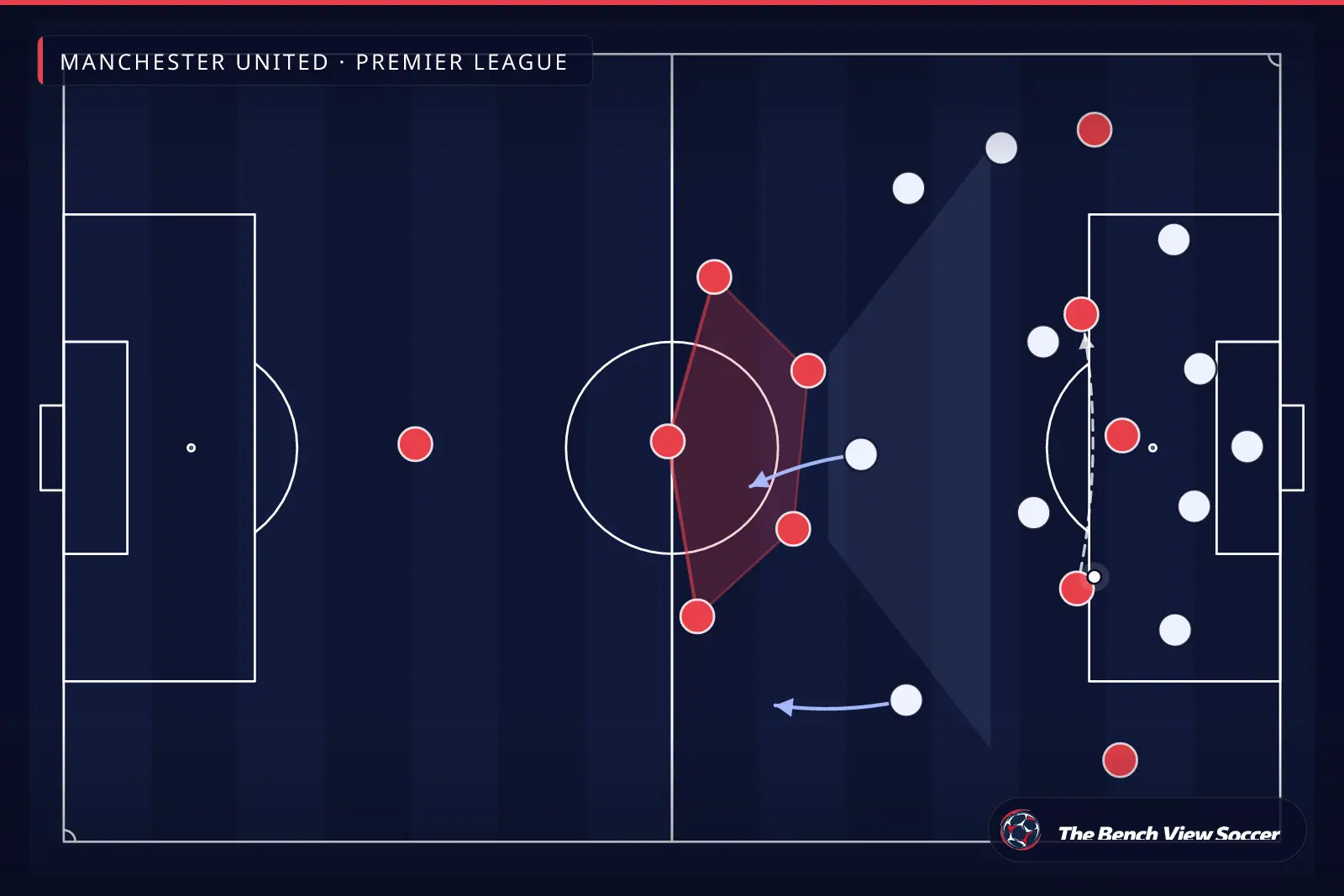
Rest defense is the skeleton of elite football. It’s the positioning of your backline and midfield behind the ball during your own attacks to control the counter if possession is lost. United have too often attacked with imagination and defended the loss of possession with hope. Baleba, in our analysis, is not being signed primarily as a passer or a scorer—but as the hinge that stabilizes the entire model when the ball turns over. That’s why this move matters more than the sticker price suggests.
Put simply, this transfer signals a pivot: from collecting profiles to engineering a structure. In our tactical reading, Baleba gives United three things they have lacked in one package—ball-winning with range, press-resistance under pressure, and the positioning discipline to form an automatic 3-2 rest shape behind the attack.
Our view: Manchester United didn’t just buy a midfielder; they bought the missing phase of play—clean, repeatable rest-defense—that turns hopeful transitions into controlled territory.
Who is Baleba tactically? A destroyer who can dribble through chaos
Baleba arrives as a high-energy 6/8 hybrid. His Brighton schooling sharpened a trait that United’s midfield has long lacked: the ability to both win the ball and immediately carry through pressure to connect lines. He is not a deep-lying regista in the classic sense; he is closer to a modern breaker-and-bridger—break the press, bridge the thirds.
Think of him as a force multiplier for a team that wants to compress space around the ball but also prime its next action. The Brighton environment—where midfielders are drilled to hold opponents in their cover shadows, bait pressure, and explode through predictable lanes—suited his profile. At United, that translates as the “first responder” in the middle third, and the second wave in attack: arriving on the scene quickly, leaving it even quicker with the ball secured.
Out of possession: pressing triggers, cover angles, and counterpressure
Without the ball, Baleba’s value is threefold. First, he reads pressing triggers like a winger turned six. A bad touch, a backward pass into an isolated full-back, or a heavy square ball across the pivot—these are his green lights. Second, his body orientation is intelligent: he typically arrives at duels angled to deny the opponent’s strongest out-ball, forcing play into the touchline or into a teammate’s pressing lane. Third, he is relentless in counterpressing the instant possession changes hands, stepping in front rather than chasing from behind.
Picture a typical sequence around the 64th minute on your clock: United lose the ball in the right half-space. The opposition attempts the first out-ball into central midfield. Baleba doesn’t sprint at the passer; he glides to screen the receiver’s inside shoulder, making the outside pass appear safest. That’s the trap. As the ball rolls toward the sideline, the nearest full-back steps, the winger tucks, and Baleba pounces on the second touch. United now attack again, 40 meters closer to goal. That’s not an extraordinary play—it’s a system, repeated until it feels inevitable.
In possession: carries that reset the press and release the 8s
With the ball, Baleba won’t be mistaken for a quarterback. He’s the paramedic: arrives, stabilizes, moves the patient. The stabilizing action is the carry through the first line. Under pressure, he can take the first touch forward, shift hips to disguise the exit, and burst through a directionally angled gap that his teammates have created. This sets off two effects: the opposing midfield breaks its compactness to chase, and United’s 8s—whether that’s a free-roaming creative 10 or a high 8 running the lanes—gain positional superiority between lines.
His short distribution is simple and reliable. The poetry is in the first two touches: a reception that invites pressure without panic, and a carry that buys time for his full-back to underlap or his winger to invert. This is especially valuable on the right side, where United have lacked a consistent pattern-maker since the days when the right-sided 8 and wide forward routinely created third-man routes around the corner.
The United problem this solves: a chronic rest-defense shortfall
United’s last few seasons have been defined by a contradiction. They have recruited elite attacking movers who demand risk—runners who want vertical passes, wide forwards who attack early space, and full-backs who push high to create width. But the defensive bedrock behind those gambles has lagged. Too often, in our analysis, United’s rest shape defaulted to a 2-4 during settled attacks: both full-backs committed high, the single pivot left patrolling oceans of grass, and the center-backs exposed to straight verticals on turnover.
Elite sides have solved this in different ways. Manchester City often lock a 3-2 with an inverted full-back and a patient six; Arsenal rotate a wide center-back into a de facto full-back while Rice controls the middle; Liverpool’s box midfield brings a third man to close inside channels. United’s structure flickered between these ideas without fully living in one. Baleba, we believe, makes one solution viable every week: a 3-2 with him anchoring the two and an aggressive, center-back-to-full-back rotation forming the three.
Build-up shape: automatic 3-2 and the art of the second ball
The cleanest version looks like this: in possession, the left full-back tucks alongside the two center-backs to form the back three, with the right full-back advanced and the right winger coming inside to form a narrow triangle. Baleba stands—never chases—at the top of that triangle of three behind the ball, paired with the other pivot (often a young all-phase midfielder who can receive on the half-turn). If the attack breaks down, United are immediately organized to win the first duel, squeeze the second ball, and play forward again.
Baleba’s presence changes the calculation around second balls. Historically, United’s rest shape often lost the second ball because their six was jumping forward too early to cover passing lanes, leaving no one to contest the ricochet. Baleba is a “wait and step” midfielder. He holds the line a half-second longer, letting the ball travel, and then steps into the opponent’s stride. That timing means the bounce belongs to United more often than not. Over a season, those tiny outcomes add up to territory—and territory add up to expected goals.
Pressing synergy: higher line, shorter distances
Another downstream effect is in United’s ability to compress the field. When your 6/8 can defend big spaces with confidence, your backline can start five meters higher, your wingers can be more aggressive jumping to the full-backs, and your 10 can face the play instead of tracking. It’s not that Baleba individually transforms pressing—no midfielder does. But he shortens the distances everyone else has to cover. Compactness is contagious when your anchor can win duels and survive under pressure after the win.
Brighton’s schooling and the skill of playing on a fault line
Baleba’s Brighton education is tactically relevant. Players raised in that environment learn to operate on fault lines—those fragile seams between an opponent’s midfield and defense where one wrong turn becomes a transition. They’re taught to invite the first marker, position their hips to split two opponents with one movement, and then either offload or roll through contact. In short, they learn how to make a team’s structure feel sturdy even when the ball is in a risky spot.
In our view, two specifics translate immediately for United. First, half-space control: he naturally drifts into the inside channels to form triangles, making counterpress traps more potent. Second, underlapping runs from full-backs: he routinely pauses his position to open the lane and then slides across to cover the vacated corridor—a micro-adjustment that saves sprints later. These habits come from reps, not hero plays. United’s biggest defensive issues haven’t been singular errors; they’ve been repeated structural omissions. Habits fix those.
How Baleba changes United’s midfield chemistry
Assume a common alignment: a double pivot with Baleba plus a younger all-phase midfielder, a high 10 who roams, wingers who invert, and at least one full-back stepping inside. In that frame, Baleba is the stabilizer. He gives the 10 freedom to jump into the box earlier and the partner pivot license to step higher into the half-space to pin a marker. He closes the back door while the others open the front.
Three combinations stand out:
- With a tempo-setting partner: Baleba does the dirty carries and hard stops; the partner knits. United can finally switch from a rushed 2-4 to a patient 3-2 without risking a vertical gut-punch on loss of possession.
- With two high 8s: In a 4-3-3 where both interiors crash the box at times, he and an inverted full-back can still hold a competent 3-2. The second 8 doesn’t have to babysit transitions; that’s on the structure.
- With a destroyer partner: Against high-transition opponents, United can toggle to a true double screen. Baleba will step to the ball; the partner screens the lane. It’s a different version of safety but equally useful on hostile away days.
Third-man runs, wide overloads, and Baleba’s simple magic
United have lacked reliability in a simple but devastating pattern: the wide overload-to-third-man release. The play is classic: full-back and winger combine to draw pressure; the interior 8 arrives on the blindside for the third-man run into the channel. This pattern dies if the rest-defense behind it is flimsy because the risk of losing the ball wide is too big. Insert Baleba. Because he anchors the central corridor with assurance, United can run that pattern more often, having pre-positioned the back three and double pivot to smother the first counter. The front gets more daring because the back gets more dependable.
Cause and effect: why United moved now
In our analysis, this was triggered by three overlapping imperatives:
1) Identity pressure. United needed to pick a lane: patient positional play or helter-skelter transitions. Buying a press-resistant ball-winner says they want the former—with the ability to toggle to the latter when the game opens.
2) Squad fit. The rise of all-phase young midfielders shifted the requirement for the partner profile. Instead of another passer in the six, the need was for a player who can win, carry, and reset. Baleba is that hinge.
3) League context. The Premier League’s best now press in organized waves and break at terrifying speed. You cannot survive that with a lone six who can’t both duel and dribble. Baleba checks both boxes at high intensity.
Historical context: when United bought structure—and when they didn’t
United’s modern midfield history is a scatter diagram of ideas. Nemanja Matić was a structure buy and gave them two excellent structural seasons. Casemiro was a leadership-plus-moments buy who stabilized instantly before age and pace asked different questions. Fred gave legs but not line-breaking assurance. A loan stopgap added diligence but not long-term fit. The larger lesson: when United purchased a framework (Matić’s spacing, a true double pivot structure), the team coherence improved. When they purchased moments, those moments were thrilling—but the connective tissue remained patchy.
Look across town: Rodri was not bought as a highlight-reel player; he was bought as a platform. Arsenal’s Declan Rice shifted them from a promising idea into a weekly machine by stabilizing their rest 3-2. Baleba is United’s version of that same calculation—not a copy, but a concept: invest big in the spine that makes every attack safer and every press shorter.
Where the risks live
No transfer is risk-free, and honesty demands one serious counterargument. Brighton’s system is a learning lab for brave midfield play, but it is also carefully scaffolded: angles are rehearsed, distances are fixed, and teammates hold their nerve under pressure. United’s spacing has not always been so disciplined. If the distances stretch, even an elite ball-winner can look ordinary. Baleba thrives on tight distances and clear pressing cues. If United’s front line presses late or their back line hesitates to step, he will be asked to defend impossible spaces. That’s not on the player—it’s on the collective.
There is also the adaptation curve. He will have more touches in traffic, fewer easy outs, and greater responsibility to steer transition moments in both directions. If he tries to force the carry every time, he becomes predictable; if he plays too safe, he blunts United’s verticality. The sweet spot is learned, not innate.
Training ground to matchday: how United should integrate him
Integration is not about minutes; it’s about habits. Our blueprint:
- Automate the 3-2: one full-back plus two center-backs always behind; Baleba plus partner holding staggered at different heights, five to seven meters apart. Repeat until it’s muscle memory.
- Pressing language: agree three non-negotiable triggers—back pass to the full-back, heavy touch from the pivot, and lateral ball across the six. On those cues, the nearest winger jumps, the 10 screens, Baleba steps into the likely exit. Everyone else compresses the picture.
- Carry cues: Baleba carries only when his closest partner is fixed behind him or when the 10 shows between the lines. If both checks are absent, he plays one-touch to recycle. That keeps the team compact even when a carry fails.
- Set-piece rest: keep Baleba plus one at the top of the box on attacking corners. United’s vulnerability to fast breaks after their own set plays has cost them points; this is low-hanging fruit.
Minute-by-minute game scenarios
Illustrative sequences help: imagine the 18th minute at Old Trafford against a deep 4-5-1. United circulate left-to-right, the right full-back pushes on, the 10 drifts wide to create a triangle. The ball is lost on a miscontrol near the touchline. Because the rest shape is pre-set, Baleba is central and square, taking two quick steps to intercept the attempted outlet into the striker’s feet. One touch to settle, second to carry six meters forward, layoff to the arriving 8—shot. The attack doesn’t have to start again from the back; it restarts from the front. That’s the dividend of structure.
Now think 72nd minute away to a top-six side protecting a lead. The opponent looks to flip early balls into the channel behind the advanced full-back. Baleba recognizes the wind-up, drops half a line, and positions body-open to both the direct ball and the runner’s lane. When the clip arrives, he wins the first contact, then cushions the second ball into the partner pivot and resets. It looks mundane; it wins leagues.
What success looks like: KPIs we’ll watch
We judge this transfer on effects, not counting stats. The right metrics for an anchor are about sandpaper, not sparkle:
- Transition control: fewer shots conceded within 10 seconds of United losing the ball in the final third. That’s the essence of rest-defense.
- Territorial locking: more possessions regained in the attacking third immediately after a lost pass. Baleba’s counterpress should raise this number.
- Compactness on carries: completed carries out of pressure that lead to a progressive pass or controlled recycle. It’s not the carry; it’s what the carry enables.
- Partner synergy: the 8s receiving on the half-turn more often in the interior lanes. If they’re facing forward, Baleba is doing his job.
- Set-piece stability: fewer counters conceded off United’s own corners and free-kicks, via smarter rest positions anchored by him.
Opposition game plans and how Baleba answers them
Expect Premier League coaches to test three things: 1) force him to receive with back to play and jump him with two forwards; 2) shuttle him into the sideline trap so his carry dies into traffic; 3) isolate him in a 2-v-2 running match against a split-striker system. The counter is structural: provide him with a bounce outlet on reception, pre-position the partner pivot inside the nearest half-space, and keep the nearest center-back on a hair-trigger to step into midfield when the split-striker bait arrives.
United’s best new trick could be the “slow fast-slow” rhythm. Slow circulation to bait the first line, fast punch through with Baleba’s carry, slow again to freeze the opponent’s retreating block while the 10 chooses the incision. You can’t live at full tilt in the Premier League; he helps United choose the tempo moments.
Comparisons without the clichés
It’s tempting to label Baleba a clone of another Premier League six. He isn’t. He sits on a spectrum between the classic destroyer and the metronome: he wins ground like the former and buys time like the latter. If you’re searching for a historical United parallel, the closest might be the version of Michael Carrick that patrolled distances by position rather than pace, combined with an 8’s appetite for duels. He won’t deliver Carrick’s long diagonals; he will deliver Carrick’s calm—with added bite.
Squad knock-on effects: who benefits most
- The 10. More touches on the half-turn, less babysitting in rest-defense. Expect earlier arrivals in the box and cleaner chances created in the inside-right channel.
- The right winger. Freed to invert more consistently, using underlaps and third-man runs, knowing there’s structure under the move. This can revive those near-post pullbacks that have felt sporadic.
- The center-backs. Higher starting positions, fewer emergency sprints, more interceptions by reading the game forward instead of retreating toward their own box. That’s how you lower error rates without changing personnel.
- The young all-phase midfielder. He can step into the left interior half-space with more confidence, trusting that Baleba is locking the middle. That’s where his progression and combination play will shine.
Counterargument, properly considered
The strongest pushback is simple: price-to-output. If you spend huge on a midfielder who doesn’t add line-breaking passes or goals, you risk tying up cap space in a role that fans and pundits undervalue. And yes, if the collective spacing remains inconsistent, Baleba’s qualities could be muted. Signing a player who thrives in structure obliges the staff to build and enforce that structure weekly. Without it, the move risks becoming a philosophical half-measure—good player, awkward fit.
That’s fair—and it’s precisely why we think this deal is actually a bet on process. If United have the courage to hard-code their rest-defense and pressing language around him, the return on investment shows up everywhere else: attack faster from higher regains, defend less in your own box, and tire out opponents by making them restart from deeper fields repeatedly.
What it means for the season: the small things that change the big things
Two to four points can swing a top-four race. Where do those points hide? In the extra clean sheet earned when a late counter is snuffed at source, in the second chance created by a regain at the edge of the box, in the set-piece conceded that never happens because the rest shape was set. Baleba’s impact won’t trend on social media every week; it will creep into the table.
Against top-six sides, expect United to look more comfortable allowing the opponent’s first pass to be made—and then hunting the second. The days of panic-sprinting 40 meters backward on turnover should diminish. In Europe, where game states oscillate and rhythm swings, having a midfielder who can “close the window” for two minutes by simply winning, carrying, and recycling is worth a round on its own.
The detail that wins titles: closing central doors
Modern football’s gold standard is not how fast you attack; it’s how slowly your opponent can. United have too often opened central doors in transition. Baleba’s game is shutting those doors with his feet, his shoulders, and his decisions. He doesn’t need to be a conductor to make the orchestra sound better; he needs to be the soundproofing that lets the melody breathe.
The decisive verdict
Tactically speaking, we believe this is the smartest kind of expensive: money spent on a role that multiplies the value of every other role. If United imprint a consistent 3-2 rest-defense and give Baleba clear triggers, they will look 10 yards taller, five meters tighter, and one second earlier to every second ball. If they don’t, the signing risks being remembered as a good player asked to solve a system by himself.
That’s the fork in the road, and our verdict walks right up to it:
Buy Baleba, buy time; build the 3-2, buy wins. This is Manchester United betting on structure over stardust—and it’s the right bet.
We’ll be watching not the heatmaps, but the empty spaces where opponents used to run. If those disappear, the price will feel like a bargain because the league will finally feel smaller for United. And that, more than any headline, is what great anchoring midfielders do: they make the game look comfortably small for their teammates and impossibly big for everyone else.
The Bench View app
Don’t just read football — train it
Everything you read here, turned into training you can follow step by step.
Physical training at home
AI daily sessions adapted to your level and position. No equipment needed.
Tactical training courses
Step-by-step courses on positioning, pressing, build-up and decision making.
- 7 days free
- No commitment
- Cancel anytime
Free account: 2 physical sessions + the first tactical course. PRO: 7-day free trial — cancel before day 8 and you pay nothing.
More Analysis
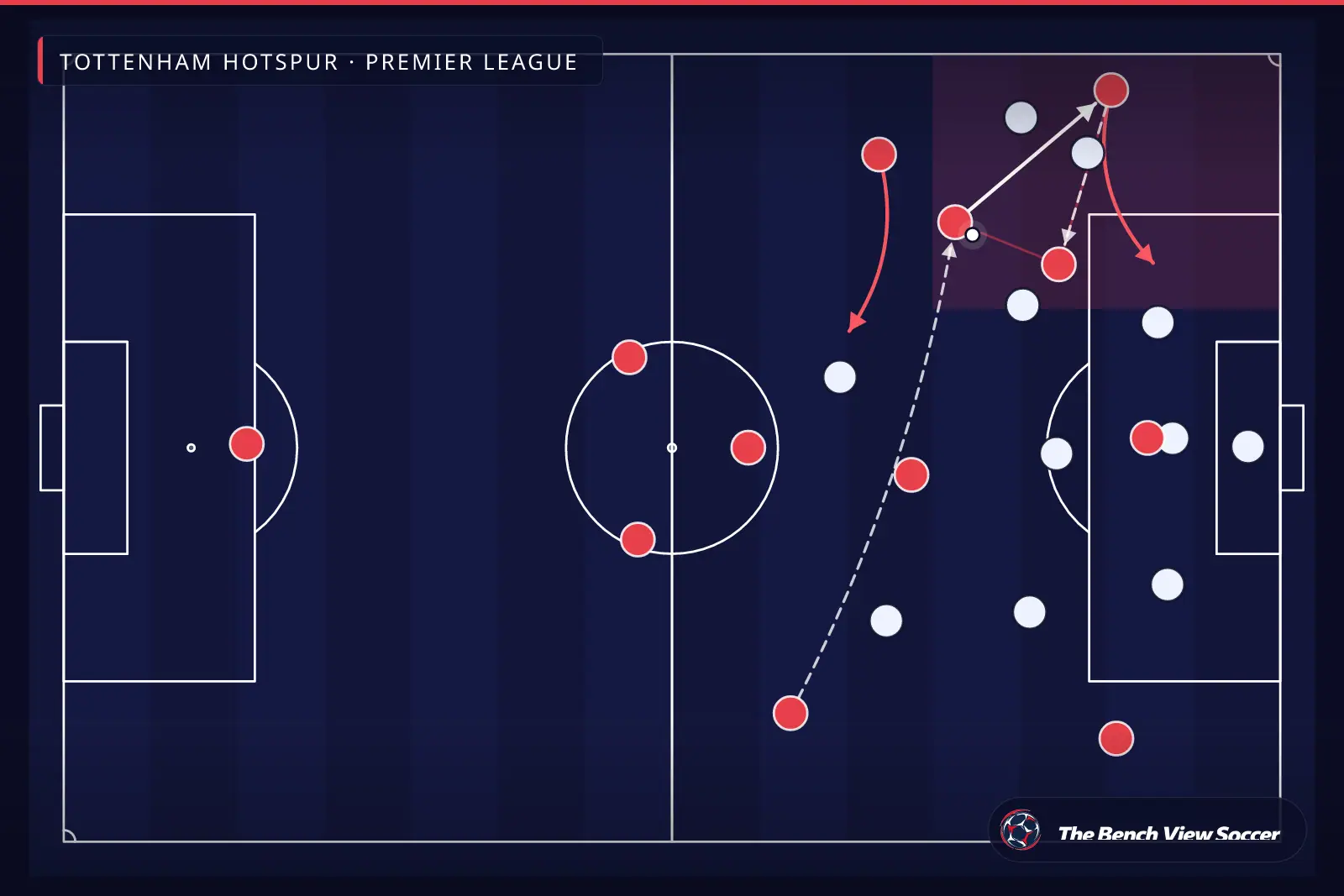
Tottenham Hotspur: Why a Gakpo-Style Inverted Winger Unlocks 3-2-5
August 25, 2026
Rodri to FC Barcelona: How the Pivot Reinvents Rest-Defense
August 19, 2026
Benfica's Inverted Right-Back Plan Made Dedić a £30m Upgrade
August 18, 2026
Manchester City's Rest-Defense Without Rodri: The Real Test Ahead
August 18, 2026