

Michael Carrick has publicly downplayed concerns about Lisandro Martínez’s attitude after the defender’s on-field sending off and an off-field outburst aimed at the club hierarchy. Despite a fine for comments directed at the club’s director of football, Carrick expects Martínez to retain his starting role as Manchester United prepare to face Roma at Old Trafford in the Champions League.
What happened
Carrick said Martínez’s “commitment is not an issue” following a recent incident in which the defender was sent off in a defeat against Chelsea. The red card came after a challenge that has been debated by refereeing analysts; Sky Sports’ Ref Watch discussed whether Martínez’s challenge on Wesley Fofana constituted violent conduct and merited a straight red. Separately, Martínez made critical remarks about United’s director of football, Jason Wilcox, for which he was fined. Carrick — described as under pressure — nevertheless indicated that Martínez is expected to keep his place as United prepare to host Roma in a Champions League fixture at Old Trafford.
The tactical reading
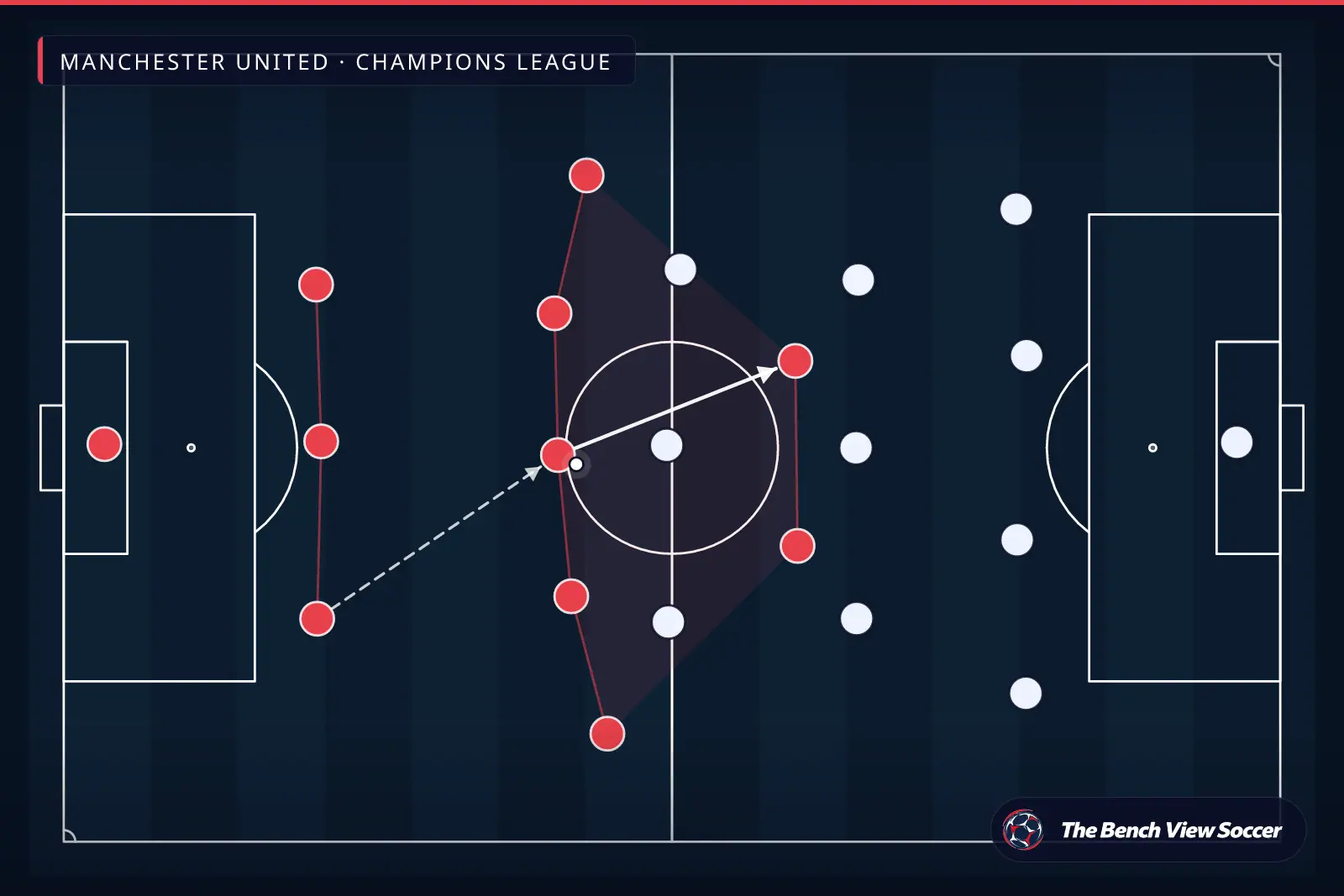
The backing of Martínez despite recent disciplinary and public-relations problems points to a coach prioritising defensive profile and on-field influence over short-term optics. Martínez’s selection continuity suggests Carrick values the specific defensive traits the player brings: aggressive ball pressure, compactness between lines, and a willingness to engage in high-intensity duels. Selecting a defender with those characteristics typically signals an intent to impose a physical and proactive defensive baseline rather than retreating into a conservative blocking shape.
The nature of the sending off — a challenge that refereeing pundits flagged as potentially violent conduct — highlights a tactical trade-off teams often face when employing highly aggressive centre-backs. Such players can dominate 1v1 battles and compress opponents’ time on the ball, useful when trying to suffocate creative outlets. But that aggression also increases risk of fouls inside or around the penalty area and can leave a side exposed numerically if the action results in a red card. Coaches who persist with this profile usually need clear compensatory systems: either a partner who provides positional cover, midfielders willing to drop into defensive lines, or a game plan that accepts short periods of numerical inferiority in exchange for overall defensive disruption.
Preparing for Roma at Old Trafford in the Champions League context suggests Carrick must balance those risks against the need to control a tactically flexible opponent. If Martínez’s inclusion reflects a desire to press or to disrupt opposition build-up, the rest of the defensive unit and the midfield must be structured to cope when the aggressive defender steps out of line. This generally means a central partner who is disciplined and risk-averse, full-backs who track laterally to prevent overloads, and a midfield double that can screen channels and sweep behind forward pressure.
Finally, Carrick’s public stance over Martínez’s discipline and his warning that he is "under pressure" introduce another layer: managerial decisiveness versus squad cohesion. Persisting with a player after off-field criticism implies a preference for on-field performance metrics in selection decisions. That choice has tactical consequences — teammates must adapt to the player’s intensity and accept the behavioral variance it brings — and the coach must implement training routines and in-game instructions that mitigate the defender’s propensity for risky challenges.
Key tactical points
- Keeping an aggressive centre-back in the XI signals an intent to press and contest 1v1s; be ready to accept higher foul and card risk.
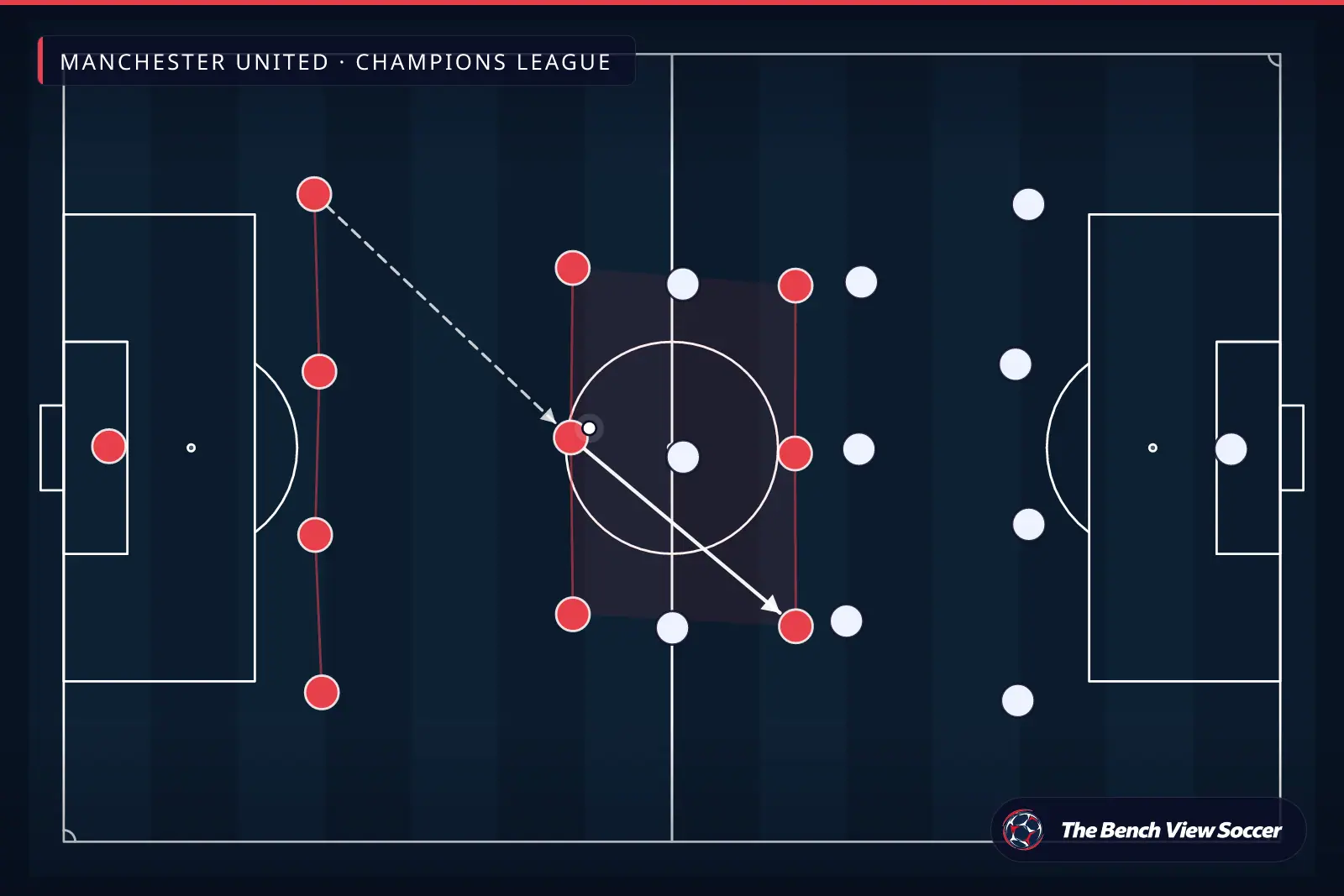
- When a defender steps out to press, the partner must provide disciplined cover to prevent exploitable gaps between centre-backs.
- Midfielders should be prepared to drop into the defensive line as a temporary third centre-back when aggression is required from the front-facing defender.
- Public managerial backing of a volatile player requires clear in-training reinforcement of decision-making around tackles and timing to reduce red-card probability.
- Opponents can target the spaces left by an aggressive defender; tactical plans should include lateral cover and targeted pressing triggers to limit exploitation.
What to watch next
Against Roma, observe how Carrick balances Martínez’s aggressive tendencies with structural cover. Will the coach pair Martínez with a more conservative centre-back, or will midfielders be tasked with sweeping behind when Martínez steps out? The answer will reveal whether United are prioritising ball-winning and disruption or aiming to maintain defensive solidity through positional discipline.
Also watch the team's response in-game if Martínez is shown a card or is forced off. The manner in which Carrick adjusts — whether by changing personnel, shifting to a deeper block, or altering pressing triggers — will indicate how much tactical contingency was prepared to offset the risks associated with a high-intensity defender.
Train it
To train the balance between aggressive centre-back play and team defensive cover, use a 6v6 plus 2 neutral players possession-drill that encourages centre-backs to step out to win the ball while teammates practice covering rotations.
- Coaching point 1: Instruct the aggressor to time his stepping out — force commitment only when teammates are aligned to cover the vacated zone.
- Coaching point 2: Teach the partner centre-back to immediately shift laterally and communicate to the full-backs and holding midfielder to form a compact defensive triangle.
- Coaching point 3: Emphasise recovery runs and transitional awareness; when the aggressor is bypassed, midfielders must drop and the team must convert to a temporary back five.
Sources
The Bench View app
Don’t just read football — train it
Everything you read here, turned into training you can follow step by step.
Physical training at home
AI daily sessions adapted to your level and position. No equipment needed.
Tactical training courses
Step-by-step courses on positioning, pressing, build-up and decision making.
- 7 days free
- No commitment
- Cancel anytime
Free account: 2 physical sessions + the first tactical course. PRO: 7-day free trial — cancel before day 8 and you pay nothing.
More Analysis
Carrick survives as United head into Roma tie — tactical lessons from a club in crisis
November 1, 2026
Brighton’s defensive discipline and Verbruggen’s brilliance hand them first league win at City
November 1, 2026
Russo hat-trick sends Arsenal second — tactical lessons from the Benfica win
October 31, 2026
Liverpool’s Anfield test: what recent form says — and what to work on before Arsenal
October 30, 2026