

Michael Carrick will remain in charge of Manchester United for the upcoming Champions League match against Roma despite Saturday's 2-0 defeat at Chelsea that extended United's winless run to nine games and left them 17th in the Premier League — their poorest start to a season since 1988. A review of his position is expected during the international break after the next round of domestic fixtures.
What happened
Manchester United lost 2-0 at Chelsea on Saturday, with Lisandro Martinez sent off during the match. The defeat extended United's run without a victory to nine games and dropped them to 17th in the Premier League, marking their worst start to a season since 1988. Despite mounting pressure and calls for change, the club indicated no immediate managerial replacement, with Michael Carrick set to remain in charge for Tuesday's Champions League fixture against Roma at Old Trafford. The situation is set to be reviewed again during the upcoming international break after the next round of league matches. Carrick publicly insisted he would still be in charge for the Roma game and said he was focusing on that match.
The tactical reading
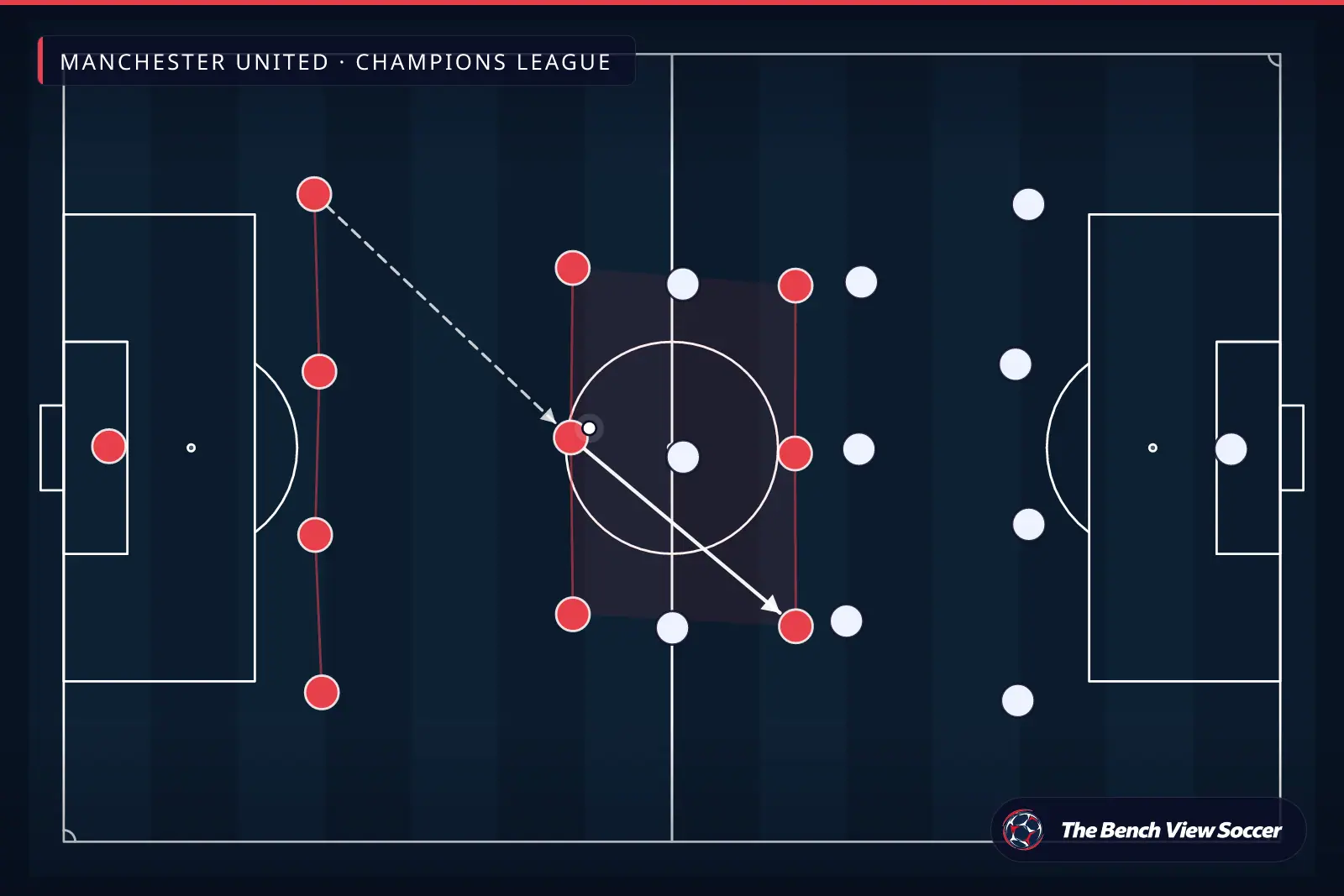
The sequence of facts — an extended winless run, a heavy away defeat, and a straight red card to a central defender — points to several interconnected tactical stresses. A team enduring nine matches without a win typically reveals problems in defensive shape, transitional control, and the ability to sustain attacking patterns. The sending-off of a central defender during the match against Chelsea suggests the team was either exposed to sustained pressure or forced into reactive defending at key moments.
Persistently poor results often reflect a mismatch between game plan and available personnel. When a side is struggling in league matches yet still preparing for continental fixtures, coaches are pressured to reconcile short-term damage control with longer-term tactical identity. The decision to keep the manager in place for the next Champions League game signals a choice to prioritize continuity — at least temporarily — which usually involves doubling down on the existing structures and roles rather than introducing wholesale change midweek.
From a structural perspective, a team conceding a 2-0 defeat and suffering a red card through a central defender likely faced problems on two fronts: organisation when in defensive transition and overloads in the channels or central areas that forced desperate interventions. Such situations typically require defenders to either cover large distances without midfield support or to attempt last-ditch tackles when outnumbered. That pattern exposes the trade-off between playing an aggressive, high-line pressing system and protecting the space behind the defence; when the press is bypassed, the back line and goalkeeper face difficult recovery scenarios.
Finally, the psychological and tactical consequences of a long winless run shape match preparation and in-game choices. A manager under pressure may simplify instructions, reduce risky positional rotations, or lean on experienced personnel to stabilise results. Conversely, players may compensate by attempting individual actions to break deadlocks rather than adhering to collective patterns. Both reactions have tactical costs: predictability for the opponent and loss of compactness or cohesion for the struggling team.
Key tactical points
- Red cards to central defenders often indicate either reckless last-ditch defending or systemic exposure caused by lack of midfield protection.
- Extended winless runs commonly point to failures in transitional phases — both conceding counter-attacks and failing to progress the ball through midfield.
- Maintaining managerial continuity under pressure usually signals a short-term emphasis on restoring defensive solidity and simplifying the game plan.
- When a team is underperforming, individual actions tend to replace collective patterns, increasing turnovers and reducing controlled possession sequences.
- Fixture congestion between domestic and continental games forces trade-offs between rotation for freshness and retaining familiarity among starting personnel.
What to watch next
In the upcoming Champions League match against Roma, watch whether the manager opts for structural stability or introduces tactical tweaks aimed at shoring up defensive transitions. Specifically, will there be visible changes to protect the central defenders and to reduce vulnerability on the counter? The response will reveal whether the coaching staff prioritises immediate containment or persists with the season-long identity that has so far produced inconsistent results.
Also observe the collective response to the psychological pressure of a nine-game winless streak: do players tighten and simplify their roles, or do they attempt to lift the team with individual initiatives? How the team manages its spacing and midfield support in both possession and out-of-possession moments will be telling about short-term tactical adjustments.
Train it
To address the tactical theme of defensive protection after losing a central defender and to improve transitional control, a focused training drill is a 7v7 plus two neutral players on a half-pitch designed to practice quick recovery and supportive midfield coverage.
- Emphasise quick numerical compensation: when a central defender is drawn out, midfielders must fill narrow channels to prevent overloads.
- Coach compactness in recovery runs: defenders and midfielders should sprint to form a compact block within three seconds of losing possession.
- Reward effective transitional passing: attackers and neutrals should aim for three-pass sequences after regaining possession to simulate controlled recovery and reduce risky long balls.
Sources
The Bench View app
Don’t just read football — train it
Everything you read here, turned into training you can follow step by step.
Physical training at home
AI daily sessions adapted to your level and position. No equipment needed.
Tactical training courses
Step-by-step courses on positioning, pressing, build-up and decision making.
- 7 days free
- No commitment
- Cancel anytime
Free account: 2 physical sessions + the first tactical course. PRO: 7-day free trial — cancel before day 8 and you pay nothing.
More Analysis
Brighton’s defensive discipline and Verbruggen’s brilliance hand them first league win at City
November 1, 2026
Russo hat-trick sends Arsenal second — tactical lessons from the Benfica win
October 31, 2026
Liverpool’s Anfield test: what recent form says — and what to work on before Arsenal
October 30, 2026
City’s profligacy punished as late PSG leveller leaves questions over game management
October 30, 2026