

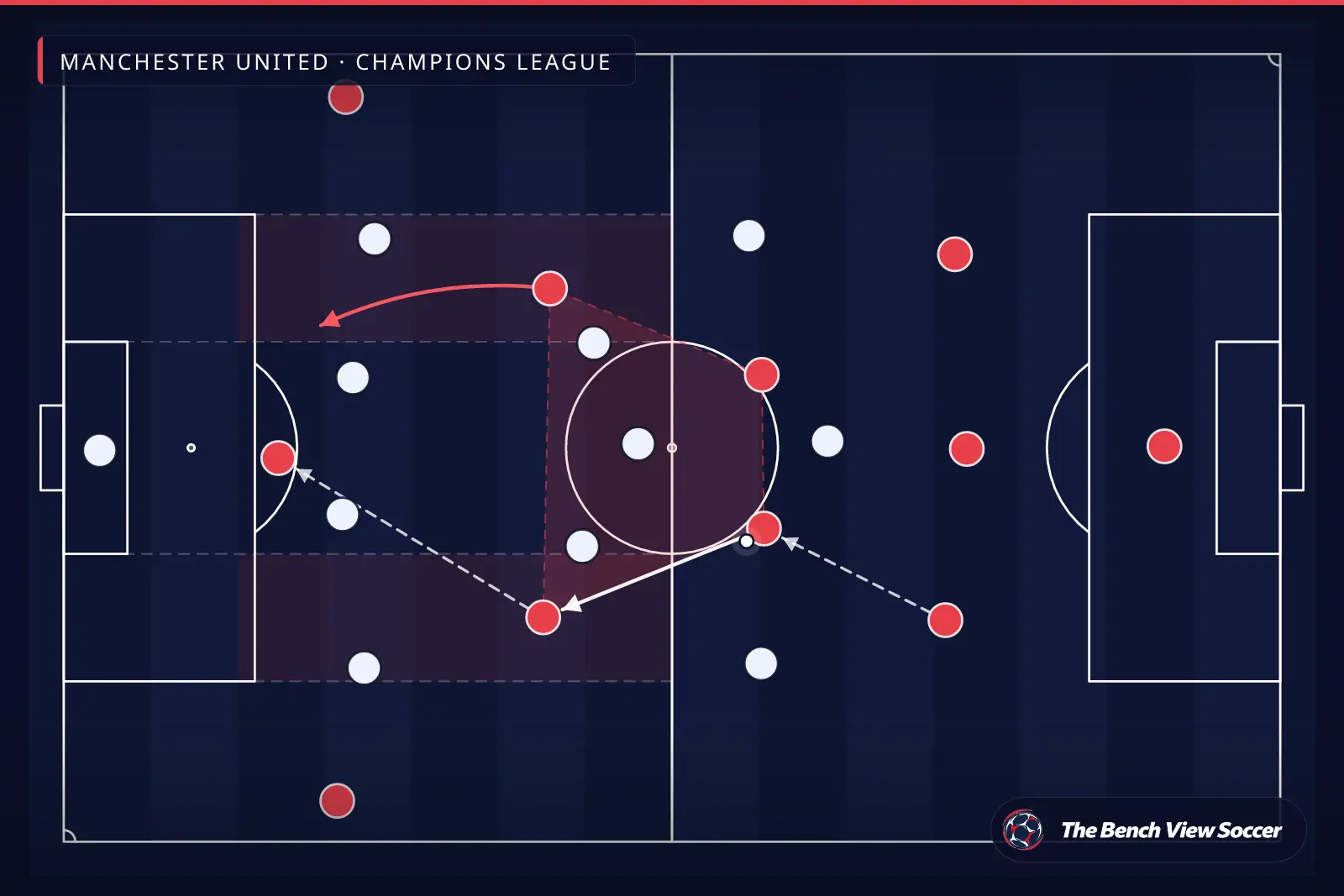
Manchester United overturned a two-goal deficit to beat Roma 3-2 in the Champions League at Old Trafford. The comeback handed United their first win in 10 games, prompted public support for head coach Michael Carrick from captain Bruno Fernandes, and featured a retaken penalty and a decisive contribution from Cunha. The result has been framed not just as a big match win but as a moment linked to Carrick’s future at the club.
What happened
Roma went into a halftime lead of 2-0, leaving Manchester United trailing at Old Trafford. At half-time the situation looked bleak for Carrick, whose position at the club had been widely questioned. United responded strongly in the second half, overturning the two-goal deficit to win 3-2. The match included a retaken penalty and a crucial contribution from Cunha that completed the comeback. After the game Carrick described the performance as an important win and said he was proud of his players. Bruno Fernandes publicly supported Carrick and said the players did not need to save his job.
The tactical reading
The sequence of events — a poor first half followed by a markedly improved second half leading to a comeback — points to a clear contrast in approach and execution between the two periods. When a team is two goals down at halftime, the most straightforward corrective levers are changes in intensity, width, and risk-taking. The improvement suggests United adjusted either their structure or their tempo, or both, to force Roma out of their rhythm and create higher-quality chances. The retaken penalty and the late decisive intervention by Cunha indicate United were able to manufacture chances from both open play and set-piece/penalty situations after the interval.
From a shape perspective, the turnaround typically implies a move toward more aggressive positioning in the attacking phase. That can mean full-backs pushing higher to create overloads on the flanks or a midfield reorganization that allows more bodies to arrive in the box. Against a team that had two-goal momentum, United’s response likely involved committing more players forward while accepting greater vulnerability on the counter. The successful comeback shows the attacking balance was managed well enough to convert pressure into goals without conceding again.
Key roles in such a recovery are usually the creative midfields who can control transitional moments and the forwards who can convert limited chances. The retaken penalty highlights the importance of composure and set-piece management under pressure; a retake alters psychological momentum and requires a player to execute with renewed focus. Cunha’s decisive contributions point to the value of forward players who can finish under pressure and who can exploit spaces that open up as opponents try to protect or extend leads.
There is also a managerial dimension: halftime adjustments and motivational interventions matter when a team reverses a deficit. The context around Carrick’s job security and Fernandes’s public backing create an environment where players may feel extra responsibility to respond. Tactically, that can translate into higher work-rate, faster transitions, and more risk in passing lanes — choices that often produce the sort of dramatic comeback seen here but also carry trade-offs in defensive control.
Key tactical points
- Halftime pivots can be decisive: targeted changes to intensity and attacking shape can rapidly alter game momentum.
- Managing set-piece and penalty scenarios under pressure is critical — retakes reset psychology and demand composure.
- Wide overloads or higher full-back involvement often supply the service and crossing channels needed to overturn deficits.
- Forwards who remain composed in transition and finishing phases are invaluable when margins are tight.
- Increasing attacking risk to chase a result must be balanced with clear defensive cover to avoid conceding on the break.
What to watch next
Will Manchester United be able to sustain the second-half principles that produced this comeback when they are not under the same existential pressure? Observers should watch whether the coaching staff makes those halftime tactical adjustments a permanent part of the team’s repertoire or whether the changes are framed as short-term reactions to the scoreboard and atmosphere.
Equally, it’s important to monitor how the team manages the trade-offs revealed by this match: does committing more players forward become a repeatable strategic choice, or will it expose defensive frailties against teams that punish space behind the forward line? The handling of high-pressure set-piece moments — penalties and retakes — will also be a marker of the squad’s mental conditioning moving forward.
Train it
Exercise: ‘Phased Overload to Transition Rondo’ — this drill trains halftime-style intensity increases, wide overload creation, rapid transitions into the box, and penalty/set-piece composure.
- Set up a 40x30m grid with two small goals on one end and a target box on the other. Play 7v7 with two neutral wide players who can be switched on after a coach’s signal to create overloads.
- Phase 1 (possession): 8 minutes of tight rondo to force quick passing and movement; coach signals change to Phase 2 every 2 minutes to simulate urgency shifts.
- Phase 2 (attack): neutrals join to create 9v7 attacking overloads; attackers must create a finishing opportunity within 8 seconds, with the option to take a penalty if the defense wins the ball and commits a foul in the box (practice retake routine).
- Reset quickly and run the sequence twice to simulate match rhythm and pressure.
- Coaching point 1: Emphasize the speed of adjustment — coach’s signal should trigger immediate positional changes and increased tempo.
- Coaching point 2: Practice penalty composure by rehearsing retake scenarios and breathing/visualization cues for the taker and keeper.
- Coaching point 3: Reward forward players who time their runs into the box and full-backs who provide width but recover quickly to cover counters.
Sources
- Sky Sports: 'An important win for us' - Carrick 'proud' of players after CL comeback
- Sky Sports: Fernandes claims players don't need to save Carrick's job, but did they?
- BBC Sport: Man Utd beat Roma - the other great Champions League comebacks
- BBC Sport: A half-time speech, a retaken penalty - and a win to save Carrick's job?
- The Guardian: Manchester United produce comeback for the ages as Cunha double floors Roma
- Sky Sports: Cunha completes wild Man Utd comeback win over Roma from two down
The Bench View app
Don’t just read football — train it
Everything you read here, turned into training you can follow step by step.
Physical training at home
AI daily sessions adapted to your level and position. No equipment needed.
Tactical training courses
Step-by-step courses on positioning, pressing, build-up and decision making.
- 7 days free
- No commitment
- Cancel anytime
Free account: 2 physical sessions + the first tactical course. PRO: 7-day free trial — cancel before day 8 and you pay nothing.
More Analysis
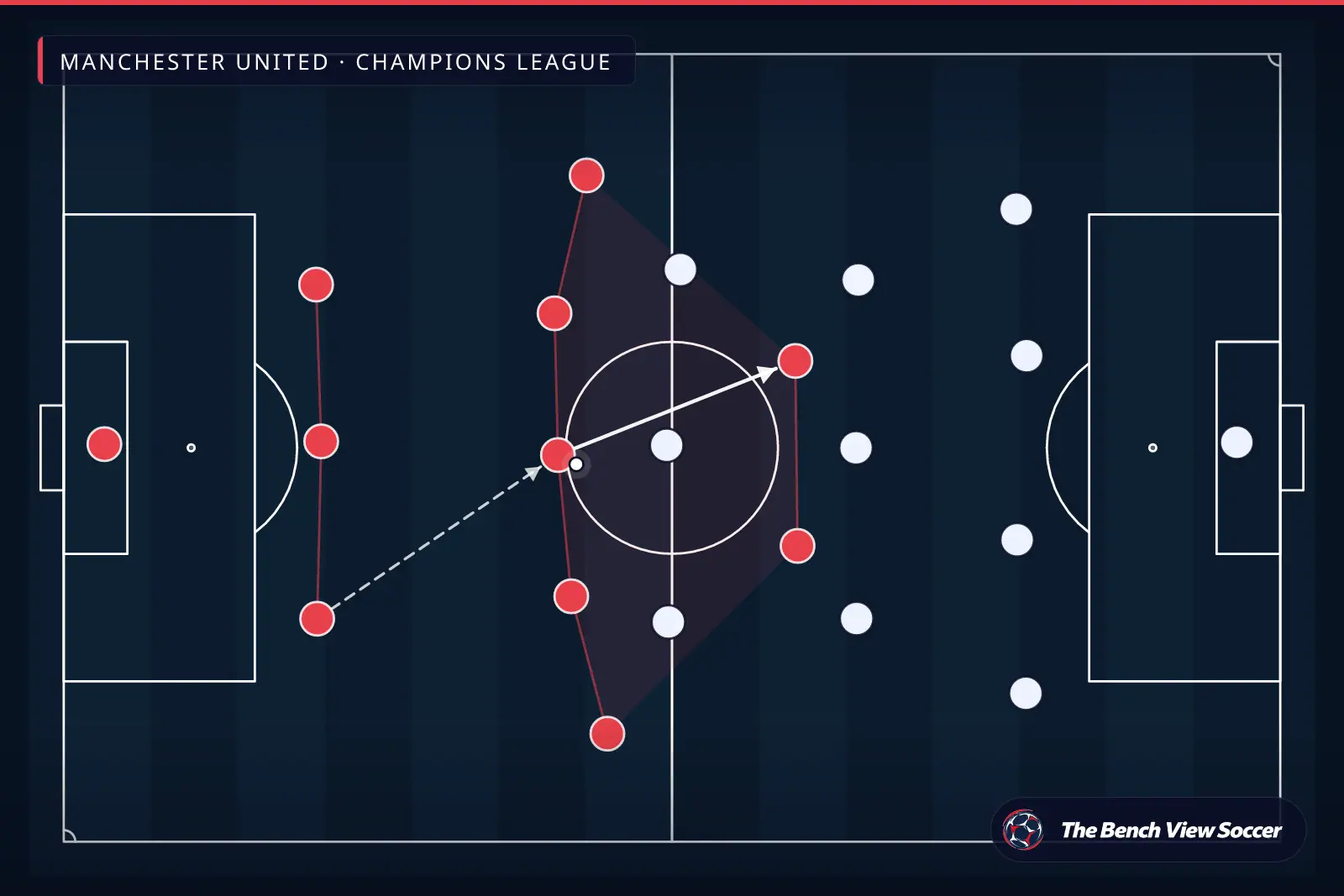
Carrick backs Martínez and eyes Roma test — what the situation reveals tactically
November 2, 2026
Carrick survives as United head into Roma tie — tactical lessons from a club in crisis
November 1, 2026
Brighton’s defensive discipline and Verbruggen’s brilliance hand them first league win at City
November 1, 2026
Russo hat-trick sends Arsenal second — tactical lessons from the Benfica win
October 31, 2026