

The Moment and the Thesis
Sometimes a European exit feels like a single mistake. This wasn’t that. Celtic surrendered a four-goal aggregate cushion in the Champions League because the very spine of their game model – the rest defense that underpins an aggressive possession structure – broke in cascading layers under LASK’s direct, intelligent pressure. It looked like a collapse of will. Tactically speaking, it was a collapse of spacing, reference points, and triggers.
The trending headline tells the shock: a massive lead, gone. The deeper story is colder. LASK didn’t find a miracle; they found a repeatable route through Celtic’s shape, cycling the ball-side overload into weak-side advantage, and weaponising transitions that the Scottish champions never truly insulated. The manager, O’Neill, has publicly taken responsibility; in our view, that responsibility starts with how Celtic built attacks, where they stationed their cover, and when they pressed – not just that they did.
In our analysis: Celtic didn’t simply lose a lead – they lost their rest-defense map, and LASK kept redrawing it on Celtic’s blind side.
What Broke: The Skeleton of Celtic’s Shape
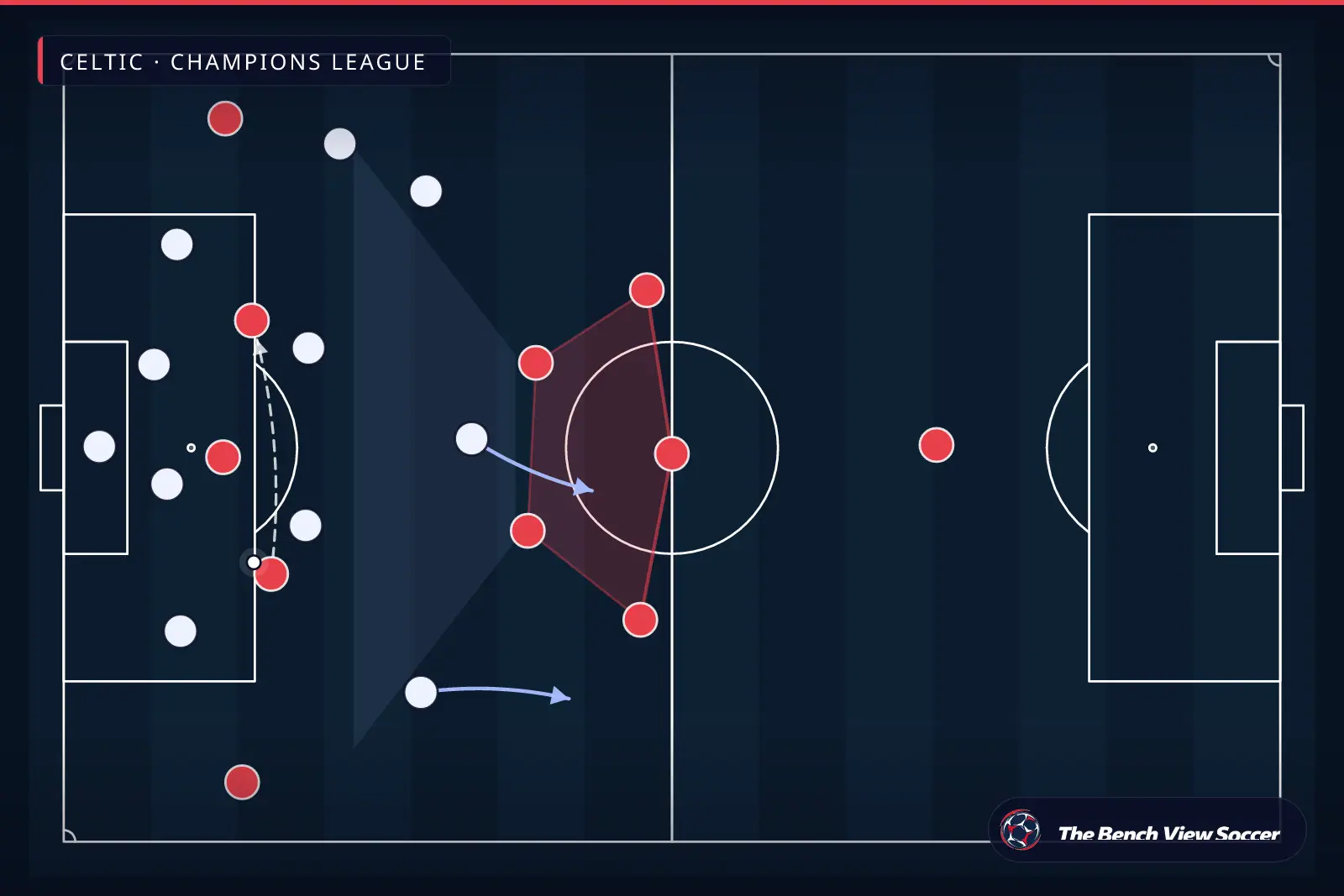
Under pressure, an attack-first side is only as good as the structure it leaves behind the ball. Celtic’s approach has often pushed into a 2-3-5 or 3-2-5 in settled possession, with full-backs stepping inside or outside to create a midfield platform. The intent is clear: establish positional superiority between the lines and flood the half-spaces with underlaps and third-man runs. But the trade-off is non-negotiable – spacing, coverage, and the angles of the last line must be pristine when the ball is lost.
Against LASK, that ledger went red. The ball-side interior was frequently overloaded, which is fine if the far side is braced – two center-backs on different vertical lines, a dedicated holding midfielder protecting the lane into the 10 zone, and a full-back tucked in to compress the switch. What we saw instead, repeatedly across the comeback phase, was a flat last line, a pivot drawn toward the ball, and a vacated far-side channel. That is a precise recipe for transitional cuts to the weak-side half-space and cut-backs from the byline.
The Three-Second Window Celtic Lost
The best pressing teams exploit a micro-window right after losing the ball: two to three seconds of counterpress to smother the outlet. Celtic’s first action too often involved the near-side 8 jumping forward and the 10 staying high to threaten the return phase. That left the pivot juggling too many fires – block the split to the nearest striker, plug the vertical pass into LASK’s 10, and screen the switch. One player cannot do three jobs if the distances are 12–15 meters too large.
In several second-half sequences, LASK’s center-back or wing-back simply lifted a diagonal into the far-side channel once Celtic’s first press bit. When that ball landed, Celtic’s weak-side full-back was caught between checking the runner inside and covering the line, with the center-back unable to step because the other LASK striker had pinned him. That indecision produced the same picture: retreating defenders, runners arriving on the blind shoulder, and high-quality entries into the box.
How LASK Engineered the Comeback
LASK’s plan was sharp rather than complicated. They didn’t just run hard. They ran to precise, repeatable patterns that flipped Celtic’s strengths against them.
Pressing Traps on the Initial Build
On Celtic’s goal-kicks and early build, LASK curved their first presser to shut the inside lane to the pivot and showed the pass into the full-back. As soon as that pass travelled, the LASK wing-back sprang forward, and the near-side 8 jumped to cut the return inside. This is classic Austrian pressing school: invite the sideline, then use it as an extra defender. Celtic’s response – trying to bounce a third-man pass into the near interior – required the 10 to be close enough to receive under pressure. Too often, that distance was three to five meters too long, and the pass never came clean. Turnovers on the flank followed, with instant direct entries into the box.
Overload to Isolate – Then Flip
In possession, LASK overloaded the ball-side midline to pull Celtic’s pivot and ball-side center-back toward the touchline, then ripped a fast switch into the far half-space. The key detail: the weak-side forward started narrow, then curved his run out-to-in so that he met the diagonal on the move. With Celtic’s far full-back originally higher (supporting possession) and then forced to sprint back facing his own goal, the channel opened. From there, the cut-back zone around the penalty-spot arc became LASK’s preferred finish location.
This is the geometry of a high-lead capitulation: not panic, but physics. Once the distances expand, every defensive choice is a lesser evil. Step, and you expose the space behind. Drop, and you concede the box edge. Hold, and you give the crosser easy time to pick his runner. LASK created these forks consistently across the final third of the tie.
Second Balls as a System
LASK didn’t only press. They built a second-ball factory. When Celtic tried to break the trap by going longer, LASK’s back three were staggered on different heights, with a midfielder screening the flick-on and the far wing-back tucking into the back line. On the first contact, LASK’s 10 and far 8 crashed the zone just beyond the aerial duel. The result was a blizzard of recoveries in the inside channels, catching Celtic’s front five ahead of the ball. From those regains, the first pass was forward, then wide, then inside: a three-touch pattern that repeatedly turned Celtic’s shape.
Inside the Key Tactical Battlegrounds
The Pivot’s Catch-22
The single pivot’s job in a 2-3-5 possession is brutal: compress space, deny the 10 pocket, and be close enough to the ball to counterpress. When the near 8 jumps – as Celtic’s did to maintain high pressure – the pivot must shuffle over. But if the weak-side full-back is simultaneously high, the far half-space becomes orphaned. LASK saw it, fed it, and forced the pivot into chasing shadows. A double-pivot adjustment would have cut those angles, but Celtic persisted with a single anchor during the critical swing of the tie.
Half-Space Overlaps vs Underlaps
Celtic like to pin the last line with five up: two wingers wide, two interiors in the half-spaces, and a striker. LASK answered by defending outside-in, compressing the half-spaces and letting the ball go wide. That’s acceptable if the box is well protected. The issue was the timing: when Celtic’s underlapping interior lost the ball on a combination, there wasn’t a pre-set rotation behind to replace him in rest defense. LASK could immediately spring through the lane he’d vacated, making the loss painfully expensive.
Back-Line Stagger
The back four’s success in transition is as much about heights as it is about speed. Flat equals fragile. Celtic’s line often ended up parallel under stress, with neither center-back a step deeper to sweep the channel. LASK exploited that symmetry, playing between the two rather than in front of them. When Celtic’s keeper stepped up to narrow the angle, LASK simply squared across the six-yard line. The individual duels were honest, but the structure exposed them in unfavourable odds repeatedly.
Game-State Mismanagement
Holding a large aggregate lead in Europe requires its own sub-model of football. The tempo slow-down isn’t just walking to throw-ins; it’s re-coding your risk. Celtic kept trying to strike the same attacking poses they used to build the lead. In our view, the model should have flipped: lower the full-back heights, establish a clearer double pivot, and make the pitch smaller. Instead, possession sequences frequently ended with five or six green shirts ahead of the ball. That is a dare to any high-pressing opponent. LASK took the dare.
Territory also swung. When an opponent is chasing, you want to turn their front press back toward their own goal, pinning them in restarts. LASK repeatedly forced Celtic into rushed clearances and contested goal-kicks. The field tilted, and with that tilt came waves of pressure. It is striking how many of the critical sequences began not from elaborate build-up but from simple territorial losses after throw-ins and goal-kicks on Celtic’s side.
Psychology Through a Tactical Lens
There will be calls to label this a mental collapse. That lets the wrong things off the hook. Confidence sits on the scaffolding of reference points. When players know the exact location of their team-mates after loss of possession, panic fades; when those anchors disappear, panic blooms. Celtic’s spacing eroded their confidence; LASK’s repeated success fed theirs. The “mental” side, in other words, was the shadow cast by structure.
Comparative Context: We’ve Seen This Movie
European history is littered with mighty leads crumbling under structural strain. Famous turnarounds – the headliners you’re already thinking of – shared core ingredients: overcommitment to an attacking shape, loss of compactness after turnovers, and opponents who could exploit the weak side with speed and bravery. This Celtic-LASK tie fits that lineage. In each of those historical comebacks, the pivot area became a magnet for chaos, pressing triggers turned predictable rather than optional, and the defending side failed to refresh its defensive shell in time.
What’s particularly instructive here is the echo of prior Celtic nights where control slipped not in a single moment but across 15- to 20-minute blocks. In those spells, the opponent’s best chances clustered, driven by repeatable entry patterns rather than wonder goals. That’s the alarm bell: patterns, not moments.
Managerial Choices Under the Microscope
O’Neill’s admission of responsibility is honest. Tactically, the critical fork was about compromise. Keep the front five’s ambition and trust the counterpress, or fold one attacker into a protecting role once the aggregate lead ballooned? Celtic stuck with the former for too long. The in-game change that felt overdue: switch to a rest 3-2 behind the ball, with the weak-side full-back tucking in as a third center-back and one interior dropping alongside the pivot. That small nudge would have reduced the switch exposure and halved the running demanded of the pivot.
Substitutions also intersect with structure. Fresh legs on the flank mean little if their starting position remains too high for the game-state. The best late-game subs in Europe don’t just run; they stabilise reference points – wider starting positions in a 4-4-2 mid-block, more conservative interior staggering, and cleaner distances to the first counterpress. Celtic’s changes didn’t convincingly reset those coordinates, and LASK continued to find the same cracks.
Inside the Patterns: Representative Sequences
Without overclaiming the exact timestamps, several sequences recurred across the decisive phase:
- Celtic work the left lane, interior underlaps, combination breaks down near the corner-flag. LASK’s wing-back immediately fires a diagonal toward their right half-space runner. Celtic’s far full-back is sprinting back toward his own goal; the center-back is pinned by a striker; the pivot is too far away to screen. Result: entry into the box and a cut-back to the penalty arc.
- Goal-kick trap: Celtic try to play short; LASK’s front three curve runs to block the interior. Ball goes to full-back, bounced back under pressure, and the third pass is pressed into a turnover near the sideline. Two touches later, LASK have the ball central, facing forward, with numbers. This repeated picture produced momentum and shots.
- Long restart to escape: Celtic go long toward the striker’s chest. LASK’s backline staggers, the first header is a 50-50, but the second ball lands to LASK because their midfield are five meters tighter. Immediate vertical pass into a runner catching Celtic’s line flat.
These aren’t accidents. They’re rehearsed triggers and distances – and their accumulation, rather than a single error, explains the scale of the collapse.
The LASK Blueprint: Austrian School, Global Execution
Give LASK their due. The club’s footballing DNA meshes well with nights like this: 5-2-1-2 or 3-4-3 out of possession, aggressive wing-backs, and a devotion to using the sideline as a trap. The front press is coordinated, not frantic – the first run curves to close a lane, the second arrives on the receiver’s blind side, and the third marks the return. With the ball, they value first-direction forward passes and attack the half-spaces with out-to-in runs. It’s the same grammar that has fuelled much of the Austrian coaching wave across Europe.
LASK also managed their risk. Even while chasing, they rarely overcommitted both wing-backs simultaneously. One went; the far one tucked in. That preserved the rest shape and underwrote their second-ball dominance. Their best work came not from elaborate combinations but from respecting the geometry of Celtic’s weaknesses.
Cause and Effect: The Chain That Snapped
Trace the dominoes from Celtic’s perspective:
1) Attacking ambition maintained high full-back positions and an advanced front five.
2) The single pivot shaded ball-side to support the counterpress, stretching distances to the weak side.
3) LASK targeted the far half-space with diagonals after luring the counterpress.
4) Celtic’s back line remained too flat to sweep the channel; the far full-back arrived late and facing goal.
5) Territory eroded after throw-ins and goal-kicks, consolidating LASK pressure and field position.
6) Each regain came closer to Celtic’s box, compounding threat and belief.
At no point is an individual mistake required for this to happen. The structure wrote the script.
What It Means for the Season
Exiting the Champions League at this stage rewrites the calendar and the club’s internal KPIs. Financially and emotionally, it’s a blow. On the pitch, though, the clarity is an opportunity. The domestic schedule affords a laboratory to hard-code a more robust transition shell. European football remains on the table via a different competition pathway this season depending on qualification rules; the standard will still be plenty high. In our view, Celtic’s ceiling doesn’t drop because of this tie; it shifts toward how fast they can mature their out-of-possession distances and rest structure.
Recruitment priorities sharpen as well. The profile of the holding midfielder becomes non-negotiable: range to shuffle horizontally, timing to delay, and habitually conservative positioning when both full-backs go. Likewise, an athletic right-sided center-back who is comfortable stepping into the channel without flattening the line would change the risk calculus.
How to Fix It – A Concrete Blueprint
1) Codify a Rest 3-2 Behind the Ball
Make the weak-side full-back the default third center-back when the ball is on the opposite flank. Build habits: as the play travels, the far full-back tucks early, not reactively. Pair that with a true double pivot when the lead is large – one sits, one shuffles. It doesn’t neuter the attack; it insulates it.
2) Trigger Discipline, Not Trigger Addiction
Pressing is about choices. Bake in a game-state clause: when holding a cushion, the near-side 8’s trigger to jump becomes contingent on the 10 dropping five to seven meters to protect the return lane. If the 10 doesn’t drop, the 8 doesn’t go. That single rule keeps the pivot from firefighting two zones at once.
3) Goal-Kick Escape Routes
Against teams like LASK, pre-plan a sham short build that immediately goes over the first line to a cushioned header into midfield, with the near winger starting narrow to challenge the second ball. Do it early to force the opponent to drop five metres and respect the threat. Once they do, the short build reopens without panic.
4) Five-Minute Reboot After Concessions
Institutionalise a reset: after any conceded goal, play five minutes in a defined 4-4-2 mid-block with touchline traps rather than central traps. It burns the chaos out of the game and recentres distances. Most “capitulations” accelerate in the ten minutes after a concession; tie that swing to a system response, not emotion.
5) Fouls and Throws as Tactical Weapons
Accept “good” fouls early in transitions to kill weak-side flips. And on your own throw-ins when the opponent presses, invert the full-back inside to offer a safer third-man angle. Small pieces add up to big control.
6) Training the Blind Side
Devote full sessions to weak-side emergency defending: center-back and full-back rehearse two-versus-two retreats facing goal, with the pivot arriving late as a screener. The key cues: center-back drops one step deeper than the full-back to create a diagonal cover line, then times the step to offside-trap the out-to-in runner.
7) Personnel Tweaks Within the Squad
If the roster allows, consider flipping the profiles of the interiors: play the more defensively aware 8 on the ball-far side to naturally favour the tuck-in behind possession. Similarly, empower the captain to call the “rest 3-2” on the fly; leadership in these micro-decisions matters as much as the whiteboard.
A Counterargument Worth Considering
One fair rebuttal: early-season fitness and rhythm can distort perceptions. Short pre-seasons, new signings, and altered Champions League calendars can produce ragged distances and slower reactions. Add in the inherent volatility of two-legged European ties – one deflection, one finish from the first shot – and the story can over-index on structure when the real culprit is variance plus tired legs.
We don’t dismiss that. It’s plausible that across a larger sample, Celtic’s counterpress would hold and LASK’s finishing would regress. But variance doesn’t explain the repeatability of LASK’s entries into the same zones. The patterns looked coached, not lucky. The fix still starts with rest-defense rules that hold under fatigue.
The Bigger Picture: Celtic’s European Identity
There is a seductive myth that Celtic’s European nights demand romantic, front-foot football no matter the game-state. The modern elite have mostly shelved that myth. The most ruthless sides shift shells without shame: 3-2 behind the ball when leading, 2-3 when chasing; mid-block interludes to steady the heart-rate; targeted long phases to shake off a press. Identity isn’t about one speed; it’s about the credibility to choose the right speed at the right time.
In domestic play, Celtic can often overpower transitions through superior talent and recycling. Europe removes that margin. The lesson from LASK is old but evergreen: you don’t win big by always attacking. You win big by deciding when your attack is safest to unleash – and earning that right by controlling the weak side.
What LASK’s Success Says About the Competition
Zooming out, this tie reaffirms a broader Champions League truth: the gap between tradition-rich clubs and tactically drilled, high-intensity challengers is narrower than ever. The modern pressing canon travels well, and it punishes even small misalignments in elite teams’ rest structures. Nights like this should not be framed as shocks; they’re case studies. LASK offered one of those with clarity: compress one side, flip fast to the far channel, and turn second balls into a system.
The Shareable Verdict
Tactically speaking, Celtic’s crash was less about courage and more about cartography. Their map of the pitch – where the cover sits, how the line staggers, when the press triggers – blurred just as LASK’s lines became bolder. Fix the map, and the story changes. Ignore it, and the pattern risks repeating when the stakes rise again.
The onus is on the staff now, and O’Neill’s willingness to own the night is a promising first step. The next steps are sharper: codify a rest 3-2, discipline the triggers, and tilt set-pieces and restarts in your favour. Do that, and Celtic’s next European headline won’t be about what was lost – but how a big lead became a boring, inevitable win.
Because in the Champions League, excellence isn’t just how you attack. It’s what your attack leaves behind.
The Bench View app
Don’t just read football — train it
Everything you read here, turned into training you can follow step by step.
Physical training at home
AI daily sessions adapted to your level and position. No equipment needed.
Tactical training courses
Step-by-step courses on positioning, pressing, build-up and decision making.
- 7 days free
- No commitment
- Cancel anytime
Free account: 2 physical sessions + the first tactical course. PRO: 7-day free trial — cancel before day 8 and you pay nothing.
More Analysis
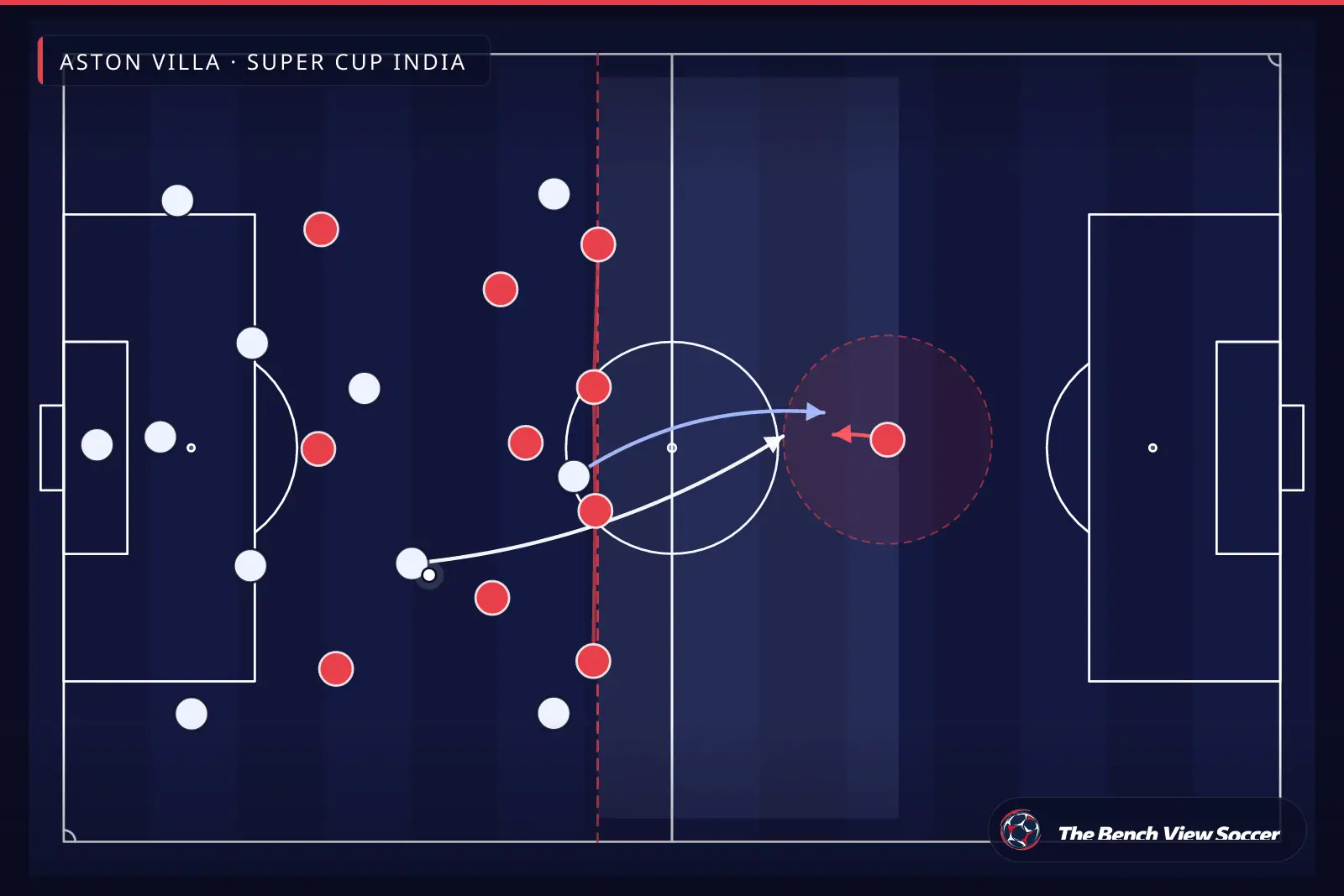
Aston Villa's Offside Trap Let PSG Win on VAR: What It Means
August 16, 2026
Arsenal's Calafiori Inversion Exposed City's Press: What It Means
August 16, 2026
Paris Saint-Germain's Rest-Defense Trap Neutralised Villa's Press
August 16, 2026
PSG's Half-Space Traps Expose Villa's High Line in Super Cup India
August 13, 2026