

Premier League’s Moment: The End of the Goalkeeper Time-Out
The trend is unmistakable: the Premier League is moving to choke off the tactical oxygen that goalkeepers have long provided with on-pitch pauses. At the very moment Chelsea are sounding out veteran leaders like Jordan Henderson and Danny Welbeck, the league is trialing measures to prevent goalkeeper “tactical time-outs.” Tactically speaking, these two headlines are the same story. The Premier League is accelerating toward a game where coaching happens in-motion, not in huddles, and where tempo is a weapon, not a variable to be negotiated by stoppage.
Our thesis is blunt: if this trial sticks, match control will shift decisively from the dugout to the pitch. The teams with pre-programmed in-play adjustments and players who can self-organize under stress will gain a structural edge. And the sides that have leaned on goalkeeper-managed breathers to reset the press, reorganize rest-defense, and receive sideline prescriptions will feel exposed—immediately.
Tactically speaking, the Premier League’s anti-time-out trial is not about time-wasting in isolation—it’s about outlawing the most efficient in-game coaching window teams built into modern football.
How Goalkeeper Stoppages Became the Silent Coaching Window
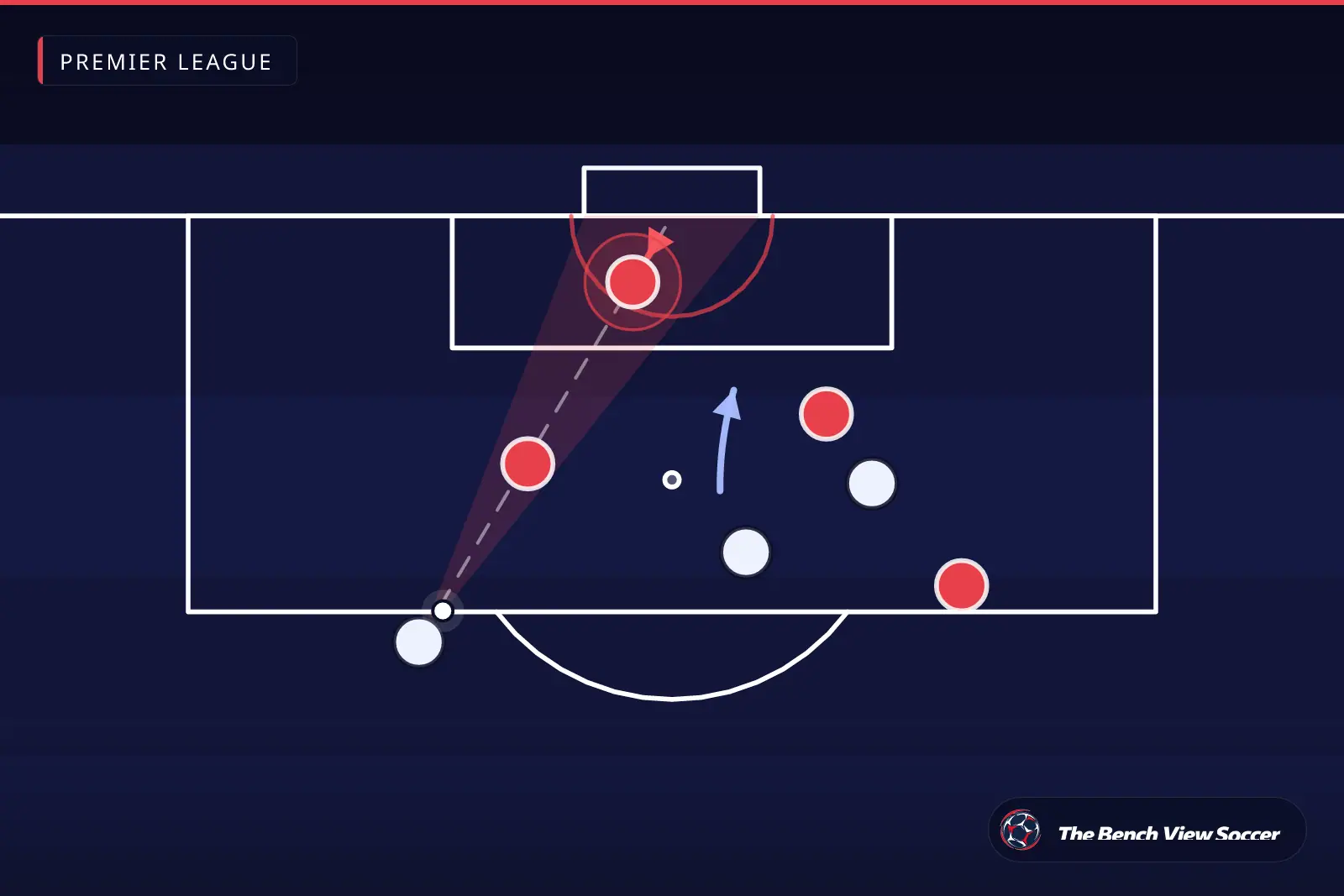
It’s easy to deride delays as “time-wasting,” but the smartest teams used goalkeeper slowdowns as a tutoring platform. Over the past five seasons, sides increasingly exploited pauses around the six-yard box—especially after contact, cramp, or innocuous collisions—to do four things:
1) Rewire the press. A 20–40 second lull allowed wingers to receive new pressing triggers (e.g., jump when the pass is squared to the full-back; hold when the No. 6 shows). The classic example: after a flurry of opposition half-space entries, the weak-side winger steps later to protect the diagonal out, compressing the rarest line-breaking pass.
2) Reset rest-defense. When a side had been countered down the channels, the huddle near the box could realign the back line + pivot distances—recovering compactness between the centre-backs and the No. 6 to block the next first or second ball. You saw this in countless 64th-minute “mini-seminars” between goalkeeper, centre-backs and the single pivot in the right half-space.
3) Script the next restart. A keeper’s restart choice is an architecture decision: short to attract the press and create positional superiority via a third-man run? Long to the striker’s far shoulder to bait the second ball in the press trap? Those micro-choices were often choreographed in stoppages, with the bench sneaking a code word or the captain relaying triggers.
4) Change the game-state rhythm. The most undervalued: pausing kills opponent field tilt and re-oxygenates heavy legs. In periods when an opponent is at +70% territory for 10 minutes, a 45-second pause is an IV drip. Once play resumes, the chasing team can execute a pre-baked first-action plan: delayed full-back overlap, wall-pass to draw the press, then a diagonal to flip the pitch.
In other words, goalkeeper stoppages weren’t just time off the clock—they were time on the chalkboard. The trial aims to shut that classroom.
What the Trial Changes—Tactically, Not Bureaucratically
We don’t need to litigate the fine print of the trial to see the direction of travel. Whether the mechanism is stricter enforcement of treatment protocols, tighter control of on-field huddles, quicker restarts on the whistle, or formal penalties that disincentivize “coaching pauses,” the target is clear: fewer manager-scripted resets, more uninterrupted phases of play.
Functionally, that alters five dynamics:
- The first 10 seconds after a stoppage get faster. Expect referees and keepers to be nudged toward immediate restarts, which compresses the window for sideline instructions and kills elaborate huddles.
- The value of pre-baked cues rises. Sides will lean harder on hand signals and trigger words embedded in training—“Box 3,” “Press+1,” “Hold 6”—to change pressing heights and pinning angles without a conference.
- Pressing becomes braver. High lines thrive on continuity; every stoppage favors the build-up side’s reset. With fewer artificial breaths, teams can commit one extra body to the first line knowing the opponent gets less time to detach a free man.
- Set-piece chaos lasts longer. If you can’t deflate the opponent’s momentum via a well-timed pause after defending three corners, you must be structurally ready to absorb waves two and three. That elevates the importance of rest-defense positions on your own corners and throw-ins.
- Keeper distribution quality is magnified. Without side-channel consulting, the keeper’s first decision after regaining control becomes a tactician’s act, not just technique. The shot-stopper who can recognize cover shadows, bait-and-switch a pressing lane, and execute the third-man exit is now a tempo dictator.
Who Wins: Self-Coached Teams With Fluent Automations
There is a reason Pep Guardiola’s teams have long installed multi-variant exit routes instead of single-scripted patterns: they survive with no bench contact. The trial tilts the league further toward that vision. The winners will be clubs that do three things exceptionally well:
1) Codified On-Field Language
Elite sides are already operating with micro-lexicons. “Six red” might mean push the pivot into the back line to create a temporary back three for build-up. “Freeze eight” could signal the interior to hold the half-space to block the bounce pass into the No. 10. These call sheets will expand and become faster.
Watch for subtle finger cues—two taps to the thigh for an underlap instead of an overlap; a palm-rotate from the centre-back to signal flipping the distribution side. In a world with fewer stoppages, these cues replace the clipboard.
2) Rest-Defense as a Default, Not a Reset
The best sides maintain rest-defense even when attacking, rather than reconstructing it after a pause. Expect more teams to keep their full-backs offset—one high, one tucked—to secure the transition lanes against the first counter. The No. 6’s distances to the centre-backs will be trained as a metronome: 10–12 meters in settled possession, collapsing to 6–8 meters on loss, no time-outs needed.
3) Keeper as the In-Play Analyst
The goalkeeper is the only player who sees the whole board. Without stoppages that invite bench counsel, the keeper must recognize when the opponent is flipping the pressing diamond or pinning the No. 6 and then proactively alter the exit—e.g., disguising the pass to the near full-back only to fire a flat ball into the inverted winger’s feet in the half-space. Shot-stopping still wins headlines; diagnostic distribution wins games.
Who Loses: Teams Dependent on Sideline Orchestration
The teams most at risk are those that:
- Coach in segments. If your adjustments rely on breaking the game into 90-second coaching slots, you will be late to problems. Think of sides that frequently call the full-backs over during stoppages to redraw touchline lanes. That luxury fades.
- Solve pressure with pause, not pattern. Clubs that beat the press by slowing everything down and inviting the bench to intervene will be forced into live problem-solving. Their centre-backs must learn to “pre-step” into the pass, and their No. 8s must turn on first contact, not after guidance.
- Use the keeper as a brake. Some teams weaponized delay: keeper down, bench on, huddle formed, press recalibrated. With the brake removed, their defensive block gets tested for automaticity; gaps appear if the collective isn’t rehearsed.
Historical Echo: From the Backpass Ban to the Era of Permanently Live Play
We’ve been here before, in spirit. The backpass rule change in the early 1990s forced keepers to be technicians, not just catchers, and accelerated pressing as a mainstream defensive art. The 2023–24 global crackdown on time lost to celebrations, subs, and throw-ins made match durations more honest, ending the dark economy of dead minutes. Each intervention nudged football toward continuity and demanded new skills.
This trial sits in that lineage. Like the backpass shift, it pushes football toward constant jeopardy. The logical endpoint is a sport where “rest” happens in structure rather than in stoppages. We’ve already seen Europe’s heavyweights rehearse constant-press living. Consider the way Bayern and City, at their peaks, absorbed pressure without seeking the pause: teach the No. 9 to counterpress the first pass out, the near-sided eight to knife the outlet, the far full-back to compress; no break, no bench, no problem.
Match Moments That Will Change—Minute by Minute
The 19th-Minute Momentum Leak
Typical current-state: opponent pins you back, wins two corners, your keeper claims and hits the turf. Cue 35 seconds of water-sipping and sideline gesturing. Post-trial future: claim, up, distribute within 6–8 seconds. The tactical imperative is a “first action” plan: either hit the channel to flip field tilt or roll short and execute a third-man exit through the pivot. The message moves from the bench to muscle memory.
The 44th-Minute Pre-Halftime Huddle
Managers love this window. One kneel-down huddle can reset shape before the tunnel. If that huddle is curtailed, leaders on the pitch must manage the period like a mini-game: compress distances, create a foul in the opponent’s half to kill their last wave, and pre-set the first restart of the second half. Captains matter again, in live time, not just in speeches.
The 64th-Minute Tactical Flip
When an opponent overloads your right half-space, the classic counter was a keeper-led summit to slide the pivot five meters and lock the No. 10’s receiving lane. Now, the right centre-back will call the change mid-phase, and the winger’s body shape (open vs. closed to the touchline) becomes the instruction. Training-ground automations overrule touchline tablets.
Training Ground: From Pauses to Playbooks
Coaches will formalize “no-huddle football.” Expect sessions to include:
- Compressed restart drills. Ten balls in rapid succession: keeper to CB, CB back to GK, GK punch to No. 8, repeat—with pre-set calls that change exits every three balls. This builds comfort with fast, varied restarts under verbal triggers.
- Counterpress ladders. Lose ball in zone 14, recover in 3 seconds, if not, drop into block in 5. With fewer intervention windows, the first five seconds after loss become the main coaching platform—the only controllable time.
- Communication choreography. Teams will script gestures: left hand up = keep the build; left hand down = launch to far 9; fist = freeze pivot. It sounds basic; it isn’t. Under fatigue, gestures maintain clarity when lungs cannot.
- Keeper cognition reps. Film-room segments built into pitch work: freeze-frame, shout the exit (“2-3-2-3,” “split CBs,” “punch 8”), then execute. The goalkeeper becomes the in-play analyst, not just the end-line firefighter.
Case Study: Why Chelsea’s Veteran Radar Makes Tactical Sense
Reports linking Chelsea with Jordan Henderson and Danny Welbeck aren’t merely nostalgia plays; they track with the league’s rebalancing. Henderson’s peak value at Liverpool wasn’t just legs—it was in-flight coaching. He organized presses on the run, solved spacing problems without waiting for orders, and reset body shapes at source. Welbeck, meanwhile, brings elite cue-reading in the front line: when to jump the centre-back’s blindside, when to peel to invite the long diagonal, when to pin and open the underlap for a full-back.
In a post-time-out world, this profile matters. Younger squads densely populated with high-variance dribblers and transitional sprinters sometimes require a touchline umbilical cord. Veterans with ingrained automations shorten that cord. If Chelsea are building an “onsite coaching group” on the pitch—Henderson marshalling distances, Welbeck queuing the first line—then they’re hedging against the very removal of sideline-accessible stoppages. It’s the same logic that made Manchester City hoard decision-makers like Walker, Stones, Rodri, Bernardo: the game’s speed demands in-play governance.
Pressing, Restarts, and the Nine Seconds That Decide Everything
With fewer tactical pauses, the next competitive frontier is the nine seconds after a goalkeeper gains control. The decision tree compresses:
- If the opponent sits off: invite with a short pass that tempts the first presser, then split to create a third-man outlet. The interior must show in the blindside of the nearest midfielder to receive on the half-turn.
- If the opponent jumps high: bypass with a flat, ripping ball to the far full-back’s chest, not a loopy clip. Your winger must immediately underlap to turn that receipt into a carry, not a trap.
- If the opponent locks the six: pin with the No. 9 on the near CB’s outside shoulder, drag the full-back with a decoy overlap, and punch a straight ball to the inverted winger in the half-space. One touch layoff, third-man run, spin behind. This is Guardiola 101 at speed—no pause necessary.
In this paradigm, the keeper is the first press-breaker or the first presser. The old model—with a keeper as a tempo brake—misreads modern football’s grammar. The trial merely reveals the truth: play is permanent; your structure must be too.
Systemic Cause: Broadcast, Data, and the Aesthetics of Continuity
Why now? Because the game’s economy prefers continuity. Broadcasters and fans want flow. Data departments do too: predictive models are far more accurate in long, clean possessions than in stop-start chaos shaped by subjective gamesmanship. The sport is converging on a product where the ball is in play more, not less, and where skill expression is continuous rather than episodic. The Premier League, the most global of showcases, is naturally the vanguard.
Tactically, coaches also prefer clarity. It is easier to script 10 compact, high-quality restarts and 15 stable defensive structures than to guess when you might get your next mid-game seminar. The trial simplifies the canvas: coach the week, automate the weekend.
Recruitment Ripple Effects: From Drapers to Drivers
Expect the market to reprice four roles:
- Goalkeepers with scanning and disguise. A keeper who shapes to play right and zips left through the second line will be worth as much tactically as two extra progressive passers.
- Centre-backs who coach the block. The Stones-Varane archetype who talks the line up and across without arm-waving panic is priceless. Your back four will shift on his tongue.
- Midfield “routers.” Think pivots and eights who can reroute pressure without looking to the bench—step in, sell the drop, swivel hips, and break the next line. Henderson’s vintage arsenal. Rice’s current evolution.
- Forwards who set the first trap. Welbeck’s value is in body orientation and blindside pins that force distribution patterns you’ve trained to punish. The nine becomes the conductor of the opposition’s first mistake.
Managerial Adaptations: Less Touchline Theatre, More Pre-Load
Managers will become curators of micro-decisions before the whistle:
- More live-scenario walkthroughs in training, fewer video monologues.
- Smaller, clearer call-sheets. Ten phrases that solve 80% of game situations beat 50 that solve none in time.
- Delegated authorities. Designated on-field lieutenants—keeper, left CB, pivot, No. 9—own the key switches. The dugout can’t own the moment if the moment never pauses.
Metrics to Watch Once the Trial Starts
Want to know who’s ready? Track these in the first month:
- Average restart time after keeper control. Sub-8 seconds suggests pre-baked exits; 12+ hints at indecision.
- Pressing pass-maps in the 10 plays after stoppages. Do teams execute the same trap consistently, or does shape drift?
- Opponent field tilt following a keeper claim. Sides that flip territory within two actions are scripting well.
- Conceded xG in five-minute windows after opponent surges. Without the “pause parachute,” robust rest-defense shows.
- Bench interaction rates. How often do captains glance for guidance vs. deliver it? It’s subtle, but cameras show governance.
Comparative Context: Lessons from Other Leagues
Leagues with higher effective playing time—think top Bundesliga sides at their peak pressing cycles—have already lived this aesthetic: fewer stoppages, faster restarts, and the rise of goalkeeper-distributors as quasi-quarterbacks. Italy’s recent tactical renaissance also points the way: the best Serie A sides embed rotations that solve pressure without stoppage—e.g., full-back inversion behind a narrow 10 to open the wide lane for the winger’s underlap. The Premier League now aims to scale that normal across 380 matches, not just at the top.
A Counterargument: Player Welfare and Fair Process
We should acknowledge the difficult balance. Not every goalkeeper stoppage is theatre. Player welfare—especially with head knocks and soft-tissue risks—must remain non-negotiable. Any protocol that disincentivizes treatment invites hidden injuries, the worst tactical outcome of all. There is also the enforcement puzzle: can officials reliably separate tactical delays from legitimate care in real time without creating new controversy and new dead time?
It’s a fair concern. Tactically, though, the response is design, not delay. If the league ring-fences genuine medical scenarios while shrinking the coaching huddle space, football gets both flow and safety. And clubs can build “no-pause” automations that reduce the temptation to seek grey-area breaths in the first place.
What It Means for the Season
Expect a sharper stratification early. The teams that spent July hard-coding their automations will look oddly calm. Their keepers will restart like metronomes, their eights will own the half-spaces without glancing sidelong, and their rest-defense will feel like a pre-taped highlight loop. The sides that depended on curated stoppages will drift: wingers unsure whether to press to the full-back’s outside or funnel inside, pivots caught between screening and stepping, centre-backs tugging lines out of sync.
By October, the market will react. Recruitment chatter will elevate “game IQ” as a measurable. Training clips will leak of keepers drilling exit choice trees. Commentary will fixate on “restart speed” as a new broadcast stat line. And if Chelsea do secure veteran glue in Henderson or Welbeck, it will look less like sentiment and more like the smart arbitrage of a league in motion.
Shareable Verdict
We’re watching a live rewrite of how Premier League matches are controlled. The trial to curtail goalkeeper tactical time-outs is not a small governance tweak; it’s a philosophical shift toward perpetual play. The winners will teach the game to solve itself at full speed. The losers will keep looking to the touchline and finding silence.
Our view: the Premier League is about to reward teams that can coach without pausing and keepers who can think like midfielders. Which is why those veteran-linked headlines matter—they point at the value of brains under pressure, not just legs under load.
In this league, control is going off-bench and on-ball. The new superpower is continuity.
The Bench View app
Don’t just read football — train it
Everything you read here, turned into training you can follow step by step.
Physical training at home
AI daily sessions adapted to your level and position. No equipment needed.
Tactical training courses
Step-by-step courses on positioning, pressing, build-up and decision making.
- 7 days free
- No commitment
- Cancel anytime
Free account: 2 physical sessions + the first tactical course. PRO: 7-day free trial — cancel before day 8 and you pay nothing.
More Analysis
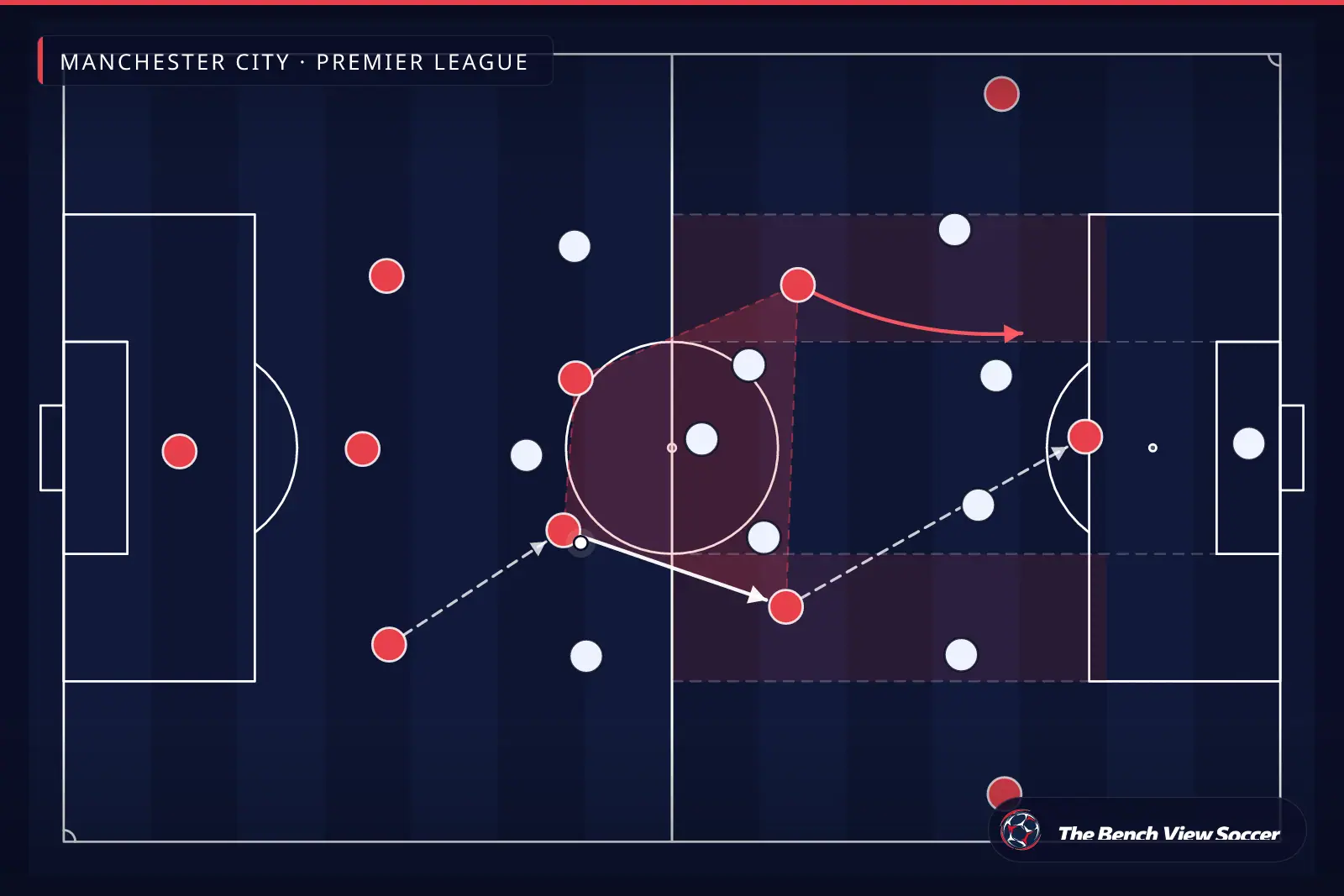
Manchester City: How Gakpo Unlocks Pep’s Left Half-Space Engine
August 25, 2026
Liverpool's Inverted Trent Unlocks Salah vs Newcastle's Press
August 23, 2026
Liverpool's Salah Succession Plan: How Yankuba Minteh Fits Slot
August 21, 2026
Hull City, Fulham and Ipswich: How the Box Midfield Changes Them
August 18, 2026