

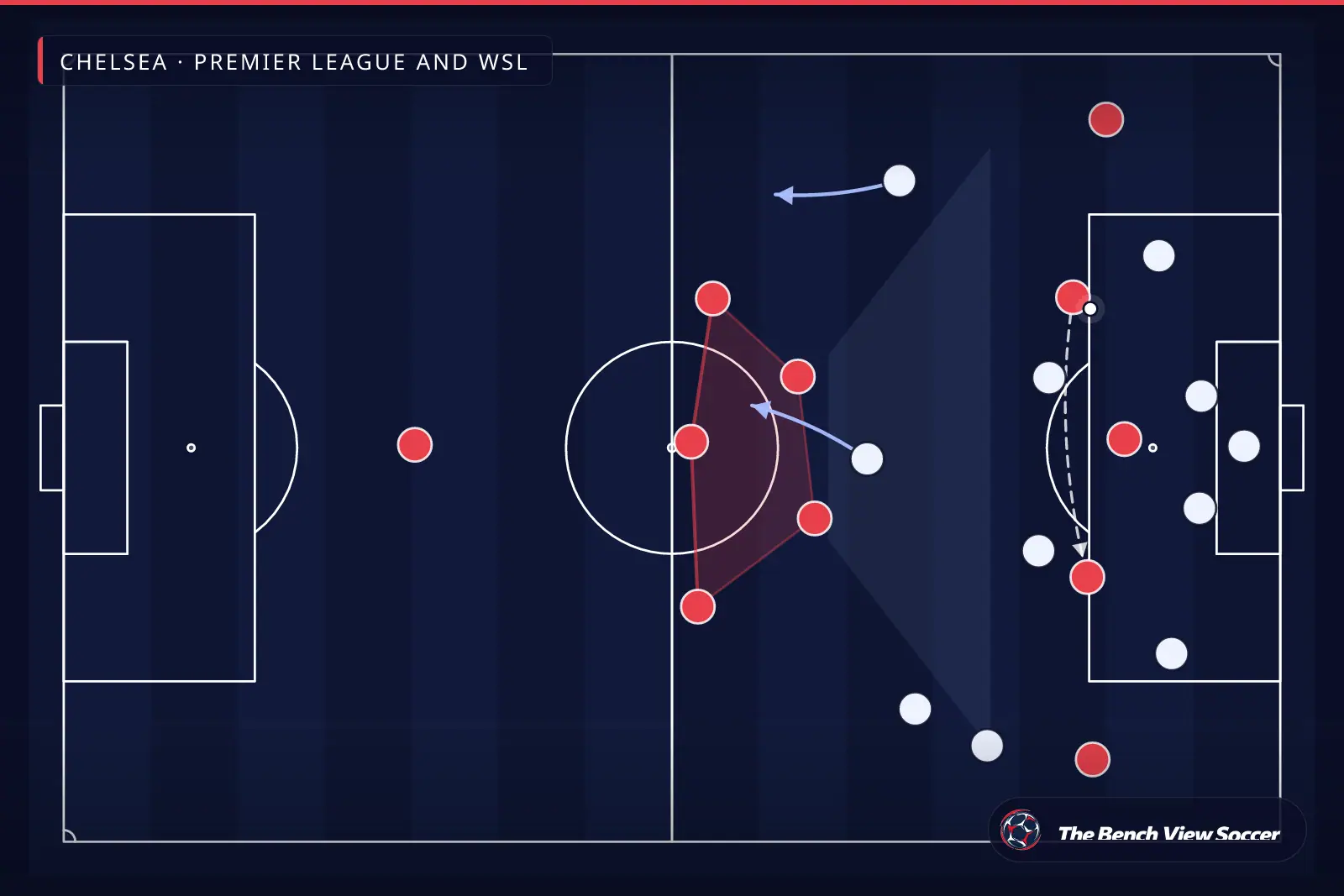
The trending moment—and the real, on-pitch question
Everyone is talking about Chelsea again. Global headlines ping between the women’s side co-dominating WSL revenues, the men’s side living through a leadership debate, and transfer sagas that won’t settle. But beneath the noise is a football problem that explains more of Chelsea’s past two seasons than any boardroom whisper or balance sheet ever could. Tactically speaking, the club’s rebuild—on both sides of the training ground—keeps dodging the same fix.
The decisive issue is rest-defense. Until Chelsea build a stable 3–2 or 2–3 structure behind the ball in possession, the expensive attackers will keep running into traffic, transitions will keep biting, and momentum will keep swinging for reasons that look like ‘mentality’ but are actually structural.
This is not a new diagnosis; it’s the one problem the women’s side learned to solve over a decade of iterating under elite leadership, and the one the men’s side have skirted while changing managers, modes, and markets. The good news? There is a proven blueprint in-house. The question is whether the club can hardwire it across both squads, from Cobham pitch-runs to matchday automations.
Why rest-defense is the missing spine of Chelsea’s rebuild
Start with the principle. Rest-defense describes the team’s shape and player spacing in possession designed to immediately control transition when the ball is lost. It isn’t a defensive block. It’s an offensive insurance policy. The best modern sides set attacks that keep at least three players staggered behind the ball, often in a 3–2 (fullback inverted to sit next to the pivot, center-backs fanned wide) or 2–3 (double pivot with a high fullback tucking in) structure. The aim is to deny the opponent an easy first pass, win the first duel, or at least slow the counter long enough to reset.
Chelsea’s men have vacillated between ideas. They have recruited wingers who prefer to attack the inside channels, fullbacks who can invert, and midfielders who receive on the half-turn. On paper, this screams positional play: create positional superiority by fixing width, pinning the back line, and layering third-man runs from the half-spaces. But too often the back-half of the shape thins out. A single pivot gets marooned. A fullback underlaps at the same time as an eight surges. The counterpress arrives a beat late. That is not bad luck; it’s bad spacing.
Tactically, the cascade looks like this:
- Over-commitment of five in the last line (both fullbacks high, both wingers high and narrow, one striker) without a corresponding inversion in midfield leaves only two stabilisers behind possession.
- When the ball turns over, the nearest presser (usually an eight) is on the wrong angle—goal-side of the ball rather than ball-side. The trigger is missed. The rival’s first pass splits the pressure toward the flank.
- The center-back who steps out has 20 metres of grass behind him, the second ball is contested rather than claimed, and Chelsea are retreating toward their own box with bodies turning rather than facing forward.
This is how sterile domination becomes terrifying fragility. The pattern repeats: long stretches of territorial pressure punctured by counters where two passes later you are defending the red zone.
What the women’s side figured out—and why it matters now
Across the last decade, Chelsea Women iterated toward a different default. Under elite coaching, they developed a flexible attacking platform tied to a stubborn rest-defense: a back three in possession assembled from two center-backs plus an inverting fullback, then a double pivot where the far-side eight drops next to the six whenever the near-side fullback joins the front five. The result is a stable 3–2 seen across top European sides: it turns every lost ball into a three-lane trap. The immediate counterpress engages on the touchline, the double pivot squeezes the inside lane, and the free center-back screens the vertical.
This internal standard is the real reason their dominance has had a floor even when open-play rhythm dips. Territorially, they can crowd the opponent’s exit routes. Psychologically, they feel no need to panic because the next attack is 10 seconds away. That is the separation money can’t buy unless the structure earns it.
Revenue dominance follows tactical control, not the other way around
Yes, the women’s side sits among the revenue leaders alongside Arsenal. But the order of operations is football-first: consistent rest-defense created repeatable attacking waves; repeatable attacking waves created winning; and winning created the scale effects that media rightly notice today. If the men’s side want the same stability, the copy-paste isn’t about personnel. It’s about principles.
The position-play blueprint Chelsea keep flirting with
Chelsea’s recruitment has skewed young and technical: press-resistant midfielders who can turn in tight spaces; fullbacks who can both overlap and invert; wingers who prefer the half-spaces to the chalk. That profile mix lends itself to positional play with choreographed rotations.
Here is the skeleton Chelsea should institutionalise across both squads:
1) A codified 3–2 behind the ball, always
- When the near-side fullback goes, the far-side fullback tucks. When both go, one eight pins, the other drops—never both beyond the ball line.
- The six is never isolated. If the opposition leaves two on top, the near eight drops level on loss. That is automatic, not a read.
- Center-backs fan wide, not high. The near CB can step into midfield if the far CB maintains vertical coverage. Do not have both in the half-spaces simultaneously during settled possession.
2) Build-up triggers that create interior superiority without sacrificing rest-defense
- First trigger: goalkeeper to far center-back to inverted fullback. This is not just to beat a press; it rebalances the tilt to form the 3–2 and pre-positions the six to receive on the half-turn.
- Second trigger: diagonal into the inside winger’s feet, layoff to the eight, release the underlap. This is the classic third-man chain that unhinges mid-blocks. The key is the far-eight’s starting spot—five metres deeper than the line of the ball to allow immediate counterpress if the chain breaks.
- Third trigger: if the opponent blocks the middle, wide overload becomes a feature, not a bailout. Commit the near-side winger, fullback, and eight to the overload but anchor with the six and far fullback to keep the 3–2 intact.
3) Counterpressing lanes pre-assigned, not improvised
- On any vertical pass into the final third, the passer does not admire the ball; he becomes the first presser on loss. The nearest eight screens the inside lane, the fullback squeezes touchline, and the six sits central to kill the direct out-ball. All three know their lane before the play starts.
4) Set-piece restarts as rest-defense rehearsals
Every corner is an opportunity to rehearse ‘live’ rest-defense. One of the two eights anchors outside the box; the far fullback sits 10 metres deeper than instinct; the nearest center-back takes the half-space rather than the channel. If you concede a transition from your own dead-ball, you’ve just told yourself the structure is not automatic enough.
Cause and effect: How Chelsea got here
Two dynamics converged. First, accelerated squad churn brought an age-profile tilt toward players still mastering tempo and game-state control. That is not a character flaw; it’s developmental. Younger teams are more likely to chase a second goal rather than lock the game with possession traps. The way to protect youth is not ‘more leaders’. It’s more structure.
Second, managerial turnover invariably resets automations. Each coach’s possession scheme tweaks the angles—fullback outside vs. inside, winger holding width vs. arriving—so the micro-timings that make counterpresses bite (pressing triggers like a bad touch, a back-to-goal reception, or a floated diagonal) slip by a fraction. News bulletins can’t show that. But if your eight arrives half a beat late to the cover shadow, the opponent’s first pass breaks the press and a 60-yard pitch opens up behind your shape.
When supporters describe ‘fragility’, they are describing the cumulative effect of half-mistimed micro-rotations across a season. Fix those, and the same squad looks composed.
Historical context: Chelsea’s two eras of control
Chelsea have oscillated between two types of control across the modern era.
- The 2004–2010 period emphasised block-and-break dominance: a compact mid-to-low block under elite coaching, with brutally efficient transitions. Rest-defense here meant rest-attack: stacking runners behind a wall of tactical cynicism. You could not get out against them; you could not live with them when they broke.
- The 2016–2017 title season offered another archetype: a back-three that implicitly solved rest-defense by leaving a spare in build-up and in transition. Wing-backs provided width; a double six protected restarts; the front two threatened depth. This was not Guardiola-style positional play, but it was a coherent rest-defense platform. The spare center-back killed transitions almost on his own.
Across the women’s pathway, the evolution has been more linear: from transitional punch to control-without-boredom. The constant? A non-negotiable back-half structure in possession that turned counters into pressing traps. That is the inheritance available right now if the club wants it.
The men’s attack: why it looks busy but feels brittle
Look at how Chelsea enter the box. The wingers prefer the right and left half-spaces; the striker pins the center-backs; one eight often arrives on the cutback zone. It’s logical—if the underlap lands on time. But too many entries are rushed because the rest-defense behind the move is unset, encouraging the front five to ‘force’ the chance early to avoid the turnover risk.
The knock-on effects:
- Crosses from suboptimal angles appear because the wide player senses the structure is thin behind him.
- Midfielders play safer sideways passes when the pivot is isolated; no one wants to lose it on the half-turn when the shape is a 2–2 behind the ball.
- The striker disconnects, making near-post runs against a back line that has not been sufficiently pinned by width.
All of it is solvable once the team trusts the 3–2. When the far fullback and the far eight know they are the ‘+2’, the near-side combinations become braver. That bravery is not emotion; it’s geometry.
The women’s blueprint: how control creates freedom
By contrast, the women’s side repeatedly shows how a stabilised back-half liberates the front five to vary the attack. The near winger can drive inside knowing the underlap is protected; the nine can drift to combine because the far winger is coached to hold width; the eights can rotate without both leaving the pivot alone. When the ball is lost, it meets an organised trap, not a prayer.
This is what high performance looks like when identity and recruitment rhyme. The profiles—two-way eights, press-hungry wingers, mobile fullbacks—are identical to the men’s setup. The difference is the default rest-defense they fall back on under stress.
Systemic factors: recruitment profiles and the cost of misalignment
Recruitment has not been random; it has been role-specific. The friction arises when role definitions change coach to coach. A fullback bought for underlaps becomes an overlap merchant under a different voice. An eight groomed for receiving in the right half-space is asked to be a second pivot. None of these are impossible; they just multiply the number of automations that need to be relearned mid-season. The result: the counterpress arrives a touch late; the rest-defense shape lags; the game swings.
The sustainable route is blunt: establish a club-wide game model and bake it into everything—academy rotations, set-piece lanes, loan pathways, first-team training. If the head coach tweaks, he tweaks within a chassis, not the chassis itself.
Pressing triggers that should be non-negotiable
- Back-to-goal receptions in the opponent’s first or second line? Front foot step-in from the nearest eight, six takes away the return, far eight scans for the chip.
- Sideline traps after switches? Near fullback squeezes, winger blocks inside, six slides narrow, far fullback tucks—no recovery sprints from 40 metres.
- Floated diagonals to their far winger? Far fullback meets early in the air, far center-back steps across, six drops into the back line to close the channel.
None of this is revolutionary. It just needs to be automatic.
What the current ‘Fernandez-style uncertainty’ means tactically
Transfer-window discussions around a central midfielder—any central midfielder—are always framed as market drama. The on-pitch reality is cooler: when the identity of the six or the playmaking eight is unsettled, the coach will naturally protect the middle with safer spacing. That usually means one fewer body joining the front five and one more sitting beside the pivot. The immediate effect is fewer third-man runs and a blunter edge in the half-spaces. The structural effect is clearer: the team hesitates between a 2–3 and a 3–2. That half-step of hesitation is exactly where transitions are born.
Again, structure is the antidote. If the role is defined—one drops when one goes; the six is always escorted on loss—the personnel can rotate without changing the behaviours. If the role is undefined, the personnel question becomes existential.
Looking ahead: what Chelsea must lock in before autumn bites
There are three priorities Chelsea should address before the season reaches the weather-change period when pitches slow and block teams get braver.
1) Make the 3–2 non-negotiable
- Training ground repetitions: 10-minute blocks with the brief “we’re trying to lose the ball” at the end of each attacking pattern, forcing the rest-defense unit to snap into lanes. The attack is judged by how quickly the counterpress wins the second ball, not by the shot quality.
- Role cards: the six, far fullback, and far eight receive laminated ‘if this, then that’ prompts. It sounds patronising; it isn’t. It saves half a beat in live play.
- Staff alignment: analysts tag every transition conceded for two weeks and cluster by spacing error rather than duel outcome. Solve spacing, not effort.
2) Codify width discipline
- Inside wingers only work if someone holds chalk. Either the fullback or the far winger must lock the opposing fullback. If both come inside, the back four compress without fear and the box becomes a mosh pit.
- Encourage underlaps not just overlaps. The striker’s blindside run needs the underlap to pin the near center-back; otherwise the cross arrives into a line ready to attack the ball.
3) Tie set pieces to rest-defense structure
- Corners and attacking throws are low-risk rehearsals for high-risk moments. Assign the far eight and the far fullback to rest-defense posts; send one fewer body into the six-yard box if the opponent loves fast breaks from dead-balls. The goal is a season-long reduction in ‘first pass escapes’ after our own restarts.
What this means for the season
If Chelsea stabilise rest-defense, the season’s floor rises overnight. Points come from not conceding the single, silly transition chance in otherwise dominant games. The ceiling rises too, because better spacing liberates the eights to attack the box without fear and turns sterile possession into layered chance creation.
- Against high presses: a confident 3–2 invites the opponent into traps, opening central lanes that suit Chelsea’s best receivers between lines.
- Against mid-blocks: width discipline plus third-man chains through the half-spaces produce the kind of cutbacks that analytics adore.
- Against low blocks: rehearsed recycling and patient rest-defense starve the counter and squeeze the game into the final third, where set-pieces and small advantages accumulate.
Why the women’s revenue headline is actually a tactical lesson
When the broader game notices that Chelsea Women and Arsenal Women out-earn the league combined, it reads as a commercial story. It is also, quite literally, a story of tactical compounding. A stable game model produces recognisable football. Recognisable football builds appointment viewing and shared vocabulary among fans. Appointment viewing sells. In our view, the men’s side will find the same compounding only by committing to the same football-first scaffolding. Market narratives follow matchday narratives, not the other way around.
Counterargument: Isn’t this really about experience and injuries?
One persuasive counterpoint is that Chelsea’s inconsistencies have less to do with rest-defense and more to do with an unusually young, rotating squad hit by injuries at inopportune times. Younger players misread tempo; chopped-up availability sabotages rhythm; change the names and any team would look streaky in the same circumstances.
There’s truth here. Availability is the first tactic, and game-state maturity usually comes with minutes. But this argument quietly strengthens the structural case. Precisely because youth and injuries are predictable in a long season, the club needs a hard-wired 3–2/2–3 rest-defense and clear pressing triggers so that whoever steps in plays within a choreographed lane. Structure is how you de-risk inexperience. It does not ignore it; it amortises it.
The micro-tactical details that will decide Chelsea’s margins
1) The six’s body shape at the receive
If the pivot receives facing their own goal, the next pass is backward and the team elongates. Coach the receive on the half-turn, hips open to both flanks, and you keep the 3–2 connected. If the opponent shadows the six, run pre-baked third-man sequences through the far eight rather than forcing a direct feed into pressure.
2) The far winger’s distance from the touchline
Five metres matters. Too wide and he leaves the half-space vacant for 20 metres, preventing fast combinations. Too narrow and he crowds the striker. The sweet spot is a body’s width off the chalk, ready to curve the run outside-to-in. This positioning pins the far fullback and keeps the back line honest.
3) Center-backs’ stepping rules
Only the near CB steps into midfield on a read; the far CB holds the vertical cover line. Swap too eagerly and you get both stepping—red carpet to the channel. If in doubt, sit. The 3–2 provides protection without hero-ball.
4) Underlap timing
Underlaps must begin before the ball enters the winger’s feet, not after. Arriving, not starting, at the receipt avoids offside and catches the fullback in two minds. Late underlaps invite shoulder-to-shoulder duels; early underlaps create blindside entries.
5) Counterpress angles
Arrive slightly outside-to-in so your first touch funnels the opponent toward the touchline trap, where the second presser waits. Arrive straight and you open the inside lane. It’s not about sprint speed; it’s about closing geometry.
What success would look like by winter
- Fewer ‘two-pass counters’ conceded after Chelsea’s own failed attacks. You can measure this by counting how many opposition breakaways start with a clean square ball across midfield. If that number trends down, rest-defense is biting.
- More cutback chances. They are a byproduct of third-man runs in the half-spaces and width discipline. If the box entries come from the byline rather than hopeful diagonals, the structure behind the attack is probably solid.
- A visual calmness. The best teams look boring in transition defense because the game dies in midfield. When Chelsea’s attacking moves end with the ball out for a throw on the near side rather than a sprint back to their own box, you’ll know the plan is working.
From Cobham to the Bridge: making it cultural
The last step is cultural, not tactical. Make rest-defense the language of the club. Analysts present sequences by rest-defense health, not just chance quality. Youth coaches praise the under-18s for a perfect 3–2 snapshot after a turnover, not only for a nutmeg. First-team meetings end with a single freeze-frame: ball lost, five Chelsea shirts in three lanes, distances tight. That frame, every week, becomes the badge behind the badge.
The subtle link to the headlines you’ve been reading
Public conversation will keep circling governance and revenue because they are legible in a way that a six’s hips or a fullback’s starting lane are not. But the sporting project will live or die on these quieter interactions. In our view, the club already owns the blueprint in its women’s program: build the attack on a stable 3–2, drill the counterpress lanes until they’re muscle memory, and let the rest of the conversation grow around the football.
The verdict
Chelsea’s rebuild is not short of talent, ambition, or ideas. It is short of a non-negotiable back-half structure in possession. Solve that and the men’s side finally get the platform their recruitment deserves. Keep skipping it and every transfer window, every injury spell, every managerial nuance will look like a new story while retelling the same one.
In-house, the women’s side have already shown the model: control transitions first, and the rest—goals, points, revenues, narratives—organically follow. Do that, and Stamford Bridge will stop feeling like a cliff-edge of emotions and start feeling like what the best grounds always are: a slow, inevitable squeeze.
Our view, for the quotables: fix rest-defense, and Chelsea fix everything else faster than any headline can keep up with.
The Bench View app
Don’t just read football — train it
Everything you read here, turned into training you can follow step by step.
Physical training at home
AI daily sessions adapted to your level and position. No equipment needed.
Tactical training courses
Step-by-step courses on positioning, pressing, build-up and decision making.
- 7 days free
- No commitment
- Cancel anytime
Free account: 2 physical sessions + the first tactical course. PRO: 7-day free trial — cancel before day 8 and you pay nothing.

More Analysis
Tottenham Hotspur: How World Cup 2026 Is Warping Their Press
August 27, 2026
Chelsea's 3-2-5 Rest-Defense Is the Real Champions League Edge
August 27, 2026
Aston Villa's Box Midfield Is the Premier League's Real Edge
August 26, 2026
Chelsea's Box Midfield Is Fueling Chaos at the Cottage — Why
August 24, 2026