

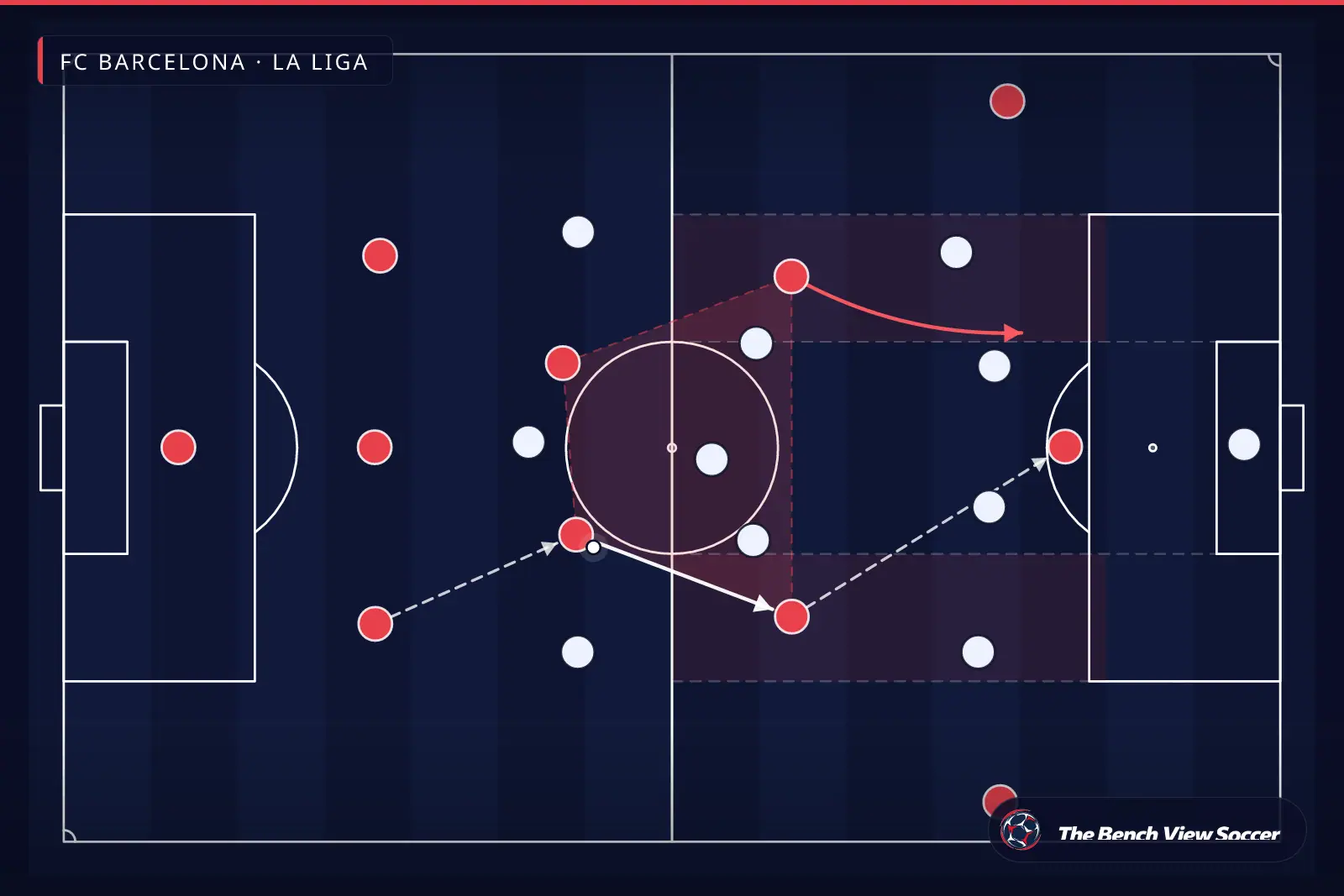
The breaking moment and the thesis: Barcelona’s summer tells on-pitch truths
The football world is chasing the headlines: bids rejected, sales confirmed, agents circling. But the real story inside FC Barcelona’s noisy August is quieter and far more important. With a rejected move for Rodri and Ferran Torres departing, Barça have effectively declared their competitive identity for the new season: this is a team trying to solve the midfield anchor, not the headline forward. And tactically speaking, that’s exactly where their ceiling lives.
Strip away the transfer ticker and a single idea emerges: Barcelona need an elite single pivot more than they need anything else. The Rodri pursuit isn’t just stardust—it’s an X-ray of how their game model wants to function with Lamine Yamal as the system’s accelerator. The sale of Ferran Torres, meanwhile, forces sharper attacking geometry on the right—and exposes just how much the pivot must now do to connect, protect and direct.
In our view, Barcelona’s season will be defined less by who scores the goals and more by who decides where the next pass goes—under pressure, between lines, and before the press arrives.
So let’s ignore the noise and follow the tactics. Why the pivot? Why now? And what does it mean for Yamal, the 9 debate, and Barcelona’s rest-defense through the highest-stakes minutes of a season that will test their identity as much as their technique?
Why the 6 matters more than the 9—for this Barcelona
Barcelona’s top-end talent is no secret. Yamal can deform a block from the right simply by receiving in the half-spaces. Ilkay Gündoğan still maps the pitch one pass ahead. The centre-backs can pass you into traps or out of them. But there’s a recurring structural question that keeps reappearing in big games: who sits at the hub of the wheel, assembles the first pass under pressure, and guarantees that the ball arrives to the right receiver at the right angle?
An elite pivot like Rodri solves three Barcelona problems at once:
1) Build-up angles. Without a dominant 6, Barcelona’s first line is often forced into predictable 2v2s in the back line. An elite pivot creates a 3v2 (or 3v3 with advantage) in the first phase by finding blindside positions and offering the bounce pass that beats the front press. This isn’t just possession for possession’s sake; it’s the precondition for everything Yamal does on the far side.
2) Press resistance under maximum stress. Against elite opponents, the first trap kicks in as soon as the 6 turns. Players like Rodri use their first touch to protect the ball, their body orientation to invite pressure, and their second touch to break it—often with a disguised pass to the free interior. That sequence is the platform for third‑man runs either from the weak-side 8 or the right winger stepping inside.
3) Rest-defense and shot prevention. Barcelona’s attacking structure—especially with Yamal pinning the touchline—stretches the team. If the pivot reads the loss and closes the inside lane half a second earlier, transitions don’t become shots. The best 6s are elite defenders not because they tackle more, but because they move first.
The build-up mechanics: how the pivot changes every passing lane
Barcelona prefer to construct with a 3-2 or 2-3 platform depending on opponent pressure. In either case, the pivot’s positions are the difference between speed and stasis. A Busquets-style 6 used to sit high enough to offer the vertical split pass and low enough to drop between centre-backs if the press threatened to pin the ball wide. That dynamism—call it press-time elasticity—has been missing in the most demanding away matches.
With a controlling 6, the timing improves across the board: the right-back can underlap to form the interior of a three, the left 8 can start higher to threaten zone 14, and Yamal can receive to his stronger foot in the right half-space without having to come all the way to the touchline to help. The pivot’s invisible labour gives everyone else a metre; that metre is the margin.
Press resistance and body orientation: the half-second that wins matches
Elite pivots solve pressure with posture. They receive on the half-turn, hip open to both centre-backs, able to threaten forward with a single touch. The press backs off, or it commits—either way, the pivot is in control. When a team lacks this, the centre-backs start playing square passes that invite a second press, and the 8s drop too deep, flattening the midfield and emptying the box.
Rodri is a master of this deception. His pausing step before releasing the ball turns a 2v2 into a 3v2. He chooses the moment, which means his team chooses the space. That is the essence of control.
Rest-defense geometry: from 2-3 to 3-2 and the art of the early stop
Barcelona’s spacing with Yamal wide right and the left 8 higher than the right 8 means the pivot’s starting position is invariably offset towards the ball-side half-space. This is deliberate: it invites the switch and sets the trap. But it only works if the 6 can sprint five metres left or right on the turnover and close the primary transition lane before the first vertical pass. If that lane is shut, the centre-backs can win the second ball instead of defending a footrace. The pivot is the speed bump that prevents the highway.
Ferran Torres out: what changes on the right and why the 6 must now be a connector
Ferran Torres leaving does more than shift minutes—it changes reference points. Ferran’s greatest value in Barcelona’s right-sided structure was timing off the ball: diagonal darts behind the full-back when the winger came short, plus selfless screens to free the right 8 on underlaps. Without him, the right triangle becomes more literal: right-back, right 8, and Yamal as the vertices. The smallest mistiming here costs flow.
That makes the pivot doubly important as the “rhythm setter.” When Yamal drops to lure the press and receive to feet in the channel, the pivot must provide the wall pass or the quick vertical that finds the third man (often the right 8) on the run. Miss that window and Barcelona’s possession becomes square and slow, giving opponents time to reset.
A right-sided blueprint built around Yamal’s gravity
- First phase: Pivot creates a 3v2 by standing on the blindside of the nearest presser, receiving to release the ball-side full-back inside.
- Second phase: Yamal holds width, then darts into the right half-space when the pivot shapes to play left, taking a marker with him. The pivot then plays the disguised pass into the free interior.
- Final third: The 9 makes a near-post run to compress the line; the left 8 arrives late for the cut-back. The pivot’s job isn’t the assist—it’s to make the assist line possible by controlling the preceding tempo and the cover in case of loss.
We’ve all seen Yamal’s capacity to flip a match with one carry. Against France (21st minute, right half-space) he bent one into the top corner at a major tournament—proof that he doesn’t need overlap after overlap to create. What he does need is timely inside service and the assurance that, if the first dribble fails, the coverage is set behind him. That is pivot work.
The Rodri archetype: the most valuable piece Barcelona don’t own
Let’s be clear: this is not just about one player. It’s about a role. The Rodri archetype blends three competencies that rarely live in the same body: deep distribution, press insulation, and transition extinguishing. Plenty of 6s can do one or two. Very few can do all three at elite speed under elite pressure.
Rodri’s own highlight reel contains the lesson. Think of the 68th minute in the 2023 Champions League final: it wasn’t just a shot from the edge—it was the third-man timing that let him arrive onto a cut-back after first dictating City’s circulation. The play illustrated how a pivot can both start and finish a move because he remains in structural control throughout.
Barcelona are chasing that feeling, not only the name. The transfer market will tell you there are “alternatives,” but tactically, the profile is scarce—tall enough to win aerials, mobile enough laterally to close half-spaces, calm enough to bait and beat the first press, and brave enough to play the pass that advances the structure, not just completes it.
Scouting the role, not the résumé
What should Barcelona actually be measuring?
- Pressured receptions in the first phase and forward progression within two touches. Count actions that break lines, not just passes completed.
- Scans per possession chain. Great pivots check both shoulders before receiving and again after the first touch; it’s an information advantage that becomes a time advantage.
- Aerial first contacts on long clearances. This is how you throttle chaos after a broken attack.
- Coverage speed to the half-spaces within 1.5 seconds of a turnover. If this number’s high, your back line’s sprint distance plummets.
- Disguised diagonals to the weak-side 8 or winger. The ability to change the point of attack without lifting tempo too high is gold for a team with a starboy wide right.
Training-ground alternatives Barcelona can stage right now
- Inverted full-back as auxiliary 6. Ask the left-back to step in and share the first-phase burden, letting the nominal pivot play higher to hound second balls. It reduces exposure but demands elite timing from the back four.
- Double pivot in a 4-2-3-1 against athletic presses. You concede some positional superiority between the lines, but the back of your structure becomes harder to isolate.
- Centre-back step-in patterns. Against mid-blocks, a progressive centre-back can cross the first line to engage a midfielder; the pivot drops to screen. Risky, but it changes the pressing picture.
History’s echo: Busquets, the template and the warning
Barcelona have been here before, in feeling if not in fact. The Busquets years (multiple versions of them) weren’t just about the player—they were about the collective certainty his role provided. With Busquets, the first press was almost boring. The second was late. The third never came. Barcelona’s best attacking performances across eras flowed from that boredom.
When the pivot role has wobbled, so has the structure. The 8s drop, the wingers start coming short to help too early, and the box empties at the very moment the cross arrives. The whole side begins to defend running toward its own goal. These are not narrative problems; they are geometric ones, fixable not with slogans but with starting positions and one player who is very, very hard to dispossess.
Three moments that explain everything
- 68th minute, Champions League final 2023: Rodri’s arrival goal against Inter caps a move he first controlled from deep—pivot as initiator and finisher.
- 21st minute, Spain vs France, 2024: Lamine Yamal’s right-half-space masterpiece. The precursors were repeatable: quick inside service, box occupation, and cover behind. The pivot’s enabling runs are the unseen part of the highlight.
- 75th minute, Napoli vs Barcelona, 2024: Victor Osimhen’s equaliser in Naples came from classic zone-14 timing off a central layoff. The teaching point for Barcelona is defensive: without the pivot tracking the underlap and screening the bounce pass lane, elite 9s turn half-chances into goals.
Cause and effect: why Barcelona’s market behaviour points to the pitch
Tactically speaking, the attempted move for Rodri and the willingness to part with Ferran speak to the same logic. Barcelona believe their path back to late-spring relevance runs through central certainty, not wide redundancy. You don’t chase the best 6 in the world unless you think your whole game model depends on solving that role; you don’t sell a rotational wide-forward unless you’re betting that your right side can be streamlined around Yamal’s gravity and the pivot’s distribution.
In pure on-pitch terms, this is coherent. The risks sit elsewhere—integrating a new 6 into a dressing room of strong personalities, recalibrating the right triangle without Ferran’s off-ball generosity, and managing match rhythm when opponents over-stack the pivot zone with man-orientation. But the upside dwarfs the turbulence. Get the 6 right, and everyone’s job becomes 15% easier. That’s not a statistic; it’s what the film shows, week after week, when the best teams play their best football.
The Osimhen temptation—and the false 6 vs 9 dichotomy
Victor Osimhen’s name hovers over every big team’s recruitment board for obvious reasons: penalty-box menace, counter-threat, aerial violence. Barcelona could absolutely use those things. But in this squad, at this moment, prioritising a 9 over a 6 risks building a beautiful roof on a shaky frame.
Why? Because without the pivot to deliver consistently clean early service to the wings and the 10 zone, a classic 9 sees fewer high-quality touches. Meanwhile, transitions against become more frequent and more dangerous, forcing the 9 to run toward his own goal more often than towards the opponent’s. The 6 raises the floor; the 9 raises the ceiling. Right now, Barcelona need the floor.
If the 9 arrives first: the tactical compromise
- More direct play from the back to exploit 9’s channel runs. This can work, but it drags Yamal out of his optimal reception zones.
- Heavier reliance on hitting early crosses or second balls. That can produce goals but erodes positional play, making Barcelona feast-or-famine in big away fixtures.
- Rest-defense weakens. Long sequences of pinball widen spaces between the lines, the very spaces elite rivals load with their 10s and inside forwards.
If the pivot arrives first: the compounding effect
- Yamal receives 8–10 times per half in the right half-space with body orientation to face forward, not sideways. That’s one big chance baked in, before finishing variance.
- The left 8 can time the late arrival into the box rather than acting as a second 6. You keep one extra runner high on every attack.
- Opponents’ first passes on transition get intercepted or smothered earlier. Your full-backs start to win duels higher and wider, compressing the field into 70 metres instead of 90.
Right now, on the grass: what Barcelona can implement before any signature
This isn’t a fantasy-shopping exercise. Barcelona can hard-wire certain behaviours immediately to approximate the pivot effect even before securing the perfect profile.
- Pre-activate the right 8 as the emergency wall for Yamal. Every time the winger drops short, the right 8 must sprint into the vacated lane as the third man. The pivot can then hold for cover rather than forcing difficult forward passes under pressure.
- Scripted left-side overloads to create the right-side 1v1. Start with two successive short combinations on the left to draw the block, then switch diagonally—by design, not discovery—into Yamal’s feet with the back post loaded. The pivot’s timing on the switch is the key variable.
- Out-of-possession, anchor the pivot on the half-turn, slightly ball- far. He must be close enough to shut the inside lane but detached enough to spring to either half-space on loss. That bracketed starting position downgrades opponents’ first pass options.
The counterargument: modern football is a double-pivot game—so adapt
The fair rebuttal is that the single 6 is a romantic holdover. Many top sides now default to a double pivot in the toughest matches, especially away, to secure the centre and allow full-backs to push. Why chase a unicorn when you can build a stable?
There’s merit here. A double pivot can share the first-phase burden, invite wider traps that are easier to break, and provide cover against fast-break teams. If Barcelona’s current squad chemistry is better suited to 4-2-3-1—with Gündoğan higher as a 10 and a pair behind him—that can be a pragmatic short-term solution.
In our view, though, this doesn’t invalidate the thesis—it clarifies it. Even in a 4-2-3-1, one of the two must behave like a real 6 under pressure: receiving on the half-turn, fixing the first line, and playing the progressive pass at the right tempo. The role still exists; you’ve just given it a partner.
Season outlook: the small decisions that add up to May
Projecting forward, Barcelona’s outcomes will be tied to three sequences that tend to decide close matches:
- First build-out under an aggressive 4-4-2 press. If the pivot can beat it in the first 15 minutes, the opponent drops off a line. If not, Barcelona get stuck deep and begin to chase hopeful diagonals. The difference is the first pivot touch.
- Final-third clarity on the right. Without Ferran’s off-ball glue, Yamal’s patterns must be scripted around his two most dangerous receptions: on the right touchline to drive inside and in the right half-space to combine. The pivot’s metronome controls which one happens more often.
- Transition prevention. The single biggest swing in expected goals in elite football is what happens in the three seconds after you lose it. A great 6 lowers your exposure there and, over a season, that’s worth points you never think to count.
None of this means Barcelona should ignore the 9 market or the evolving needs of a long season. But if you’re prioritising levers, the biggest single one available to them is located 20–30 metres in front of their own goal, not 20–30 metres from the opponent’s.
What the Yamal era needs from the man behind him
Lamine Yamal is a system. Provide the correct service windows and he unpicks almost every structure you can show him: low blocks, mid-blocks, aggressive high presses. The invisible precondition is the pivot who can predict when and where the press arrives, deliver into the right foot at the right height, and be already in motion to kill the counter if the dribble doesn’t come off.
That’s the connection between the Rodri pursuit and Ferran’s exit. The former is a declaration of tactical need; the latter is a bet that the right-side chemistry can be rebuilt around Yamal + a connector pivot rather than Yamal + an off-ball runner. It’s coherent footballing logic—high risk, high clarity.
The shareable verdict
Tactically speaking, Barcelona don’t need to win the transfer window; they need to win the first pass. If they land a true Rodri-type, everything else composes itself: Yamal’s danger spikes, the 8s stop firefighting, the centre-backs defend forward, and the team’s shot map tilts from chaos to control. Fail to solve the 6, and we’ll be back in April asking why a squad with this much talent looks occasionally rushed and often stretched in the games that matter.
In our view, this is the cleanest way to say it: Barcelona’s summer headlines are about names; the season will be about a role. Solve the pivot, and the team will feel inevitable again.
The Bench View app
Don’t just read football — train it
Everything you read here, turned into training you can follow step by step.
Physical training at home
AI daily sessions adapted to your level and position. No equipment needed.
Tactical training courses
Step-by-step courses on positioning, pressing, build-up and decision making.
- 7 days free
- No commitment
- Cancel anytime
Free account: 2 physical sessions + the first tactical course. PRO: 7-day free trial — cancel before day 8 and you pay nothing.
More Analysis
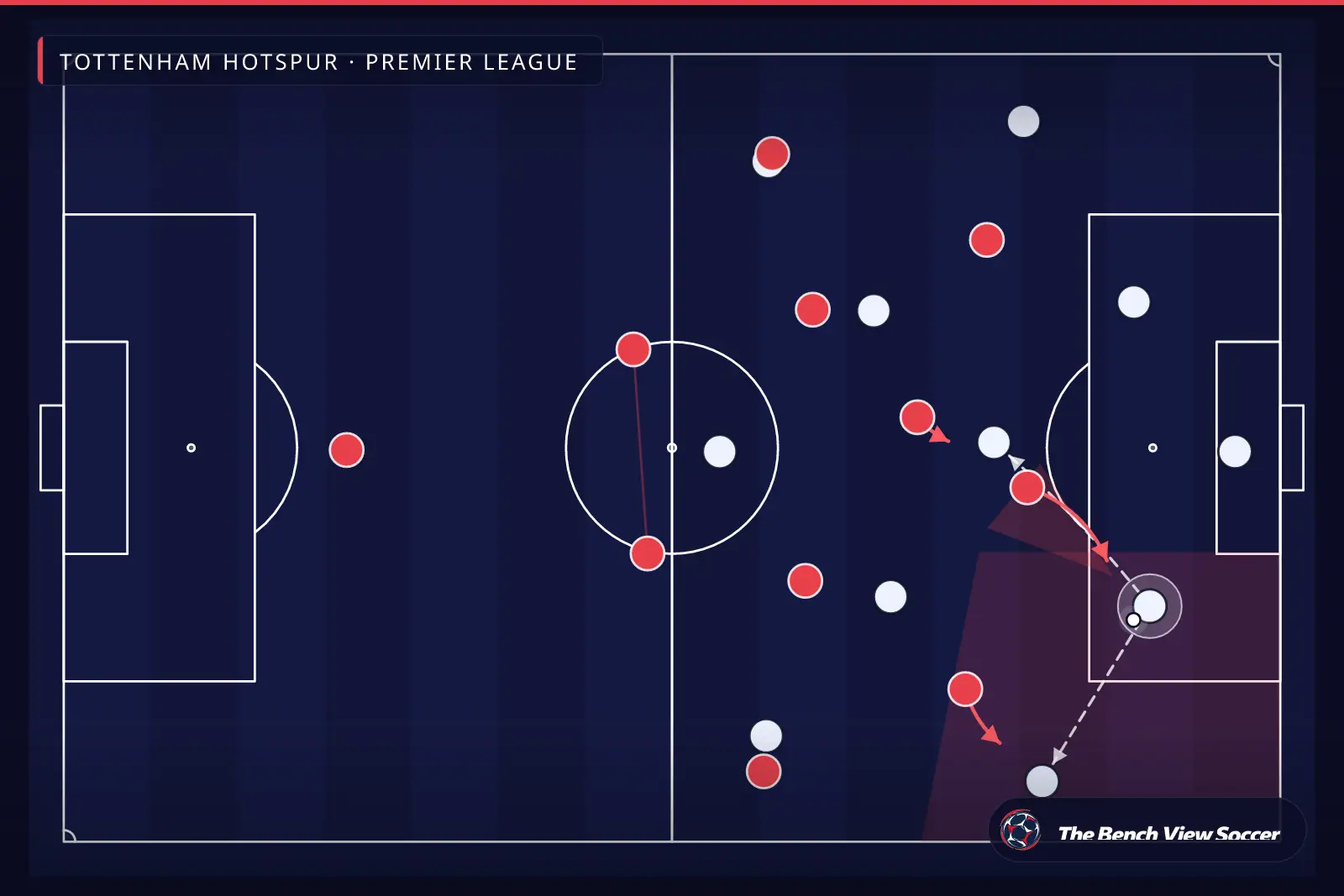
Tottenham Hotspur: How World Cup 2026 Is Warping Their Press
August 27, 2026
Chelsea's 3-2-5 Rest-Defense Is the Real Champions League Edge
August 27, 2026
Aston Villa's Box Midfield Is the Premier League's Real Edge
August 26, 2026
Chelsea's Box Midfield Is Fueling Chaos at the Cottage — Why
August 24, 2026