

The moment that matters — and the thesis no one else is making
Chelsea are on every ticker right now because of draws and deadlines: a Carabao trip against a stubborn Luton Town and a high-stakes Women’s Champions League qualifying tie with Real Sociedad. Strip the headlines, though, and this week reveals something more foundational: tactically speaking, Chelsea’s season will be decided by whether they can operationalise a box midfield that simultaneously breaks low blocks and resists elite presses — and whether their rest-defense is brave enough to keep its shape without the ball.
That’s the hinge. Get the box and the rest-defense right, and the Carabao Cup becomes a springboard rather than a banana skin; the UWCL qualifier a statement of continental maturity rather than a nervy coin toss. Misfire, and the squad’s youth, the dual-calendar strain, and familiar final-third anxiety will reappear under the harshest floodlights.
Chelsea’s early-season ceiling is not about names on a teamsheet — it’s about sequencing: box midfield superiority in possession, immediate five-second counterpress, and a back-three rest-defense that dares the opponent to play into pressure.
What the box midfield actually does for Chelsea
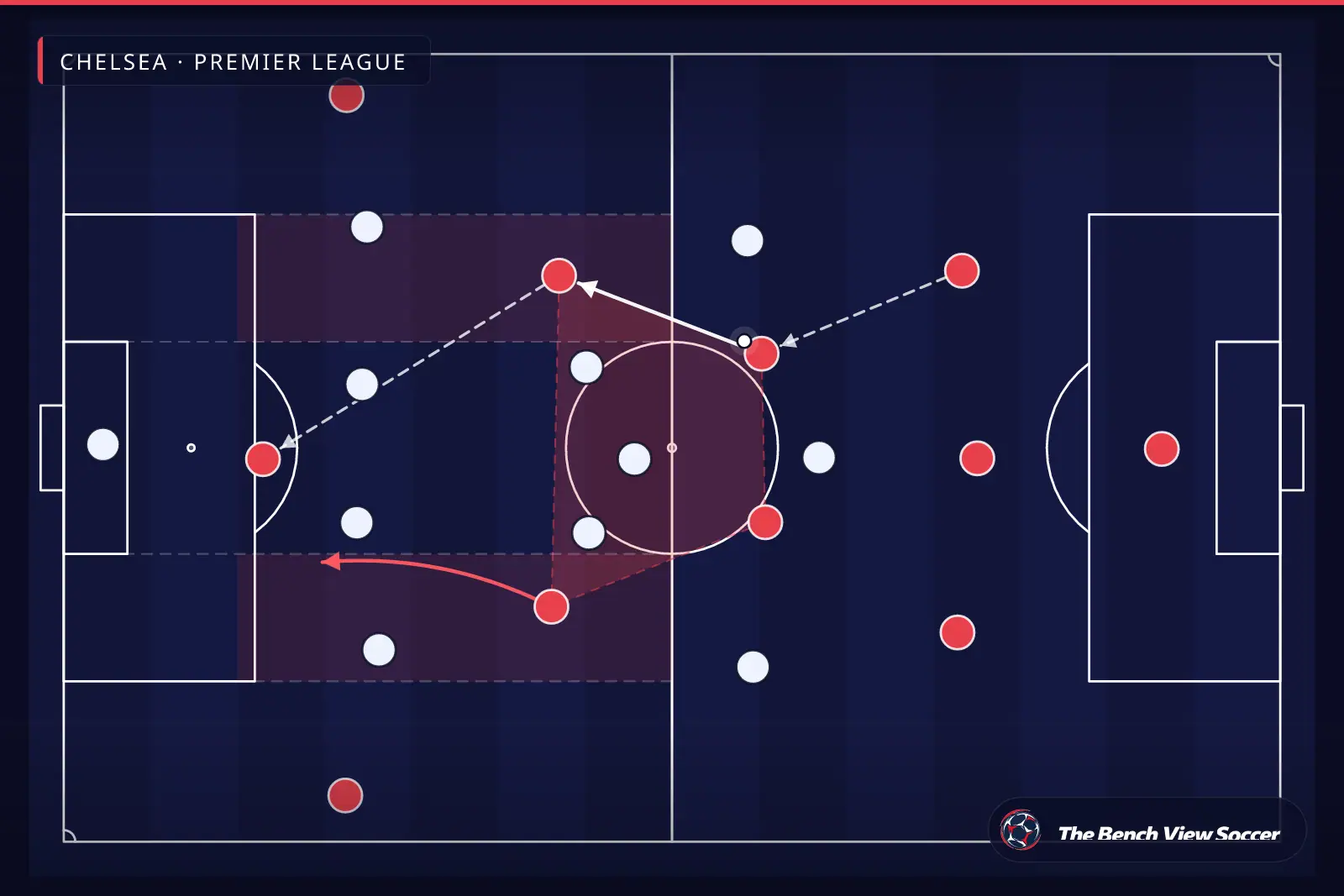
Forget labels; think functions. Chelsea’s preferred possession structure in recent months has increasingly resembled a 3-2-5/2-3-5 box midfield. One full-back tucks inside to form a double pivot alongside the deepest midfielder, while the opposite full-back advances to lock the far touchline. Ahead, two interior eights occupy the half-spaces, in line with the centre-forward and the far winger hugging width. The output is predictable to diagram but difficult to defend: Chelsea generate positional superiority between the lines while guarding against counters with a stable back-three and a two-man screen.
Specifically:
- The inverted full-back creates a second line-breaker in front of the centre-backs. This doubles the angles into the eights and allows for third-man runs when the striker pins centre-backs.
- The near-side eight sits between full-back and centre-back, in the right/left half-space, receiving at body orientation to play forward or spin outside to combine with the winger.
- The far-side winger holds width, ready for a diagonal switch to attack the weak side after Chelsea attract pressure.
- Behind the ball, the centre-backs fan into a rest-defense triangle — two wide stoppers and a central sweeper — prepared to squeeze long clearances and recycle pressure.
This isn’t theoretical. At Stamford Bridge against low blocks, we’ve repeatedly seen Chelsea create advantages by passing into feet in the half-space, then bouncing around the corner for a cutback. Remember the 3–0 over Luton in August 2023? Not the personnel — the principles. In the 17th minute and again around the 68th, Chelsea’s right-sided overload isolated the Luton full-back, created a dribble-to-cutback lane from the right half-space, and produced clean finishes. The pattern matters more than who executed it: fix the opponent, accelerate through the half-space, and arrive in the box before they can reset.
How this translates specifically vs Luton
The problem Luton set
Luton’s best Premier League days were built on uncompromising compactness, aerial aggression, and emotional intensity around second balls. Out of possession, they form a narrow 5-4-1 or 5-3-2, daring you to sling hopeful crosses into a forest of centre-backs. In possession, they tilt long and vertical, drawing set-pieces, seeking flick-ons, and winning territory. Their matches turn into duels and restarts.
The Chelsea answer: half-space speed and restarts on Chelsea’s terms
If Chelsea go classical 4-3-3 and pump crosses, Luton will live. If Chelsea build a box, Luton will run. Here’s the sequencing we expect tactically:
- 3-2 circulation to pull out Luton’s first line. Keep the inverted full-back close to the six in the first phase. Switch through the back-three until a Luton winger jumps — that’s the pressing trigger. As soon as he bites, punch the vertical lane into the near eight’s inside shoulder.
- Underlap, not overlap. Against a back-five, sending the full-back high outside just creates a crossing contest. Instead, use the inside lane. Have the winger hold width to pin the wing-back, then time the eight’s underlapping run inside the channel. The striker’s near-post dart pins the first centre-back; the far eight arrives at the penalty spot for cutbacks.
- Edge-of-box patience. The first cutback might get blocked. Don’t force a second-phase cross. Reset to the pivot and re-attack the same pocket; the third repetition often breaks compact low blocks because the far-side midfielder starts to ball-watch, opening the reversal.
- Rest-defense two steps higher than comfort. Luton’s out-ball is the channel clip. Chelsea’s wide centre-backs must hold aggressive starting positions and win the first contact; the double pivot must collapse for the second ball. If that line retreats five yards, you’ll be defending throw-ins in your own third all night.
There’s a set-piece sub-plot. Luton’s restart threat is well known. The antidote is to reduce conceding throw-ins and corners by winning the first aerial duel into safe zones. But when they do get dead balls, Chelsea must use a 1+4 zonal shell with a spare tasked to attack the first contact, rather than mixing responsibilities late. The aim is clarity, not gimmicks.
Minute-by-minute pressure points
Low-block games turn on patience. If the breakthrough doesn’t come before half-time, the temptation is to add more attackers and lose structure. The historical warning is clear. In previous Chelsea low-block stalemates, the decisive chance often arrived only after the 60th minute, when repeated half-space entries thinned the block’s legs. The right nudge is to introduce a fresh runner at about 58–62 minutes to sustain the speed of the underlap. Not more strikers — more runs.
How it translates vs Real Sociedad
The problem Real Sociedad set
Spanish sides like Real Sociedad tend to press on a cue rather than constantly: back passes and square balls in the first line are the invitation. They prefer tight, synchronized jumps aimed at forcing you wide into a trap before stepping onto the pivot. With the ball, they’re patient, positional, and comfortable under pressure, drawing you into over-committing centrally to then release a diagonal to a winger arriving at the back post.
The Chelsea answer: show the press a picture it doesn’t like
The box midfield can invert the entire risk picture:
- Asymmetry in the first line. Build 2-3-5 rather than 3-2-5 against a high press. Keep two centre-backs split with the six dropping between lines as an offramp only if a press trap is sprung. The inverted full-back creates the 3 in front of them, offering third-man wall passes to beat the first wave without using the six as bait.
- Double width without crossing obsession. Against presses that overprotect the half-spaces, the fast switch must land to a winger in stride, not to feet. It’s not about early crosses; it’s about isolating the full-back 1v1 on the far side once the press has shifted.
- Press-resistance equals carry + bounce. Don’t overplay cute diagonals inside your own third. A centre-back’s straight-line carry into the half-space, then a 1-2 into the pivot’s blindside, breaks more Spanish-press lines than choreographed triangles do.
- Counterpress in five. The moment a forward action finishes, the nearest five must squeeze. The point isn’t to win the ball clean; it’s to force Real Sociedad to clear in a way that your back-three can read. Structure over chaos.
In the UWCL qualifier, transitions will decide more than patience. Chelsea must accept phases without the ball and trust their rest-defense. If the back-three can hold the midfield line and keep the distances tight — 8–12 metres between units — then Real Sociedad’s cute wall passes will lead them into contact, not out of it.
The common denominator: rest-defense or bust
Both Luton and Real Sociedad punish loose rest-defense, albeit differently. Luton do it vertically and aerially. Real Sociedad do it diagonally and on the deck. The solution is the same: a back-three platform, two screeners on cables, and a striker who counterpresses the first pass rather than spectates. The whole idea of the box midfield only works if five players are available to counterpress instantly at possession loss.
Think of rest-defense as Chelsea’s elastic: it must be tight enough to snap back into contact but long enough to allow the front five to stretch. If the elastic sags, the second ball becomes the opponent’s platform. If it’s too tight, Chelsea’s own attacks suffocate. That elastic management — 10 metres here, two steps there — is coaching gold dust.
Historic echoes and how Chelsea have solved this before
This isn’t the first time Chelsea have faced a split tactical demand in the same week — low-block pragmatists at home and press-savvy technicians in Europe. The club’s modern history is a casebook in toggling structures.
- Jose Mourinho’s 2006–07 Chelsea regularly inverted a full-back into midfield when chasing control, with Michael Essien stepping into hybrid roles. The net effect: extra cover in transition while maintaining central superiority.
- Antonio Conte’s 2016–17 side weaponised the back-three as a rest-defense and a build-up shape. Wing-backs pinned opponents; the front three attacked channels. Low blocks were broken not by volume crosses but by rapid wall passes in the half-spaces before cutbacks.
- Tuchel’s 2020–21 Champions League winners lived off rest-defense. Three centre-backs, a double pivot on strings, and repetition of five-second presses built a platform that outlasted superior on-ball sides.
- Chelsea Women under Emma Hayes struck a smothering balance of overloads and rest-defense that made domestic cups springboards rather than distractions. Her sides rarely lost shape chasing a late winner; they reloaded and ran the same pattern with fresh legs.
The point isn’t nostalgia. It’s that Chelsea’s best weeks have always been about structural humility: secure the middle, sort distances, rinse-and-repeat the same high-probability entry routes until the opponent wilts. The box midfield is today’s vehicle for the same logic.
Why this is happening now: calendar, squad profile, and tactical convergence
Three forces converge this August:
- Calendar compression. Early domestic cup rounds and European qualifiers squeeze the window for experimentation. There’s no time to drift toward a shape; the shape must already exist.
- Squad architecture. Chelsea’s multi-year investment in dynamic, press-resistant midfielders and vertical wingers makes a box midfield the most coherent way to get best players in best roles while building a clean rest-defense.
- League evolution. The Premier League’s mid-table clubs defend deeper and transition quicker than ever; European sides press smarter. That bifurcation punishes generic 4-3-3s. You need a shape that both tempts low blocks out and bounces out of presses. The box midfield is that compromise.
In short: the fixtures forced clarity; the squad invites a box; the opponents demand rest-defense. You can call it fate. It’s just football logic.
Detailing the patterns: how Chelsea should sequence attacks
Against Luton’s five-back
Start on the right to finish on the left. Here’s a clean five-step pattern:
- Drag and pin. Circulate right-to-centre until the Luton left wing-back steps. The winger stays chalk-on-boots to hold him wide; the striker stands on the near centre-back’s toes to freeze the chain.
- Laser into the pocket. Fire a firm pass into the right eight, body open, inside shoulder. First touch forward, second touch bounce into the inverted full-back as the second centre-back steps to press.
- Third-man to slice. The pivot plays one-touch to the far eight sprinting beyond the striker’s blindside — the third-man run — through the exposed channel.
- Cutback zones. Target the penalty spot or the reverse to the onrushing winger at the back post. Rehearse the lanes so the receiver doesn’t hesitate. Low cuts, not floated chips.
- Trap the clearance. Both pivots and the weak-side centre-back pinch 10 yards. Win the second ball. Repeat from Step 1.
Against Real Sociedad’s press
Confuse the presser with asymmetry and bravery:
- Show a press, play past it. Invite the first line with a baited back pass, then beat it with a centre-back carry through the near half-space. The six drifts laterally to block the nearest midfielder’s lane to press.
- Freeze the full-back. The far winger’s early, high positioning forces Sociedad’s full-back to defend a two-choice problem: step to the switch or protect the channel. Hit the switch only when his hips turn; if not, keep circulating inside.
- Rebound the turnover. When possession is lost, five-step counterpress: nearest two jump to the ball, next two block lanes, the striker marks the pivot. Force a rushed diagonal. Sweep with the back-three.
- Don’t fear the foul. Intelligent, early, tactical fouls at the halfway line cut off Sociedad’s best transition moments. The discipline is to foul early, not late.
Set-pieces: Chelsea’s underused force multiplier
Set-pieces can turn tight cups and qualifiers. Two ideas to bank:
- Near-post traffic vs Luton’s zonal mix. Start two blockers on the keeper line, run a near-post sprint across the face to nick the glance. Luton's stoppers hate turning to their own goal. It’s about creating doubt, not necessarily a direct header.
- Short-corner deception vs high-pressing sides. Real Sociedad will push out quickly. Run a 2v1 on the corner-taker’s side to pull out the near-post defender, then slide a runner along the byline for a cutback. It turns a static phase into the same high-probability cutback Chelsea seek in open play.
Rotation without breaking the machine
Dual-front weeks demand rotation, but not at the cost of understanding. The trick is role rotation rather than wholesale system changes:
- Inverted full-back archetype. Swap the player, keep the job identical: invert into the pivot, play on the half-turn, protect counters.
- Eights as runners, not just passers. Whichever profiles fill the half-spaces, they must arrive in the box, not simply circulate possession. The team’s goal probability rises when both eights touch the ball in the penalty area.
- Back-three chemistry. Keep at least two of the same three centre-backs across games to maintain rest-defense timing. The third slot can flex for freshness.
- Pressing spine. Maintain the six and the striker pairing that understands the first press cue: who jumps, who screens. Swap wingers more liberally.
Metrics that will tell you if Chelsea got it right
You don’t need a coach’s feed to feel if the plan is working. Track these in real time:
- Field tilt above 60%. Chelsea should play the majority of the match in the opponent’s half without devolving into hopeful crosses.
- Half-space entries. Not just possession — entries that end with a touch in the box from a midfielder. Two per half is a healthy baseline against a low block.
- Counterpress regains within five seconds. Especially versus Real Sociedad. If Chelsea aren’t recovering within five seconds of losing it in the final third, the rest-defense spacing is off.
- Set-piece expected goals. Aim for a combined 0.3–0.5 xG from corners and free-kicks across ninety minutes in cup ties. It reflects repeatable routines.
- Cross profile. Low cutbacks and ground crosses should vastly outnumber floated deliveries. If not, Luton win the aerial war by default.
One serious counterargument
There’s a valid skepticism: the box midfield can overcomplicate simple games. Inverting a full-back requires elite spacing and timing; one bad touch leaves you defending channels against two sprinters. Young squads sometimes hide within the box structure, circulating sterile possession and mistaking control for danger. Against a side like Luton, the direct route — early runs in behind, fast combinations, mistakes forced rather than crafted — can be more honest and more effective.
The counter to the counter is balance. The box isn’t a religion; it’s a tool. If the first 20 minutes show that Luton’s back-five won’t budge, flip the picture: go to a classic 4-3-3 with natural full-backs overlapping, pin their wing-backs with double width, and run behind the wide centre-backs. Or, if Real Sociedad’s press smothers the first phase, abandon the bait and go longer into the striker’s chest to play for second balls higher up. The method must serve the moment.
What it means for the season
Early cup rounds and qualifiers shape narratives more than league matchdays do. A clean, controlled dispatching of Luton with sustained half-space attacks signals maturity; squeaking through on chaos suggests lessons unlearned. In Europe, a composed handling of Real Sociedad’s press advertises that Chelsea can carry a proactive identity across borders — the missing note in too many previous campaigns.
If Chelsea master the box midfield + rest-defense combo now, two things happen:
- Belief credit is banked. Players trust the distances and runs; the bench accepts clearly defined roles; late-game subs maintain structure rather than scramble it.
- Variance shifts in Chelsea’s favour. You don’t need vintage finishing to win when you produce repeatable cutbacks, trap clearances, and kill counters at source. That’s how you string wins across all competitions without heroic performances every time.
And if they don’t? The squad’s youth accelerates the feedback loop. Impatience leads to extra touches. Extra touches lead to turnovers. Turnovers lead to transitional defending in space. That’s how cup exits and European regrets are born.
Practical coaching cues Chelsea should carry into both games
With the ball
- Winger: hold width until the eight receives, then sprint the blindside. Don’t come short unless the full-back has already been fixed.
- Eight: open body, first step forward, don’t bounce backwards under pressure — use the third man or spin out to the underlap lane.
- Inverted full-back: one-touch speed in Zone 14, then reset to the pivot if the lane isn’t there. No vanity diagonals under pressure.
- Striker: pin near centre-back on the cutback actions; be the decoy to create the penalty-spot lane for the arriving eight.
Without the ball
- Six: live on the shoulder of their playmaker; block the first vertical after turnovers.
- Centre-backs: start two yards higher than comfort; step into aerial duels, don’t wait.
- Wingers: counterpress centre-back’s first touch, then angle to shut the pivot; don’t chase full-backs blindly.
The intangible that becomes tangible: rhythm
Everything above reads like chalkboard detail, but it compresses to one feeling: rhythm. When Chelsea’s box midfield flows, opponents feel outnumbered centrally and overloaded wide, even with equal players on the pitch. The rhythm comes from timing and conviction — the eight moving before the ball arrives, the full-back inverting on the trigger rather than on instruction, the back-three stepping to claim a clearance as if it were a loose pass. That rhythm is what separates a technical plan from a winning one.
The final word
Two matches. Two very different problems. One solution space. Luton will try to pull Chelsea into a slog; Real Sociedad will try to pull them into a sprint. The box midfield, done right, refuses both invitations: it turns the slog into rehearsed sequences and the sprint into controlled accelerations. It prizes control without timidity, ambition without naivety.
In our view, Chelsea don’t need a new idea this week — they need to do the right idea faster: box midfield superiority, ruthless cutbacks, five-second counterpress, and a rest-defense that lives five yards higher than fear would allow.
Get that right, and the season’s first tests become a blueprint. Get it wrong, and we’ll be back here talking about half-chances, woodwork, and “on another day.” This is not another day. This is the day Chelsea make the structure their advantage.
The Bench View app
Don’t just read football — train it
Everything you read here, turned into training you can follow step by step.
Physical training at home
AI daily sessions adapted to your level and position. No equipment needed.
Tactical training courses
Step-by-step courses on positioning, pressing, build-up and decision making.
- 7 days free
- No commitment
- Cancel anytime
Free account: 2 physical sessions + the first tactical course. PRO: 7-day free trial — cancel before day 8 and you pay nothing.
More Analysis
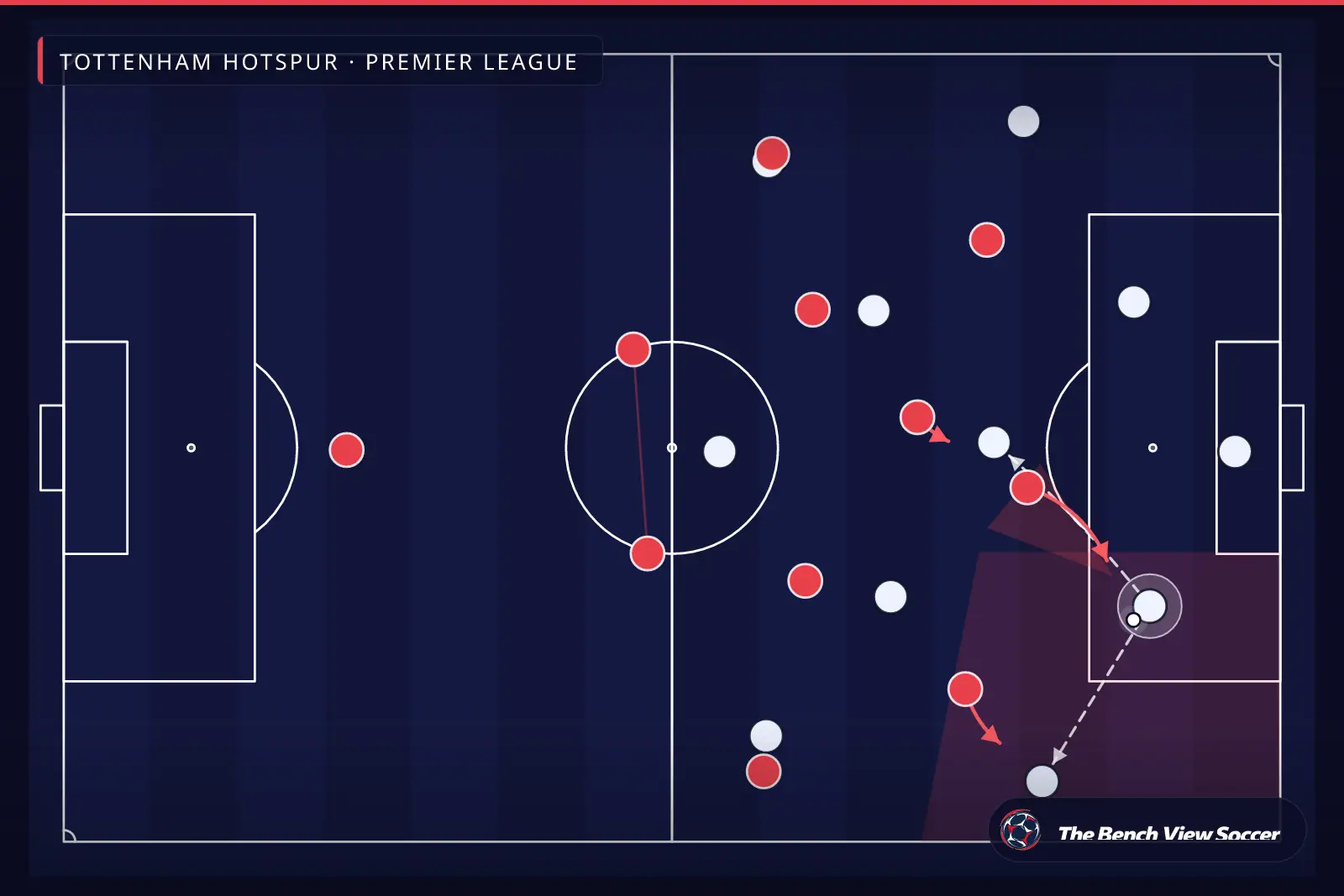
Tottenham Hotspur: How World Cup 2026 Is Warping Their Press
August 27, 2026
Chelsea's 3-2-5 Rest-Defense Is the Real Champions League Edge
August 27, 2026
Aston Villa's Box Midfield Is the Premier League's Real Edge
August 26, 2026
Chelsea's Box Midfield Is Fueling Chaos at the Cottage — Why
August 24, 2026