

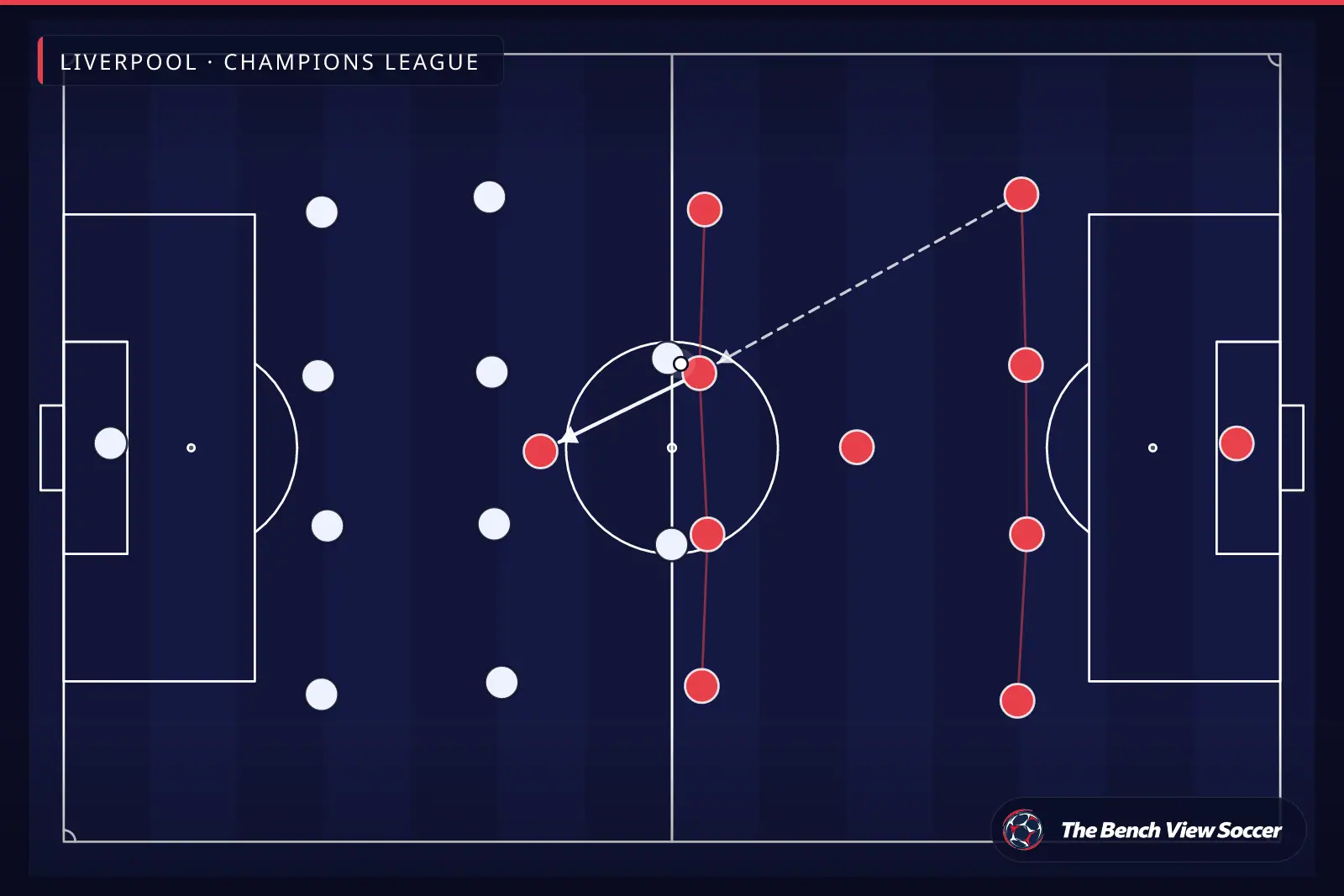
Liverpool head to Istanbul knowing they hold a perfect record in Europe so far this season, while Fenerbahçe are led by former Liverpool forward Dirk Kuyt. Andoni Iraola has urged the Reds to sharpen their attacking play before the Wednesday meeting, and Fenerbahçe full‑back Archie Brown’s unorthodox journey to the club — plus a noted moment of madness against Galatasaray — have framed expectations for what Liverpool will face in Turkey.
What happened
Liverpool travel to Fenerbahçe on Wednesday holding a 100% record in the Champions League this season and aiming for a fourth straight win in the competition. Andoni Iraola, speaking ahead of the match, said Liverpool need to improve their attacking play, though he dismissed concerns about differences between his team’s performances in domestic and European competitions. Fenerbahçe are managed by or at least led by Dirk Kuyt in a prominent role, and their squad includes Archie Brown, whose route to Istanbul has been described as unorthodox. Brown has also been involved in a high‑profile moment of madness in a match against Galatasaray, a detail cited in coverage of the upcoming fixture.
The tactical reading
The pre‑match comments and background colour point to a game in which attacking clarity will be decisive. Iraola’s call for Liverpool to be sharper in the final third suggests he expects the visitors to create chances but perhaps lack ruthlessness or cohesion when breaking down organised opposition. When a coach highlights “sharpening” in attack, it typically points to the need for better combinations in tight spaces, crisper decision‑making in the last pass, and more coordinated movements to unsettle a compact defensive block.
Fenerbahçe’s connection to Dirk Kuyt and the spotlight on Archie Brown hint at dual emphases for the hosts: experience and individual edge. A former forward in a leading role often imprints an attacking mentality and directness on a team, while the mention of Brown’s unorthodox path and his emotional episode against Galatasaray suggests the hosts may blend unconventional personnel profiles with high‑intensity, occasionally volatile moments. That combination typically produces phases where the home side will press for momentum and test opponents with bursts of aggression or risk‑taking.
For Liverpool, then, the game plan that Iraola anticipates being necessary — greater attacking sharpness — likely involves improving transitions from midfield to the front line and exploiting moments when Fenerbahçe overcommit going forward. If the Turkish side show the sort of high‑energy or unpredictable traits implied by the coverage, Liverpool will gain from structured patterns designed to punish space left in transition and from rehearsed overloads to bypass personal duels that can produce emotional disturbance.
There are trade‑offs on both sides. Emphasising sharper finishing and quicker attacking combinations can leave a team susceptible to counterpressing if possession is lost higher up the pitch; pushing for momentum can also provoke individual mistakes in hot atmospheres — the sort of “moment of madness” associated with Brown’s mention. Conversely, Fenerbahçe’s adoption of directness or intensity to unsettle Liverpool could sacrifice positional stability, opening corridors that a professional, organized visiting side might exploit—provided the visitors convert those chances with the sort of clinical edge Iraola says is required.
Key tactical points
- Attacking cohesion: Liverpool being asked to “sharpen up” points to the need for improved final‑third combinations and decision quality when breaking down a compact defence.
- Exploit transitions: If Fenerbahçe display high energy or unpredictability, quick transition play and rehearsed overloads can expose spaces left by aggressive moments.
- Manage emotional volatility: Individual episodes of indiscipline or high emotion (as referenced in Brown’s past match) can create moments for opponents to exploit; coaches should prepare players to capitalise calmly.
- Balance risk and control: Increasing attacking intensity has defensive trade‑offs—teams must plan for how to recover shape if possession is lost high up the pitch.
- Experience shaping identity: A leader with a forward’s pedigree often encourages direct attacking intent; opponents should be prepared for purposeful, goal‑oriented transitions rather than purely possession‑based play.
What to watch next
Will Liverpool’s finishing and combination play show the “sharpening” Iraola demanded? Watch for how often the visitors create high‑quality chances from rehearsed patterns versus from individual moments of inspiration. The balance between structured build and quick, decisive final passes will indicate whether Liverpool have addressed the attacking issues highlighted.
For Fenerbahçe, monitor how their character and personnel — including Archie Brown’s role and any influence from Dirk Kuyt’s leadership — affect the tempo and temperament of the match. Do they seek to unsettle with bursts of directness and intensity, or will they prioritise organisation to frustrate Liverpool’s rhythm? The answer will determine whether the game is a test of attacking precision or of controlled game management.
Train it
A focussed drill to sharpen attacking combinations and decision‑making under pressure: a 6v6 transition rondo that emphasises quick penetration and immediate recovery of shape when possession is lost. The exercise is designed to improve final‑third link play, decisive passing, and transition management.
- Encourage two‑touch maximum in the attacking team to promote quicker combinations and forward thinking.
- Reward penetrative passes that break defensive lines with direct finishing sequences, practicing the decision to shoot or combine in the final third.
- After any loss of possession, require the attacking side to execute a rapid counterpress routine—two coordinated triggers—to practise recovery shape and reduce vulnerability from higher turnovers.
Sources
The Bench View app
Don’t just read football — train it
Everything you read here, turned into training you can follow step by step.
Physical training at home
AI daily sessions adapted to your level and position. No equipment needed.
Tactical training courses
Step-by-step courses on positioning, pressing, build-up and decision making.
- 7 days free
- No commitment
- Cancel anytime
Free account: 2 physical sessions + the first tactical course. PRO: 7-day free trial — cancel before day 8 and you pay nothing.
More Analysis
Carrick’s survival and the tactical pivot behind United’s 3-2 Champions League comeback over Roma
November 4, 2026
Carrick backs Martínez and eyes Roma test — what the situation reveals tactically
November 2, 2026
Carrick survives as United head into Roma tie — tactical lessons from a club in crisis
November 1, 2026
Brighton’s defensive discipline and Verbruggen’s brilliance hand them first league win at City
November 1, 2026