

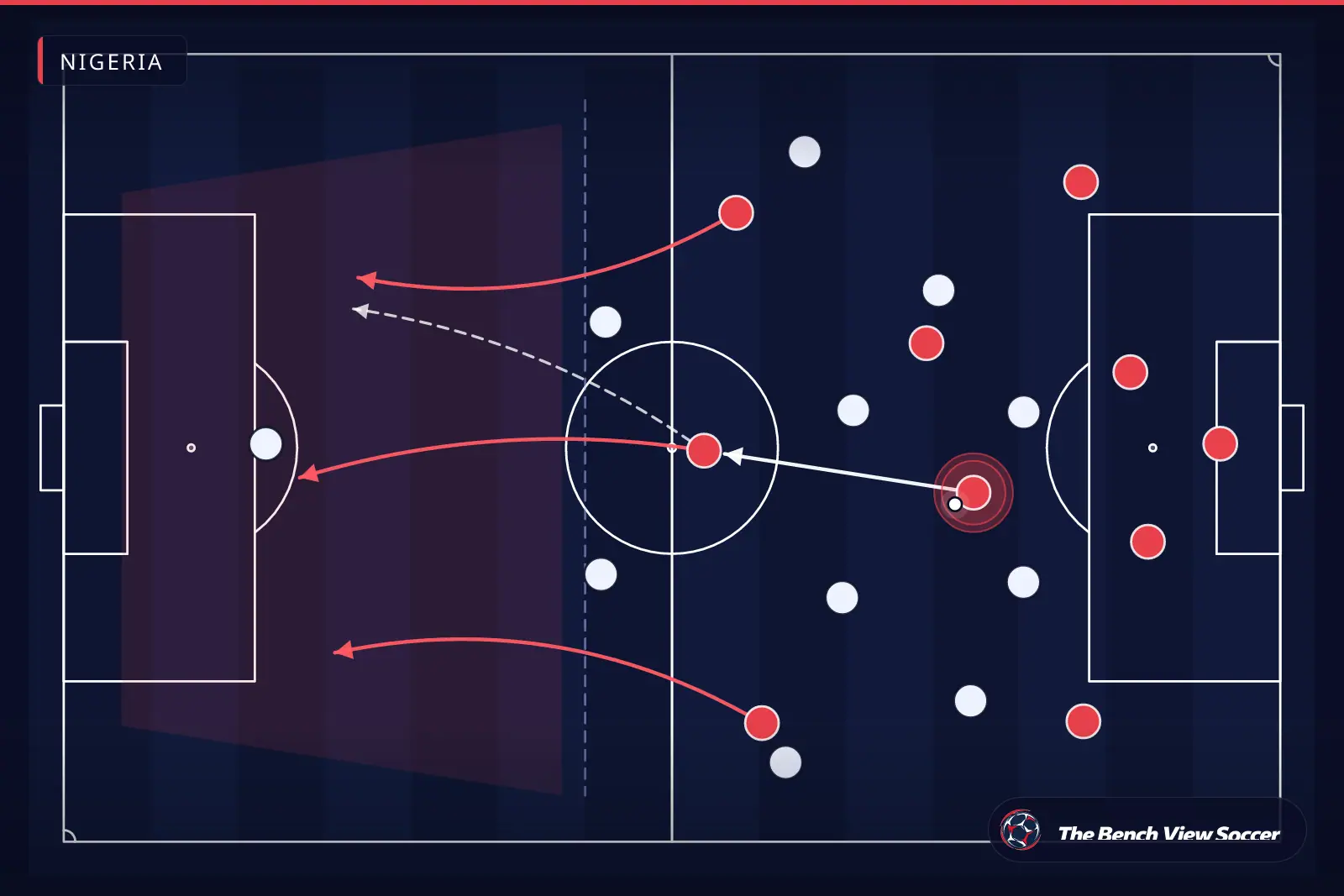
Trending moment, decisive thesis
Two headlines are colliding over Nigeria today. On one flank, the market churns: Victor Osimhen’s future is again the pivot in a super-club chess match. On the other, a jolt to national pride: Nigeria’s women will reportedly miss the next World Cup after rivals navigated their play-offs. At first glance, these feel like separate stories — a transfer saga and a qualification shock. Tactically speaking, they’re the same story. Both trace back to one enduring truth about Nigerian football: its vertical-run DNA.
Our view: Nigeria are elite when the game stretches. Their forwards win footraces, their eights crash lanes, and their pressing triggers turn chaos into chances. But when opponents deny space, freeze the half-spaces, and enforce sterile control, Nigerian sides — men and women — too often hit a creative ceiling. Osimhen’s next move is about who can unlock those runs; the Super Falcons’ stumble is about what happens when you can’t find them.
Key idea: Nigeria’s identity is built on verticality — the art of timing runs, triggering presses, and attacking depth. The future depends on adding a second language: constructive possession that creates the very spaces Nigeria devour.
What Nigeria’s vertical-run DNA looks like on the pitch
Strip the shirt crests and you’ll still spot the pattern within 15 minutes: early ball wins, fast up-backs-and-throughs, and third-man runs ripping through the last line. It’s a style tuned to the modern game, where transitional moments decide ties and depth runs overwhelm compactness.
Super Eagles, AFCON 2024: the blueprint in micro
Consider the 36th minute against Cameroon in the AFCON Round of 16. Nigeria sat in a narrow 4-4-2 when out of possession, then sprung a pressing trigger as the right centre-back took a square touch. Osimhen snapped from the blindside, bodying into the pass lane; Alex Iwobi jumped the next lane; the turnover fell to the inside-left channel. Two touches later, Ademola Lookman finished. That wasn’t improvisation — it was the template: compress, pounce, then attack the first open depth with a runner cutting in from the half-space.
Even when José Peseiro flexed between a 4-2-3-1 and a back-five rest-defense (morphing into a 5-4-1 without the ball), the principle didn’t change. Osimhen angled his press to force play to the touchline; wingers inverted to threaten between full-back and centre-back; the double pivot (Onyeka/Iwobi or Onyeka/Remi) set the platform. With space, Nigeria were irresistible.
Nigeria Women, World Cup 2023: the clearest lens
Flip to the Super Falcons’ knockout against England in 2023. In the 17th minute, the right-to-left switch found Ashleigh Plumptre stepping into the left half-space. Her strike rattled the crossbar. Minutes later, Payne and Ajibade sparked repeated underlapping runs behind Lucy Bronze’s shoulder. The chance creation came from the same fuel: quick ball wins, vertical releases, and runners timing the offside line. Nigeria went toe-to-toe with world champions by forcing a track meet.
The Osimhen effect: verticality as a striker superpower
Osimhen is more than a goalscorer; he’s a system. He is the archetype of Nigeria’s vertical-run ethos, tuned for elite football’s current tempo. Three qualities separate him tactically:
- Separation step: He wins the first two meters. Against medium lines, he often ghosts the near shoulder with a shaved diagonal, creating the angle for third-line passes from the right half-space.
- Double-movement mastery: He fakes into feet, reverses into depth. Centre-backs bite because he’s improved the front-foot layoff; then he’s gone. Watch 64th minute, right channel, Napoli-Roma (2022–23): a dead ball into feet, a cushioned set, and immediate spin across the near-post seam. The pattern repeats internationally.
- Press-first mentality: He triggers chaos. The Lookman goal vs Cameroon? That entire sequence begins because Osimhen detonates the build-out from the blindside and keeps running into the recovering line. His pressing is not token; it is an attacking action.
In club football, Osimhen’s verticality bent Napoli’s spacing around him. Kvaratskhelia dragged the left full-back wide, Anguissa underlapped the left half-space, and Di Lorenzo’s timing allowed Napoli to create positional superiority on the weak side. Osimhen’s job was simple to describe and hard to defend: live on the offside line, cut across the blind shoulder, and own the penalty spot when the cut-back came.
Arsenal and the Osimhen question: would it work, and how?
Rumours of an Arsenal-led move matter tactically because Mikel Arteta has built one of Europe’s most refined 3-2-5 possession structures. The Gunners oscillate between a 4-3-3 in listing and a 2-3-5/3-2-5 in possession: Zinchenko (or Timber) inverts, the right-back chooses either overlap or rest-defense balance, and Ødegaard/Saka own the right half-space.
Layering Osimhen into Arteta-ball
- Right-side triangles: Ødegaard wants receivers who can set and spin. Osimhen’s back-to-goal improvement allows a third-man run sequence: Ødegaard to Saka to Osimhen into feet; bounce back to Ødegaard; slip behind to Osimhen again. If the line sits, Saka carries inside and plays the clip to the back post — a zone Osimhen attacks ferociously.
- Left-side isolation: Martinelli thrives when the nine runs the near-post seam to empty the far channel. Osimhen’s diagonal to the right centre-back’s blindside clears Martinelli’s take-on lane. The reward isn’t always a shot; it’s the positional rotation that breaks the shell.
- Rest-defense and pressing: Arsenal’s best press is their worst enemy if unsupported. Osimhen fits Arteta’s first-line press: he shapes the passing lane to the full-back, jumps on the back-pass, and forces lofted clearances into a waiting box midfield. The payoff is second-phase chaos where he’s lethal on first contact.
The caveat Arteta must solve
Arsenal’s control game sometimes devolves into sterile horseshoes against deep 5-3-2s. The nine must knit through the middle with one-touch security and draw a centre-back out. Osimhen has improved his wall-play, but he’s not Harry Kane. If he arrives, Arteta will need to choreograph In possession rotations that pull a pivot into the front line (think Rice stepping high) to give Osimhen a third man at the wall. That’s how you make a depth striker dangerous against no depth.
Why Nigeria’s vertical identity wins — and why it sometimes stalls
Verticality isn’t a gimmick; it’s the most stable way to generate high-value chances in the modern game. You either catch teams in the build-out, or you run into the space they surrender when they attack. Nigeria are world-class at both. But trends cut both ways, especially internationally where camps are short and chemistry is rationed.
When it works
- High-line opponents: South Africa under Desiree Ellis grew more ball-dominant; when their full-backs occupy high-and-wide lanes, they tempt the turnover that ignites Ajibade/Payne. For the men, sides that try to play through Nigeria often misjudge Osimhen’s press and the speed of Lookman/Simon in the channels.
- Trigger clarity: Nigeria’s best spells come when the pressing triggers are non-negotiable: poor receiving body shape by the centre-back, a square pass from six to full-back, or a heavy touch into the corridor. The R16 Cameroon goal is textbook: back-to-goal touch plus square angle equals go.
When it stalls
- Low blocks and lane denial: Teams that sit in a 5-4-1 mid/low with a five-yard brace between lines can defang Nigeria’s runs. Deny the half-space receive, double the channel, and you force the Eagles or Falcons to cross early or play into feet under pressure. We saw this tension in the AFCON final against Ivory Coast: Nigeria’s exits were strangled, forcing longer clearances without the third-man support to turn them into attacks.
- Possession detail: There’s a difference between having the ball and using it to create depth. Nigeria sometimes move the ball without moving the block. Too many U-shapes, not enough rotations. Without a No. 10 who can pin a pivot and slip the inside lane, verticality becomes a hope rather than a plan.
The Super Falcons’ stumble in context: a tactical arms race
The reported World Cup miss doesn’t come from a vacuum. African women’s football has sprinted forward tactically. South Africa have hardened their possession scheme — double width from full-back and winger, a dropping nine to tilt the six, and pre-rehearsed underlaps to break narrow lines. Ghana’s rest-defense has tightened: a 3-2 shell behind the ball that strangles counters at source.
Nigeria’s women still defend space as well as anyone. But when the run-in compresses — play-offs, second legs, stakes high — opponents increasingly refuse to give them a track meet. Two problems then surface:
- Phase two entries: Post-win, Nigeria can be too vertical too soon, bypassing the wall pass that pulls a pivot out. The result is a hopeful thrust into a 2v4.
- Set-pieces: When open play dries up, dead balls decide tournaments. Nigeria have long delivered outsized moments from corners and direct free-kicks, but current routines are basic relative to peers. South Africa and Ghana have started stacking blockers and ghost screens, winning shots even when the game refuses them rhythm.
Cause and effect: how the micro becomes macro
Tactically speaking, today’s twin headlines are downstream of the same river. Osimhen’s value skyrockets because the elite game sits on a knife edge of pressing and counter-pressing; the striker who turns a 45-meter channel into an 0.25 xG chance changes seasons. Conversely, Nigeria’s women falter because the rest of the continent has learned to deny that channel and force a Plan B — one Nigeria haven’t habitually executed on command.
Zoom further out: Nigeria’s player pipeline still produces speed, power, and off-ball aggression. The domestic league’s rhythm, diaspora development patterns, and early coaching incentives all teach attacking depth. That’s a feature, not a bug. The missing piece is systematic possession coaching at international-camp intensity: scripted rotations, positional play training, and a set-piece lab to steal 5–7 goals per qualifying cycle.
What Osimhen’s next club means for Nigeria
Osimhen’s club destination won’t just shape his goal tally; it will shape how he returns to the national team. Two scenarios illustrate the spread:
Scenario A: Control club (e.g., Arsenal)
- Upside: Reps against low blocks, improved wall-play, and choreographed box collapses. Osimhen would log hundreds of touches with a centre-back in his back, sharpening the micro-skills that Nigeria need when transitions disappear in tournament knockout games.
- Trade-off: Fewer pure transition reps. He may arrive to camp sharper in small spaces, slightly dulled in long-distance sprints. That’s solvable with conditioning and pattern work in camp.
Scenario B: Chaos club (e.g., a side that plays more in transition)
- Upside: Maximize his superpower; every week is a clinic in attacking depth, starting outside-to-in on the shoulder and living in the red zone.
- Trade-off: The ceiling against packed lines may remain untouched, which matters in AFCON knockouts and World Cup group deciders where one goal against a low block swings a nation’s month.
Our view: A control club with a ruthless press (Arsenal fit this bill) gives Nigeria the best of both worlds if the coaching staff lean into it. You want Osimhen to return not only as the best run-maker on the continent, but as a more reliable wall in the funnel. That unlocks the vertical game when verticality isn’t on offer.
Rewiring the Super Falcons without losing the edge
The Super Falcons don’t need a personality transplant; they need an add-on. Here’s a five-step tweak that can be taught in short camps:
- Build-out bait: Invite the press by splitting the centre-backs wide and dropping the six into the line, but with a pre-scripted wall pass to the 8 in the right half-space. The goal is to trigger a pivot step, creating the slip lane. Repeatable. Teachable.
- Occupation rules: Always have one pin in the last line between CB and FB on both sides. It keeps the back five honest and opens the angle for the cut-back. The first mention of positional superiority here is key: it’s not about possession; it’s about freezing defenders where you want them.
- Underlap obsession: Pairs on both flanks — full-back underlaps, winger stays high. If the 10 receives on the turn, the underlap is automatic. The worst case is a near-post corner won; the best case is a squared tap-in.
- Set-piece lab: Add ghost screens, near-post glances, and back-post misdirections. One training day, three routines, seven extra shots in a two-leg window. That’s qualification math.
- Counter-press five seconds: When the first pass after a turnover isn’t on, hit a five-second hyper-press to win a second ball within 30 meters. Nigeria’s athletes can live here; it buys the extra touch that opens the next vertical window.
Historical lens: when Nigeria evolved, results followed
Nigeria’s global crescendos arrived when vertical violence married possession poise. The Super Eagles of 1994, with Amunike blasting through channels and Okocha stalling, teasing, and releasing the exact pass to re-open depth, were a two-language team. The 2013 AFCON side under Stephen Keshi had Emmanuel Emenike as the runner and Sunday Mba finding second phases around the box; the balance let them break compactness without losing the run game.
Even the recent AFCON campaign told a similar story in micro. At their best, Nigeria flowed: Osimhen starting wide-right in the 62nd minute to drag a CB, Lookman flashing inside, the pivot punching into the lane. At their worst, the ball circulated without purpose and the nine stood offside waiting for hope. Tournaments punish waiting.
Counterargument: don’t sand down the blade
There’s a credible opposing view: Why fix the thing that beats the best? The modern elite are themselves vertical machines. Manchester City under Guardiola won the Champions League with a terrifying counter-press that released Haaland into depth and De Bruyne into second phases. Real Madrid’s post-press transitions have trampled more structured teams than we can count. The Super Falcons took England to the brink with a plan that asked the Lionesses to race — and almost beat them.
We agree to a point. Nigeria’s advantage is physics plus intent; neutralizing that by over-structuring would be folly. But the question isn’t whether to change who you are; it’s whether you can make opponents become who you need them to be. The only way to force transitions against a team that refuses them is to pass them open — to rotate, to pin, to underlap, to tease, and then to run into the space you just created. Keep the blade; add a second edge.
Near-term implications: season, careers, and trajectory
- Osimhen’s season: If the move to a control-heavy side happens, expect his shot map to shift. Fewer pure through-ball finishes; more near-post darts to cut-backs and recycled crosses. His pressing numbers should hold or improve under a coordinated counter-press. For Nigeria, that means a nine returning sharper at wall-play and still lethal in depth.
- Super Eagles’ campaign: Qualifying windows hinge on low-block problem solving. The coaching brief is clear: script 2–3 pressing triggers that generate a cheap goal per window and carve 2–3 possession patterns that manufacture the same effect a different way.
- Super Falcons’ reset: The missed World Cup (if confirmed) is both a blow and an opening to retool. The group stage in the next continental tournament becomes a lab to test new underlap patterns and set-piece layers. The staff should plan one day per camp as a dead-ball workshop and one day as a half-space workshop. Keep the rest for pressing and transitions — the identity still pays.
Minute-by-minute, half-space-by-half-space: the details that win
It always comes down to specifics:
- 12th to 20th minute: Nigeria’s best pressing window. Set the early trap. Whether it’s the men or women, force the square pass from six to full-back and jump. With athletes like Osimhen and Ajibade, that early goal re-writes the opponent’s plan, stretching the game for 70 minutes.
- 45th to 55th minute: Teams re-start in a compact shell. Script the first possession of the half: activate the right half-space with a false run by the nine into feet, the 10 on the wall, and the winger darting behind. If nothing’s on, hit the underlap, earn the corner, and run a misdirection screen at the back post.
- 80th minute onward: Nigeria excel in chaos, but chaos needs rest-defense. Keep one full-back home to form a three with the centre-backs, the far-side eight tucked. That’s the platform for one more vertical winner without conceding the equaliser.
Tactical visualisations we’d publish
- A formation graphic showing Nigeria’s 4-4-2 out-of-possession morphing into a 2-3-5 in-possession, with Osimhen’s run arrows across the near shoulder and Lookman’s underlap path.
- A half-space heatmap of the Super Falcons vs a compact opponent, pinpointing the empty pockets their new occupation rules would target.
- A set-piece flowchart with ghost screens and back-post misdirections labeled by run order.
The to-do list, distilled
- Keep the vertical transitions; train the scaffolding that creates them.
- For Osimhen: sharpen the wall and the decoy diagonal; the rest is already elite.
- For the Super Eagles: 3 possession patterns with automatic underlaps; 3 pressing traps rehearsed to muscle memory.
- For the Super Falcons: a dead-ball playbook and half-space occupation rules that can be coached in 90 minutes.
- For both: measure what matters — depth runs per possession, underlap triggers, and cut-back generation, not just passes completed.
Final verdict
Tactically speaking, Nigeria don’t need reinvention; they need refinement. The men’s game has delivered enough evidence: give Osimhen two yards and he turns a match report into a eulogy. The women’s game has offered the counterpoint: deny those two yards without repercussion and Nigeria can be made to wait. The smart answer lives between the extremes.
Our decisive take: Nigeria’s future is not a choice between pace and control — it’s the marriage of both. Keep the vertical blade sharp. Teach the pass that makes the space to use it.
In that light, Osimhen’s next club is more than a transfer ticker entry; it’s a development syllabus for the Super Eagles. And the Super Falcons’ reset isn’t a crisis; it’s a curriculum. Build the second language, keep speaking the first, and Nigeria will sound like themselves at full volume again — in every tournament, on every continent.
The Bench View app
Don’t just read football — train it
Everything you read here, turned into training you can follow step by step.
Physical training at home
AI daily sessions adapted to your level and position. No equipment needed.
Tactical training courses
Step-by-step courses on positioning, pressing, build-up and decision making.
- 7 days free
- No commitment
- Cancel anytime
Free account: 2 physical sessions + the first tactical course. PRO: 7-day free trial — cancel before day 8 and you pay nothing.
More Analysis
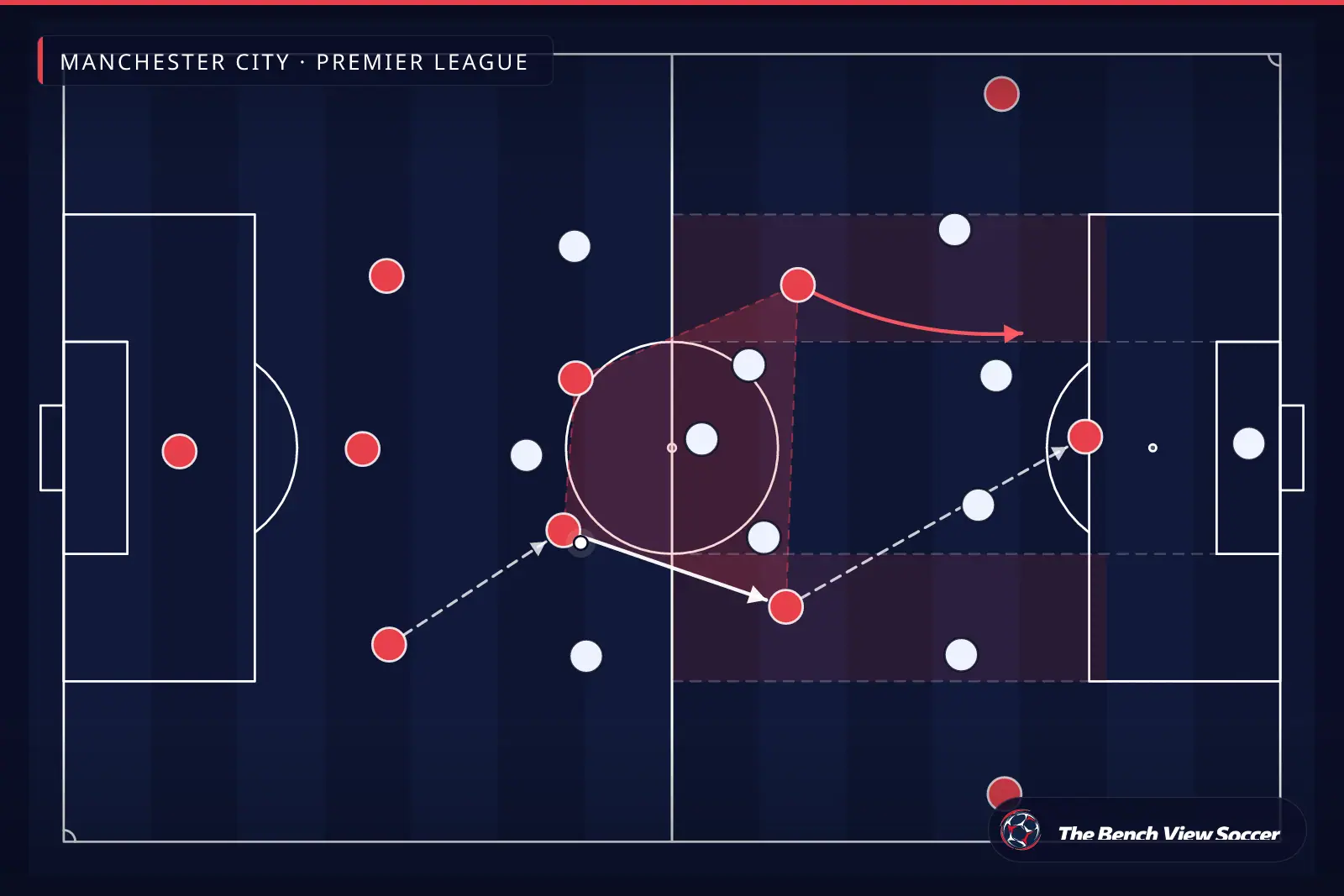
Manchester City: How Gakpo Unlocks Pep’s Left Half-Space Engine
August 25, 2026
Liverpool's Inverted Trent Unlocks Salah vs Newcastle's Press
August 23, 2026
Liverpool's Salah Succession Plan: How Yankuba Minteh Fits Slot
August 21, 2026
Hull City, Fulham and Ipswich: How the Box Midfield Changes Them
August 18, 2026