

The moment and the misdiagnosis
The headlines are loud: Virgil van Dijk welcoming more quality before the season starts; an opposition coach bluntly saying Liverpool still look vulnerable; speculative noise around Mohamed Salah’s future flaring in unexpected places. The impulse is to treat these as separate threads — leadership, defending, transfers. Tactically speaking, they are all one story.
Here’s the bold view: Liverpool don’t have a “high line problem.” They have a rest-defense problem. That distinction is everything. The high line — the brave starting position of the back unit — is a feature of elite sides across Europe. The rest defense — the structure and spacing behind the ball while you attack — is the safety harness that makes the risk worth it. When Liverpool look leakier than they should, it’s because the harness is loose, not because the line is high.
Tactically speaking, Liverpool will contend again the instant their 3-2 rest-defense scaffold becomes habit, not an afterthought — the high line isn’t the villain, it’s the platform.
And that’s why Van Dijk’s comments about adding quality matter, why a rival coach can still point to familiar frailties, and why the Salah discourse keeps returning to role and structure. All three point back to the same tactical hinge: where Liverpool place their five “safety players” in possession, how quickly they swarm the first pass against, and whether their right-sided machine — with or without Salah — is balanced by an equally disciplined left.
The core issue: structure over personnel
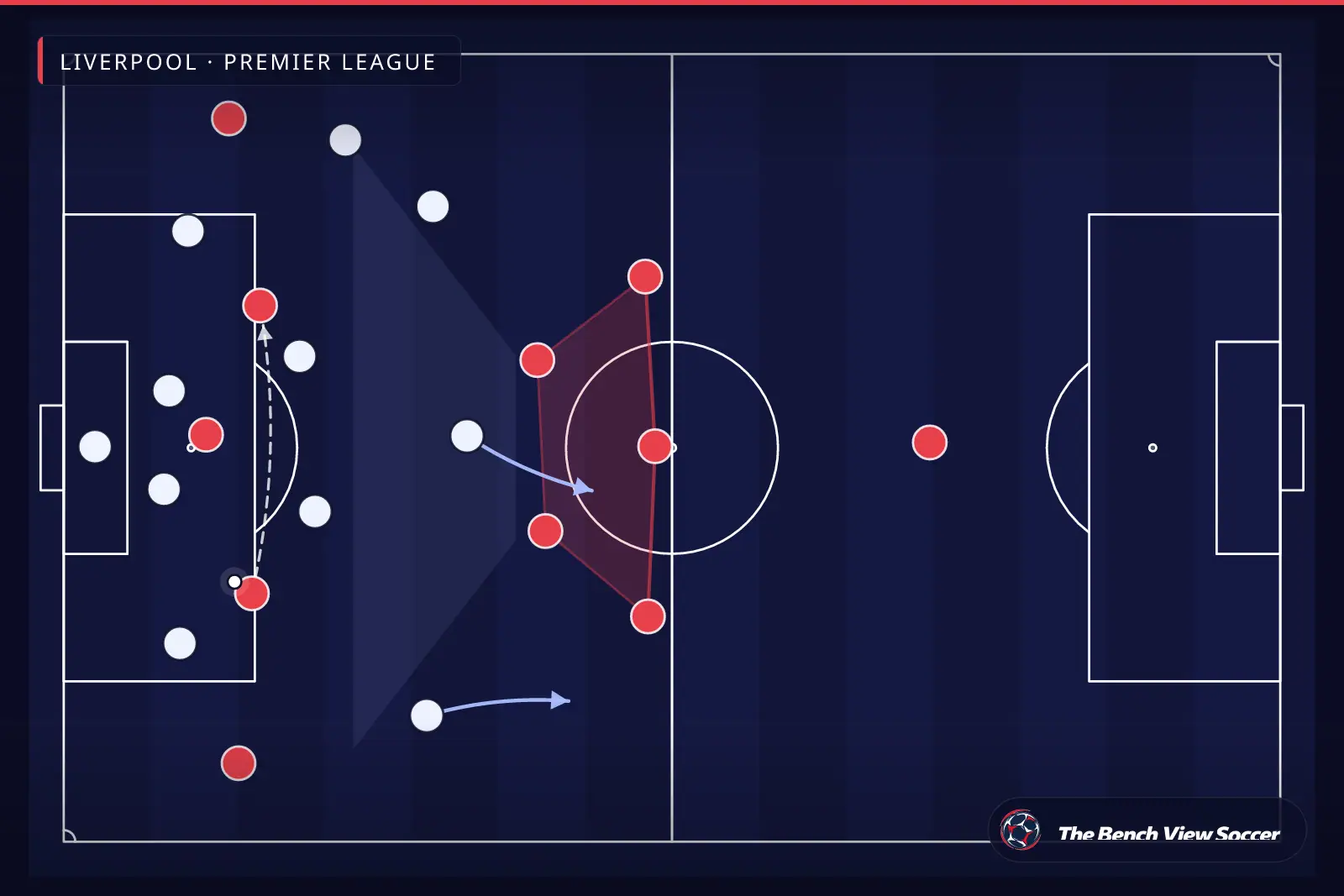
When Liverpool attack in their modern guise, they seek to occupy all five vertical lanes upfield while keeping five players responsible for “rest” — suppressing the counter the moment the ball is lost. This is usually a 3-2 or 2-3 chassis behind the ball. The differences are subtle but decisive:
• In a 3-2 rest defense, you expect three players on the last line (often the two center-backs plus a fullback tucked in) and two midfielders screening. That’s robust against wide counters.
• In a 2-3 rest defense, you expect two center-backs behind three midfielders forming a triangle. That’s robust against direct play through the middle.
Where Liverpool stumble is not in the idea, but in the execution of distances and roles. Too often the picture becomes a precarious 2-2-6 — two center-backs and two midfielders at imperfect heights, with both fullbacks high and both No.8s in the last line. It looks thrilling right up to the second it doesn’t.
How the shape breaks
Think of the recurring pattern — and you’ve seen it in recent seasons, preseason friendlies, and the occasional league wobble. The ball goes into the right half-space for a neat bounce pass (imagine a “12th minute” touch map if you like). The right-sided No.8 pushes beyond the line to combine, the right-back steps inside as an auxiliary playmaker, and the right winger pins the opposing fullback. It’s gorgeous occupation of the right channel.
Now freeze the frame the moment possession is lost. If the six (holding midfielder) was committed to support that triangle, and the left-sided No.8 had drifted forward without rebalancing, Liverpool’s rest defense has effectively two players — Van Dijk plus his partner — and a long sprinting lane down the far-side touchline. The weak-side fullback, often high and wide to threaten the back post, is miles from the recovery picture. One vertical pass, one diagonal, and Liverpool’s center-backs are exposed to a 2v2 with 40 yards of grass.
That’s not a “high line” error. It’s a rest-defense misallocation — one too many bodies ahead of the ball, one too few covering the far lane, and a six who has been lured one step too high by the promise of a combination instead of holding the hinge.
Flip the situation to a “64th minute” scenario when the team is chasing a goal. The left fullback overlaps aggressively, the left No.8 underlaps, the striker drags the center-back away. Lose it here and the near-side counter is the danger: inside-out passes into the channel where the left fullback vacated. Again, the solution isn’t to lower the line — it’s to pre-assign one of the eights to sit a beat deeper whenever the far fullback goes. It’s choreography.
The high line isn’t the villain — the timing is
Van Dijk’s superpower is not just height and heading; it’s reading the ball-carrier’s hip and stepping at the exact moment where the offside trap becomes a weapon. A high line executed with synchronized pressure on the ball is suffocating. A high line with even a half-beat delay in the press is a coin flip against pace. News cycles can make this binary: “high line bad if you concede.” The tactical reality is more nuanced: the high line is only as brave as the pressure in front of it is honest.
When opponents break Liverpool’s first press with a simple third-man bounce — into the pivot and out again — they turn the Reds’ aggression into fuel. The fix is not to retreat, but to retrain the first and second waves of pressure to overprotect the middle and push the play wide, where recovery runs have better angles.
What history teaches: Liverpool’s defensive cycles
Liverpool have been here before. The late 2010s vintage built their dominance on a faultless 3-2 behind the ball: Fabinho anchoring, Henderson and Wijnaldum staggering their heights, Robertson flying forward balanced by Alexander-Arnold’s half-space quarterback role. When they lost the ball, the nearest three always snapped into the counter-press, and the far-side eight slid to sit on the far lane. It wasn’t conservative; it was ruthless.
As personnel evolved, so did the geometry. The post-Firmino years replaced a false nine who naturally “locked” the opponent’s six with a more vertical striker profile. The right-sided patterns stayed elite — Salah’s gravity, the right-back’s inversion, the No.8’s underlaps — but the center-forward’s starting positions changed the angles of the first press. With fewer ball-side traps on the opposition pivot, the first escape pass became slightly easier, and that had knock-on effects for the back line’s risk calculation.
Across multiple seasons, the story rhymed: when Liverpool’s best counter-pressing distances were drilled and their 3-2 rest scaffold was automatic, they strangled games. When the distances slipped, injuries forced unfamiliar pairings, or the box midfield left the six isolated, the line didn’t look brave — it looked exposed.
What Virgil van Dijk actually needs around him
When Van Dijk speaks about more quality coming in, it reads like captain’s optimism. Tactically, the ask is specific. Van Dijk doesn’t need a deeper starting line; he needs cover at the moments where the line’s logic is most strained.
• A six who defaults to “hold” when the ball enters the half-space on his side. That single beat of discipline prevents a collapse into a 2-2-6. Teams live or die by that pause.
• One fullback who inverts judiciously and one who holds the width — at least until the ball is securely in the final third. Symmetry in possession looks clean on a whiteboard; asymmetry builds rest-defense insurance.
• The far-side eight trained to see the moment to become a third center-back in transition. It can be as simple as turning hips early when the ball is on the opposite flank, ready to defend the long diagonal.
• A goalkeeper aggressive in starting position to sweep behind the line and bold enough to hit the outswing to the winger’s chest to defuse first-wave pressure after a turnover.
If Liverpool add “quality,” this is the template those players must fit. A left-sided center-back comfortable defending large spaces reduces the system’s risk profile by ten percentage points alone. A six who runs less but closes lanes earlier turns scary open-field chases into controlled jockeying. And if a right-back tucks in, the left-back must be the safety pin, not the second No.10.
The Salah question is really a lane-management question
Speculation will continue to swirl around Mohamed Salah wherever he goes or doesn’t go. The tactical question for Liverpool is enduring and independent of rumor: how do you maximize Salah’s gravity without unbalancing the rest shape?
Over the years, the right-sided triangle has carried Liverpool’s incision: Salah as an inverted winger starting wide to threaten the channel and curving in onto his left; the right-back as an inverted fullback stepping into midfield; and the right No.8 timing third-man runs beyond the last line. The best versions of this triangle draw two or three opponents to the ball, then flick to the weak side through a disguised switch. The trade-off is obvious: pull too many of your own pieces into the right half-space and the rest-defense plank creaks.
There are two clean structural answers:
1) The right tilt, left lock. Commit to overloading Salah’s side but pre-commit the left fullback to stay home and the left No.8 to hover in the half-space at midfield height. This gives you a natural 3-2 behind the ball whenever play is on the right: right-back inverts next to the six (forming the two), the center-backs plus left-back become the three. Lose it? You have five in place.
2) The 2-3 hinge. Keep both fullbacks connected to the center-backs and allow the six plus both eights to form the triangle behind the ball. Here, the right No.8 sits five yards deeper than instinct dictates. It feels like restraint in the moment but reads like control in the transition map.
And if there’s ever a Salah succession plan? The principle remains. If the right winger is a touchline hugger who dribbles outside-in less, the right-back’s inversion becomes more valuable as a passing hub — but the far-side eight’s early retreat is non-negotiable. If the right winger is a runner who pins the line, the No.8 must become the “connector” not a second striker. Either way, the geometry behind the ball makes or breaks the move.
Micro-tactics: pressing triggers, distances, and the first five seconds
All of this becomes real in two phases that decide elite football now: the pass before loss, and the first five seconds after it. Liverpool can solve 80 percent of their “frailties” by optimizing those windows.
• The pass before loss. The last pass before a turnover is often a vanity ball — cute, vertical, low percentage. The fix is to coach stronger “exit passes” under pressure: either a firm set to the six or a switch to the far fullback at waist height. The micro-rule: if the ball can’t be secured into the half-space, roll it back to the hinge and rebuild. That preserves rest shape.
• Orient the press. The initial counter-press must funnel outside. If the nearest winger jumps straight to the ball-carrier’s toes and blocks inside with his body, the first recirculation pass traps the opponent on the touchline. If the winger arrives flat — parallel to the sideline — the inside switch is alive and the line is in peril.
• Stagger the eights. If the right eight attacks the box, the left eight mirrors five yards back and five yards inside. It’s a tiny detail that changes running races from 40 yards to 20 yards on the first counter.
• Six as a screen, not a hunter. The six should meet the first vertical pass, not chase the dribble lane. Arriving early to screen turns moments into melees — and Liverpool thrive on melees with numbers around the ball.
The key metric coaches obsess over isn’t possession or shots. It’s “counter-press regains within five seconds.” Whether you track it formally or informally, the eyeball test is simple: are Liverpool winning the ball back quickly enough after loss that the high line rarely has to defend a full-speed footrace? When yes, they look like Liverpool. When no, they look like a top-four team trying to be champions.
Set plays: the hidden ten points
When people say “familiar frailties,” they often mean open play transitions. But there’s another lever Liverpool can pull: make set-pieces a floor-raiser. In seasons where Liverpool’s rest defense wobbled, their set-piece work quietly held points — or cost them when it sagged.
Defensive corners: a hybrid zonal-man structure suits this group. Van Dijk at the near-post zone, a screen at the penalty spot to attack in-step deliveries, and two blockers assigned to the opposition’s best runners to disrupt their first two steps. The second-ball line is crucial: one player five yards outside the box central to collect clearances and turn them into counters, but only if the far fullback stays to create the 3-2 first.
Attacking corners: they have the height, the delivery, and the traffic patterns. The marginal gain is in rest defense. Keep both fullbacks back when leading; release one when chasing but keep the six glued to the top of the D. It’s not sexy, but it’s six goals prevented across a season.
Personnel within the plan: roles, not names
It’s tempting to frame this entire puzzle as a transfer market checklist. In our view, Liverpool’s needs can be written as functions:
• A left center-back who can live in space: fast enough to win a sprint, calm enough to delay and allow the block to recover.
• A six who defends early, not late: less about sliding tackles, more about arriving before the pass and turning through-balls into sideways passes.
• A right-sided No.8 who times third-man runs but defaults to the hinge when the right-back inverts.
• A left-sided No.8 with the instincts of an auxiliary fullback in negative transition — hips open to the far side, first step backward when the ball is on the right.
• A fullback pair with complementary instincts: only one inverts at a time before the ball enters the final third.
Van Dijk, Salah, and the rest don’t need a rebuild to look like contenders; they need role purity. When role purity returns, chance quality follows. When it slips, even elite defenders look mortal because they’re being asked to defend scenarios that the shape should have prevented.
Comparative context: what the best do
Look around Europe. The teams who run aggressive high lines and don’t live in chaos all share the same habits: ruthless lane control, a default 3-2 or 2-3 that’s visible from the camera gantry, and a first press that shows you outside and locks the middle with shadows. Their eights are not identical; one is usually a connector, the other a runner. Their fullbacks are not symmetrical; one tends to be the extra midfielder, the other the safety wide defender. Their six is obsessed with positioning, not just interventions.
When Liverpool mirror those habits, they sit on 65+ points by spring without drama. When they chase “five-lane occupation” with six players up front and only four behind, they enter the entertainment business instead of the trophy business.
Training-room details that change match-night outcomes
• Trigger vocabulary. Give the six and eights a common word that means “lock.” If the right fullback steps in, the left eight literally says the word and drops. It sounds trivial; it prevents chaos.
• Recovery angles, not sprint speed. On video, draw the lane lines for the first three steps after loss. Reward the angle, not the top speed. Angles win transitions.
• Pre-loss cues. The moment a receiver takes a closed body shape near the touchline, the weak-side eight starts to retreat. Anticipation reduces distances by ten yards before the turnover exists.
• Goalkeeper shoulder checks. Teach the keeper to look for the counter two seconds before the corner is cleared. Starting two yards higher on average erases one through-ball per match.
Illustrative moments: where the goals come from — and go
Without anchoring to any single preseason fixture, the game-states that have cost Liverpool at times are painfully consistent across years:
• 8th minute, right half-space. Vertical pass into the striker’s feet, bounced into the oncoming right eight. A heavy touch invites the duel, ball spits loose, opponent goes central-to-left with a first-time pass. Fix: the six must be in the passing lane, not pressing the receiver’s back.
• 34th minute, left wing. Overlap, cut-back blocked, far-side winger and eight both standing in the box. Counter goes down Liverpool’s right because the right-back had inverted; only two center-backs break the wave. Fix: far-side eight starts five yards deeper so he becomes the third center-back in negative transition.
• 64th minute, scoreline level, adrenaline high. Both fullbacks beyond the ball when a switch is under-hit. Opponent’s first pass is beaten by a counter-press, but the second pass isn’t — because the near-side winger’s body shape showed inside. Fix: winger arrives with inside shoulder ahead, funneling outside.
These aren’t mysteries; they’re drills. The good news for Liverpool is that drills are solvable problems.
What this means for the season
Here’s the practical outlook:
• If Liverpool normalize a 3-2 rest structure whenever they’re on the right and a 2-3 when they’re on the left — and enshrine the “only one fullback inverts before the final third” rule — their transition xGA will fall without sacrificing chance creation. They’ll look calmer at 1-0 and scarier at 0-0.
• Van Dijk’s value compounds when the running races reduce. He becomes not just a stopper but a controller, picking the moments to step and compress. Fewer panicked retreats, more proactive offsides.
• Salah’s gravity becomes an asset without being a drain. The right triangle pulls teams apart, while the left lock catches the first counter — allowing Liverpool to sustain pressure and rack up the five- to seven-minute attacking waves that define title pushes.
• Transfer noise matters less when roles are clear. Whether reinforcements arrive or not, players recruited into this system must be role-true first. A “name” who breaks the hinge does more harm than a squad player who keeps it intact.
The counterargument
The fair opposing view: it’s August, legs are heavy, partnerships are incomplete, and preseason errors are often about rhythm, not system. Many of the “familiar frailties” vanish once match fitness returns and the first team plays together for three or four consecutive games. Moreover, the margins in transition are razor-thin; a single mistimed step can turn a good shape into a chasing pack, and those details typically sharpen by September.
There’s truth here. Early-season jitters can make structures look worse than they are. And Liverpool will always live at the edge by design — their high line and aggressive occupation of the final third exist to push opponents into untenable defending. When you live on a cliff, a few slips are part of the risk-reward calculation.
But in our view, waiting for rhythm to solve spacing is a gamble. Fitness improves pressure; it doesn’t fix the wrong five behind the ball. The rest-defense rules have to be codified so that rhythm enhances them, not rescues them.
The decisive tweaks Liverpool can make now
Summing the plan into three non-negotiables:
1) Codify the 3-2/2-3 rest scaffold. Decide which side inverts by phase and by opponent, and bake the reactions into the eights. If the right-back inverts, left eight locks. If the left-back overlaps early, right eight stays. Write it into the week, not just the whiteboard.
2) Re-teach the first five seconds. Body shape on the jump, angle of the first harrier, and the six’s default screen. Reward the interventions that force play wide; punish hero-balls into the middle after turnovers.
3) Protect the far lane. One player — often the far-side eight — must be tasked with nothing but watching the through-ball angle when play is on the opposite flank. If he gets bored, you’re doing it right.
Shareable verdict
Tactically speaking, Liverpool are one habit away from turning “familiar frailties” into a familiar sight: opponents walking back to halfway shaking their heads. Van Dijk’s high line is a platform, not a flaw. Salah’s gravity is a gift, not a gamble. Build a default 3-2 behind the ball on the right, a 2-3 on the left, and a five-second counter-press that points the game toward the touchlines. Do that, and talk of “work to do” becomes talk of a title chase.
The Bench View app
Don’t just read football — train it
Everything you read here, turned into training you can follow step by step.
Physical training at home
AI daily sessions adapted to your level and position. No equipment needed.
Tactical training courses
Step-by-step courses on positioning, pressing, build-up and decision making.
- 7 days free
- No commitment
- Cancel anytime
Free account: 2 physical sessions + the first tactical course. PRO: 7-day free trial — cancel before day 8 and you pay nothing.
More Analysis
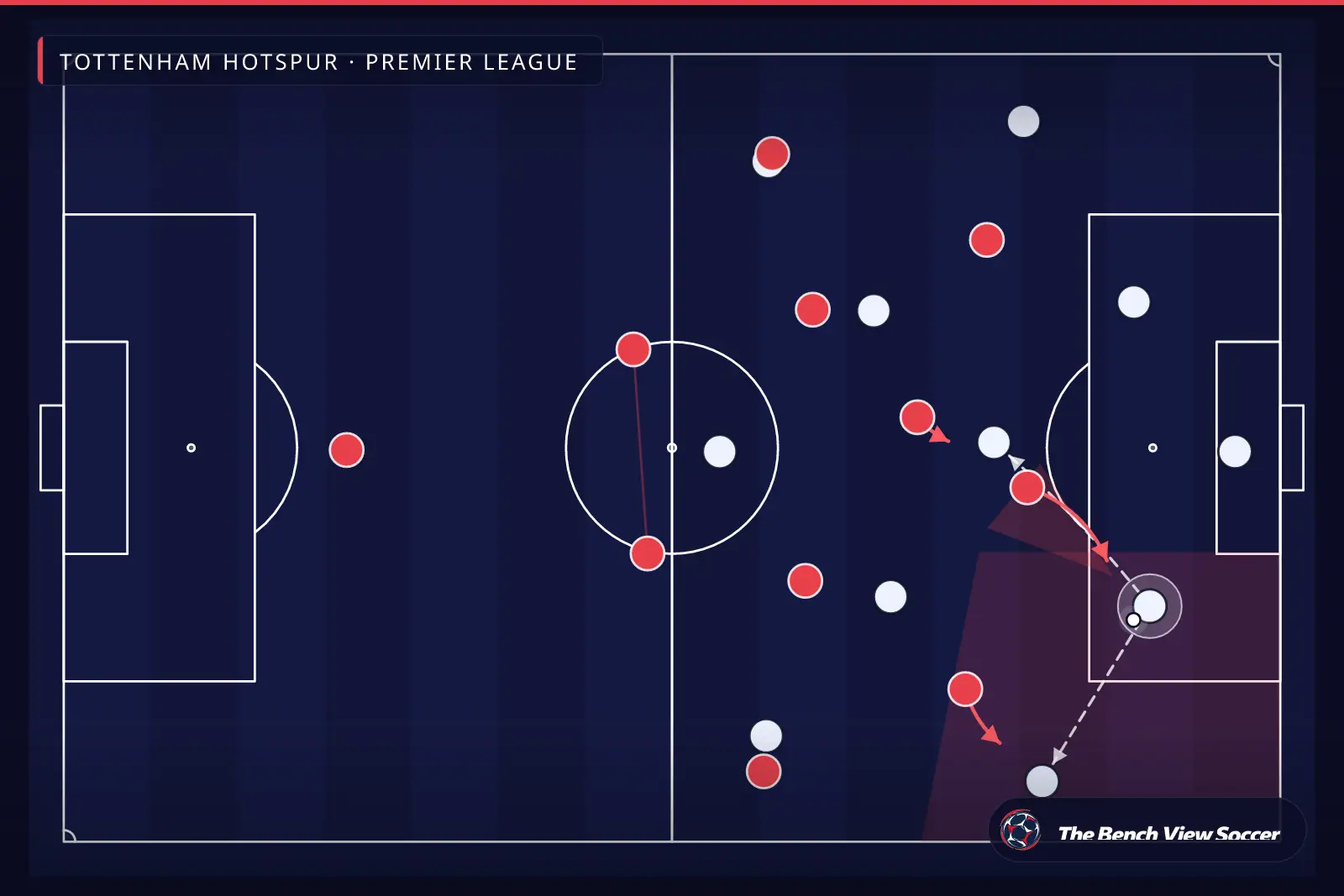
Tottenham Hotspur: How World Cup 2026 Is Warping Their Press
August 27, 2026
Chelsea's 3-2-5 Rest-Defense Is the Real Champions League Edge
August 27, 2026
Aston Villa's Box Midfield Is the Premier League's Real Edge
August 26, 2026
Chelsea's Box Midfield Is Fueling Chaos at the Cottage — Why
August 24, 2026