

Trending moment, decisive thesis: the bid is the headline, but the system is the story
Reports of interest in Gabriel Martinelli have set timelines ablaze. The number attached to his name is loud; the real question is louder: what, tactically, would Arsenal be selling if they moved on their left winger? Our view is clear and immediate—Arsenal would not simply be offloading a player; they would be deleting a system shortcut. Martinelli’s vertical gravity is the left-edge accelerator for Mikel Arteta’s entire positional framework. Let him go without a structural answer and Arsenal’s left side slows by a full tactical gear.
Vertical gravity is the pull a forward exerts on back lines by threatening space behind them—every sprint, feint, and decoy opens corridors elsewhere. With Martinelli, that force is not a nice-to-have flourish. It’s the pressing trigger, the spacing tool, and the release valve in one. It’s how Arsenal pin the far full-back, stretch a back four diagonally, and turn stale U-shape circulation into cutbacks and second phases.
Analytically speaking, Martinelli’s unique value at Arsenal is not just goals or dribbles—it’s the chain reaction his runs create: pin, draw, lay-off, arrive. Remove that gravity and you don’t just lose a winger; you rewire your left half of the pitch.
How Arsenal’s left edge really works
Under Arteta, Arsenal build most often in a 3-2-5 or 2-3-5 shape. The specifics flex—who inverts, who pins—but the left edge follows a consistent logic:
- The left winger (Martinelli) starts wide on the chalk, body open to the inside, threatening the run in behind the right centre-back.
- The left “8” (variously a striker-type acting as a connector or a controller) oscillates between the left half-space and the penalty spot, the ideal third man.
- The left back toggles duties: either underlaps to become a surprise runner or inverts into the double pivot to stabilize rest defense.
- The left centre-back steps into midfield to carry when unpressed, forcing a wide defender to choose: step or drop.
Martinelli’s job is to force that choice at speed. If the right-back holds, he receives to feet and punches inside on his second touch. If the right-back steps, the ball goes beyond him and Martinelli angles diagonally towards the inside-left channel. If the right centre-back shuffles wide, the left “8” ghosts into the seam for the third-man release. All three outcomes are wins because the choice is coerced at Martinelli’s tempo, not the opponent’s.
Example, micro-detail: the third-man chain
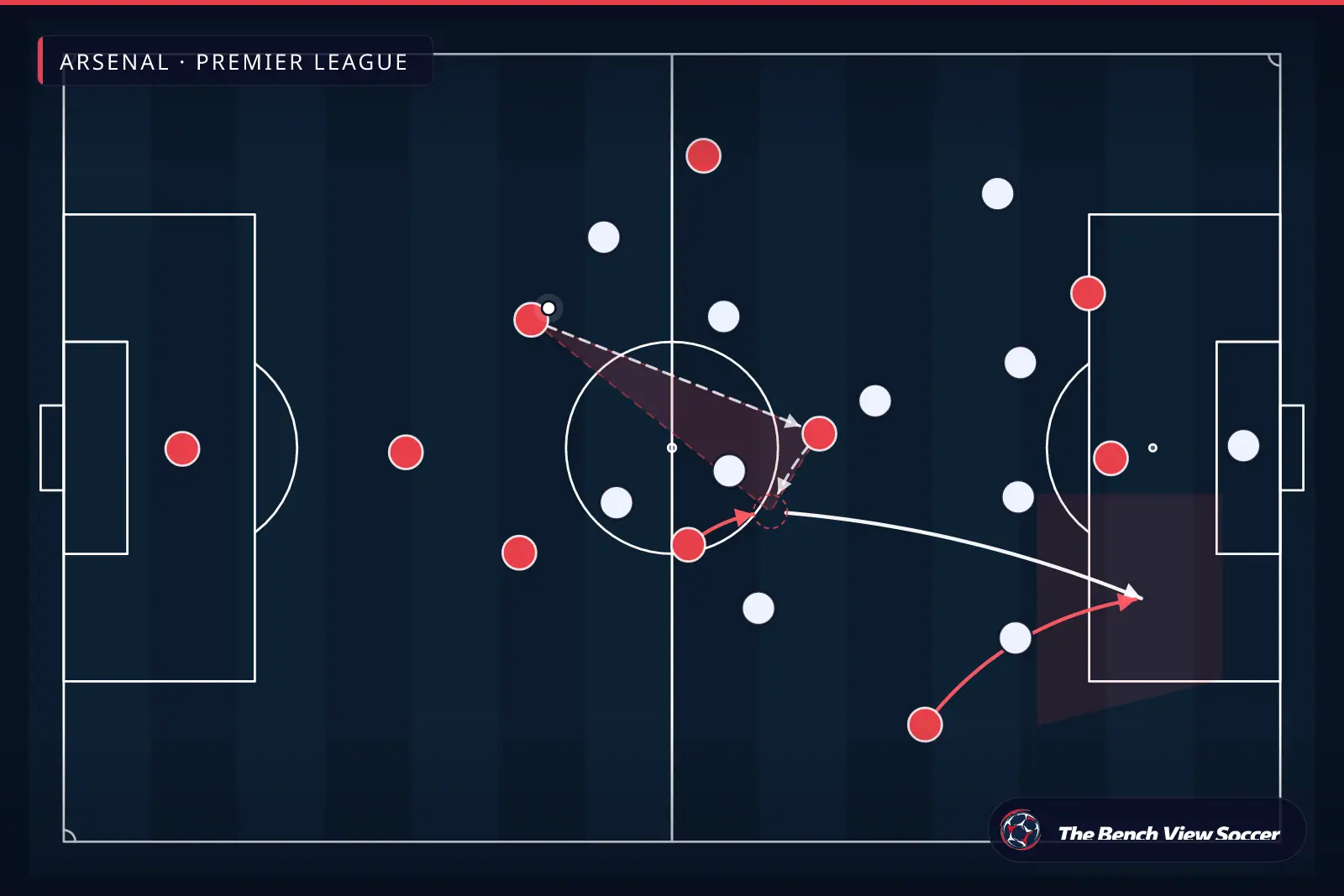
Arsenal’s left-side pattern often looks like this: ball with left centre-back, pass fired to the left-back in the half-space, cushioned into the left “8”, wide release to Martinelli, who is already sprinting. From there, Martinelli either:
- Cuts inside to draw the centre-back and lays off to the arriving third man at the D, or
- Carries to the byline to force a low block collapse and finds the cutback line, or
- Feints inside to freeze the defender and takes the outside lane for a low cross across the six.
The crucial detail isn’t the end action—it’s the first two steps. Martinelli’s first stride after the release is an information weapon; defenders read it as “behind” even when he intends “inside.” That’s gravity.
Film room: minutes that explain the mechanism
Even in games where he doesn’t fill the box score, the left-edge mechanism reveals itself in key moments fans remember:
- 86th minute vs Manchester City (Emirates, 2023-24): A late throw of the left-side dice. Martinelli, reintroduced after injury, starts wider than the full-back’s line, receives the lay-off at the top of the left half-space, and fires a shot that deflects in. What matters is not the deflection—it’s the sequence: wide pin, quick wall pass, shot from the channel City usually barricade. That chain exists because the initial run promised depth, forcing a retreat that never fully reset before the strike.
- First-half stoppage vs Sevilla (away, Champions League 2023-24): Transition textbook. Martinelli explodes from the left touchline as the central turnover happens. The first 10 metres are separation; the next touch pulls the centre-back diagonally. Whether he finishes or lays off, the pattern is the same: left-edge verticality breaks compactness before it can form.
- Second-half press vs Liverpool (Emirates, 2023-24): The signature Arsenal pressing trap on the left. Triggered by a lateral pass from right centre-back to right-back, Martinelli jumps the lane, the left “8” closes inside, and the turnover zone appears on cue. The outcome was a high-value chance born from synchronized aggression—again enabled by the winger’s capacity to threaten both the interception and the spin behind.
In all three, the measurable action (shot, carry, chance) sits on top of a deeper structure: Martinelli makes opponents defend both the wing and the vacuum behind simultaneously, which is exactly what positional play seeks to engineer.
Vertical gravity defined—and why it is rare
Not every fast winger generates gravity. Gravity is a property of trust between teammates and terror in opponents. Teammates trust that if they play the early ball, the runner arrives. Opponents fear that if they turn their hips too late, it’s gone. Martinelli’s blend is unusual because:
- He accelerates into space earlier than most, reading the centre-back’s weight rather than just the pass.
- His starting position is extreme width, but his end position is often the inside-left lane—the movement bends, causing maximum defensive distortion.
- He presses with the same angle as he attacks: outside-to-in, baiting passes into exactly the lanes Arsenal want to steal.
The effect is compounding. When he sprints, the pitch tilts; when he stops, the full-back overshoots; when he receives, the double-team arrives a beat late because the line has already shifted.
What Arsenal actually lose if they sell him
Sell the player, and you don’t just reduce expected goals from the left wing. You alter:
- Pressing triggers: Arsenal’s left-side press often keys off Martinelli’s curved run showing inside before flipping to the outside lane. Without that cue, the left “8” and left-back must adjust starting distances, increasing the risk of a straight-line pass through the first line.
- Third-man timings: The lay-off to the arriving midfielder or striker in the left half-space is calibrated to Martinelli’s two-touch rhythm. A more “feet-first” winger (think a natural 10 out wide) slows those exchanges, giving blocks time to set and collapse into five-at-the-back rest shapes.
- Rest defense structure: Because Martinelli commits defenders early, Arsenal can set a 3v2 safety net behind the ball. If left-wing progressions become slower, the team spends more time in exposed shapes as the back line shifts across.
- Box occupation: Martinelli’s diagonal carries typically pull one centre-back out; that vacates the cutback zone for a second wave runner. Remove that pull and second-wave shots reduce, even if crossing volume remains.
The knock-on effect on Saka
There’s a hidden, right-sided tax here. Bukayo Saka’s ability to isolate on the right often depends on the opponent’s back four being stretched diagonally by the opposite winger. When Martinelli pins the far side, the weak-side full-back can’t tuck fully into the half-space to support against Saka. Take away that far-side pin, and Saka sees more double teams, or at least more structured shuffles narrowing his cutback lane. In other words, left-edge gravity makes the right edge lighter.
Why might Arsenal consider it anyway? The systemic logic
Even acknowledging his value, there are systemic reasons a club might entertain a high offer for a wide forward:
- Predictability vs. variance: In certain low-block games, Arsenal’s left edge can tilt toward predictable isolation, inviting 1v2s that stagnate circulation. A more inside-leaning wide playmaker could increase central combinations and reduce dead-end touchline traps.
- Squad equilibrium: If the left “8” is evolving into a higher-volume penalty-box presence, a more connective winger might maximize that role—more wall passes, fewer pure sprints.
- Injury and load management: A system that leans heavily on repeated high-intensity sprints may seek to distribute those efforts differently across the front five to sustain month-to-month availability.
- Market window: There are moments when a club can bank significant value on a profile and reallocate toward a different tactical need (e.g., an aerially dominant striker, or a full-back with elite 1v1 defending to free the left winger to stay higher).
These are coherent arguments. But each assumes that what Martinelli provides can be replicated by committee—or that Arteta actively wants to evolve toward a less vertical left edge. That is a decision about identity, not just personnel.
Historical analogues: when elite teams sold the vertical winger
Clubs at the sharp end have taken this road, with mixed outcomes:
- Manchester City and Leroy Sané: City lost a left-footed right winger with blistering depth runs. Pep Guardiola offset that by adding interior control (Bernardo Silva’s minutes out wide) and maintaining width through full-backs tucking late rather than early. City’s control increased; their wing chaos decreased—but their central machine was so refined it barely mattered domestically.
- Liverpool and Sadio Mané: Mané’s departure reduced Liverpool’s counter-press-to-goal conversion. Darwin Núñez changed the shot map, but the ball-winning tempo dip on the left wing asked more of Andrew Robertson’s engine and left-sided 8’s anticipation. The adaptation took time.
- Arsenal and Alexis Sánchez: A different profile but a similar lesson. When Sánchez left, Arsenal lost a chaos generator. They re-centered chance creation through different profiles, but their left-edge directness dipped, and the broader attacking identity wobbled until the next iteration emerged under Arteta.
In short: you can sell vertical gravity and survive. To thrive, you need a compensating mechanism: either an overpowered central structure, a full-back who restores width efficiently, or a striker whose gravity replaces what the winger provided.
The Galatasaray question: fit, function, and European nights
Why would a club like Galatasaray push for this profile? In tactical terms, Martinelli solves two problems at once:
- Against mid-blocks in the league: The Super Lig frequently presents semi-passive 4-4-2s. A high-tempo left winger bending runs behind the right-back unglues these shapes early, forcing emergency lopsided 5-3-2 rotations. Martinelli’s first three carries per match could determine whether the game becomes two hours of siege or a 30-minute sprint to a lead.
- Against elite opponents in Europe: In Champions League group matches, transitions are the universal solvent. Martinelli’s out-ball utility—receive under pressure on the touchline, spin, and drag the holding midfielder out—is exactly what allows a team to mount the pitch in two passes instead of five. His pressing angle can also trap build-up teams who slide possession right-to-left and expose their right-back on the reset.
There’s also a natural synergy with a penalty-box striker. A striker like Mauro Icardi thrives on blindside movements and cutbacks; Martinelli manufactures those. The geometry is classic: winger diagonally inside, low cross to the front post, rebound zone alive for the 10. It's a fit that looks obvious because in pure football terms, it is.
If Arsenal do sell: three tactical paths forward
If Arsenal elect to cash in, Arteta has choices. Each implies a new left-edge identity.
1) The connector-winger model
Replace Martinelli with a winger who plays more like an interior. Benefits: tighter ball circulation, greater capacity to play through the block instead of around it, and better crossing variety from standstills. Costs: fewer depth runs, less back-line panic, more responsibility on the left “8” to provide verticality.
- Implementation details: Ask the left-back to sprint the outside lane more often, keeping width high while the winger tucks in. The left “8” becomes the main penalty-box runner. The double pivot must be secure against counters, because the left-back’s higher position invites transitions.
2) The full-back-as-winger model
Keep a conservative, technical winger and outsource width and verticality to an athletic left-back who arrives late. Benefits: unpredictability—winger shows middle, full-back explodes outside against a static defender. Costs: increased transition risk, higher workload on the left centre-back to defend space.
- Implementation details: Early underlaps from the left-back to manipulate the near-side midfielder; winger receives in the pocket to slip the runner. The striker must pin the near centre-back to open the byline lane. Rest defense locks into a 3+2 with the right-back tucking in early.
3) The striker-centric gravity swap
Invest in a striker whose presence replaces the winger’s threat. Benefits: central gravity attracts both centre-backs, freeing both wingers to act as late arrivals. Costs: requires elite crossing or cutback supply and high execution in Zone 14.
- Implementation details: Left winger can play as a delayed runner, arriving to attack the back post. The left “8” hovers at the edge of the box for rebounds, while the right winger provides early width to swing the block. Pressing must be recalibrated to a central cue rather than a left external cue.
The micro-skills Martinelli provides that replacements rarely match
Beyond shape and structure, Martinelli’s individual toolkit is unusually tuned to Arsenal’s needs:
- First touch orientation: He opens his body to threaten both inside and outside with equal believability. Many wide forwards telegraph their preference; Martinelli’s neutrality keeps back lines honest.
- Defensive-to-offensive transition speed: His first step after a duel or turnover is immediate depth, which forces back-pedals, creating space for midfield to climb the pitch.
- Cutback selection: He locates the pull-back seam rather than smashing across the six-yard line. That spares Arsenal the 50-50 chaos and instead delivers 70-30 finishes at the penalty spot.
- Counter-press habits: He presses to win, not to foul—curving from the blindside to cut the escape valve, then tackling onto his strong foot to keep the move alive.
These are not easily cloned by a committee of “good” wingers. They are shaped by repetition inside the same left-edge machine for years.
Causality: why Arsenal’s system elevated him—and why it’s a two-way street
It is fair to say the system makes the player. It is just as fair to say the player finalizes the system. Arteta’s positional discipline—all those five lanes, third-man structures, and patient U-shapes—creates the perfect runway for a vertical winger. But runway without a takeoff is taxiing. Martinelli supplies the lift. The causality runs both ways:
- System → Player: The double pivot and rest defense allow the winger to stay high and wide, keeping energy for attacking sprints. Teammates feed him early to punish shifting back fours.
- Player → System: The threat of the sprint conditions the opponent’s back line, making the central patterns (the “boring” bits) far more effective because the defense cannot step with the same aggression.
Remove the player, and opponents can step earlier into midfield, safe in the knowledge that the space behind will be attacked less ruthlessly. That subtly degrades Arsenal’s capacity to suffocate teams—less explosiveness, more sterile dominance.
What it would mean for the season ahead
In-season, selling a left-edge accelerator triggers a period of recalibration. Expect:
- Different pressing pictures: The left-sided trigger becomes more cautious. Arsenal may sit a touch deeper on that flank and spring traps centrally instead.
- Shot map drift: Fewer diagonal carries to the penalty spot from the left, more crosses from closer to the touchline, and a higher reliance on late arrivals from the left “8”.
- Right-side dependency: Saka’s usage climbs. That risks predictability unless the right-back’s overlaps and the striker’s near-post runs compensate.
- Rest defense tweaks: With fewer fast left-to-right transitions, the back line can settle into a more stable 3+2 early, but will also need to defend longer sequences against set low blocks.
None of this is fatal to a title challenge. But if Arsenal intend to sustain a 90+ point pace and deep European nights, they must replace not the name, but the function.
Counterargument: is the system the real star?
There is a credible opposing view: Arteta’s structure is so robust that the left-wing role is ultimately plug-and-play. The argument runs like this:
- The build-up architecture (3-2-5, five lanes, box midfield) ensures that any fast, disciplined winger can provide width and run channels.
- Coaches can script the same pressing triggers with timing drills and video work; the cue is the pass, not the player.
- In the Premier League, winning the territory battle and set-piece edge often matters as much as open-play chaos; a more connective winger can increase chance quality through central combinations.
There’s truth here—structure scales. But two caveats apply. First, timing is talent; repeating the same run picture-perfect at full speed, weekly, is a skill ceiling question, not just a coaching point. Second, vertical gravity has an emotional effect on defenders that structure cannot fully replicate. A full-back who knows Martinelli can roast him sprints a half-step earlier and turns his hips a half-beat faster. That creates soft edges elsewhere long before the first dribble happens.
Recruitment lens: if Arsenal sell, scout for function, not fame
Whether Arsenal keep or cash in, the recruitment checklist for the left edge is functional:
- Run profile: Repeated diagonal sprints from touchline to inside-left channel, with the ability to bend runs late.
- Touch profile: First touch that sets inside or outside equally; strong carry resistance against shoulder-to-shoulder contact.
- Pressing IQ: Curved runs that cut off the central outlet, timing to jump lateral passes, and body shape that invites the press into pre-planned traps.
- Final-third vision: Cutback selection to the penalty spot and ability to delay by a half-second to arrive teammates into finishing lanes.
Miss on any of these, and you will see the left edge slow, even if the newcomer’s raw numbers (goals, assists) look fine on paper.
Training ground solutions if no like-for-like arrives
If Arsenal choose internal solutions, three micro-adjustments can preserve left-edge threat:
- Earlier striker rotation: Have the striker drift left earlier in build-up to pin the right centre-back, freeing the replacement winger to receive to feet and attack the full-back 1v1 with a better starting picture.
- Left-back aggressions in waves: Stagger the left-back’s overlaps—one early sprint per possession cycle—to shock the line and create a decoy for the winger’s inside lane.
- Pre-planned third-man triggers: Script one automatic third-man run every time the left winger receives under pressure with back to goal inside the 18-yard line; this preserves the lay-off rhythm that makes Arsenal’s cutbacks hum.
The hidden metric: chance chain value vs. individual output
Focusing on goals and assists undersells Martinelli’s contribution. The better lens is chance chain involvement—how often his run is the first domino in a high-value sequence. Arsenal’s most dangerous spells typically feature three repetitive visuals: a back line sprinting toward its own goal, a left “8” arriving into the box unmarked, and a striker dragging a centre-back toward the near post. Martinelli is frequently the spark for that run-of-play fire.
Why this matters now
Transfer windows tempt teams to think in players, not patterns. But for top sides, the gap between 84 points and 92 points isn’t just talent; it’s time. It’s the half-second earlier on the vertical run, the extra decoy that drags a midfielder, the trust that allows a centre-back to carry the ball one more stride. Martinelli’s presence shortens attacks and quickens decisions. In the grind of a title and Europe, that speed is currency.
Final thought: the cost of slowing down
Tactically speaking, the worst outcome for Arsenal isn’t selling a good winger. It’s selling the left-edge accelerator and replacing him with a player who confuses touches for threat. Volume without verticality is sterile dominance. The Emirates has learned that lesson in eras past. The current Arteta project has avoided it by pairing structure with speed where it hurts—outside-in on the left.
So, if a bid arrives, the choice isn’t sentimental. It’s schematic. Keep the gravity and keep the left edge fast—or sell, and spend decisively on a plan that recreates the speed by other means.
Our verdict is unapologetically clear:
Unless Arsenal have a ready-made mechanism to preserve left-edge vertical gravity, selling Martinelli is not a talent decision—it’s a tempo downgrade.
That’s the headline under the headline. The rest is just numbers.
The Bench View app
Don’t just read football — train it
Everything you read here, turned into training you can follow step by step.
Physical training at home
AI daily sessions adapted to your level and position. No equipment needed.
Tactical training courses
Step-by-step courses on positioning, pressing, build-up and decision making.
- 7 days free
- No commitment
- Cancel anytime
Free account: 2 physical sessions + the first tactical course. PRO: 7-day free trial — cancel before day 8 and you pay nothing.
More Analysis
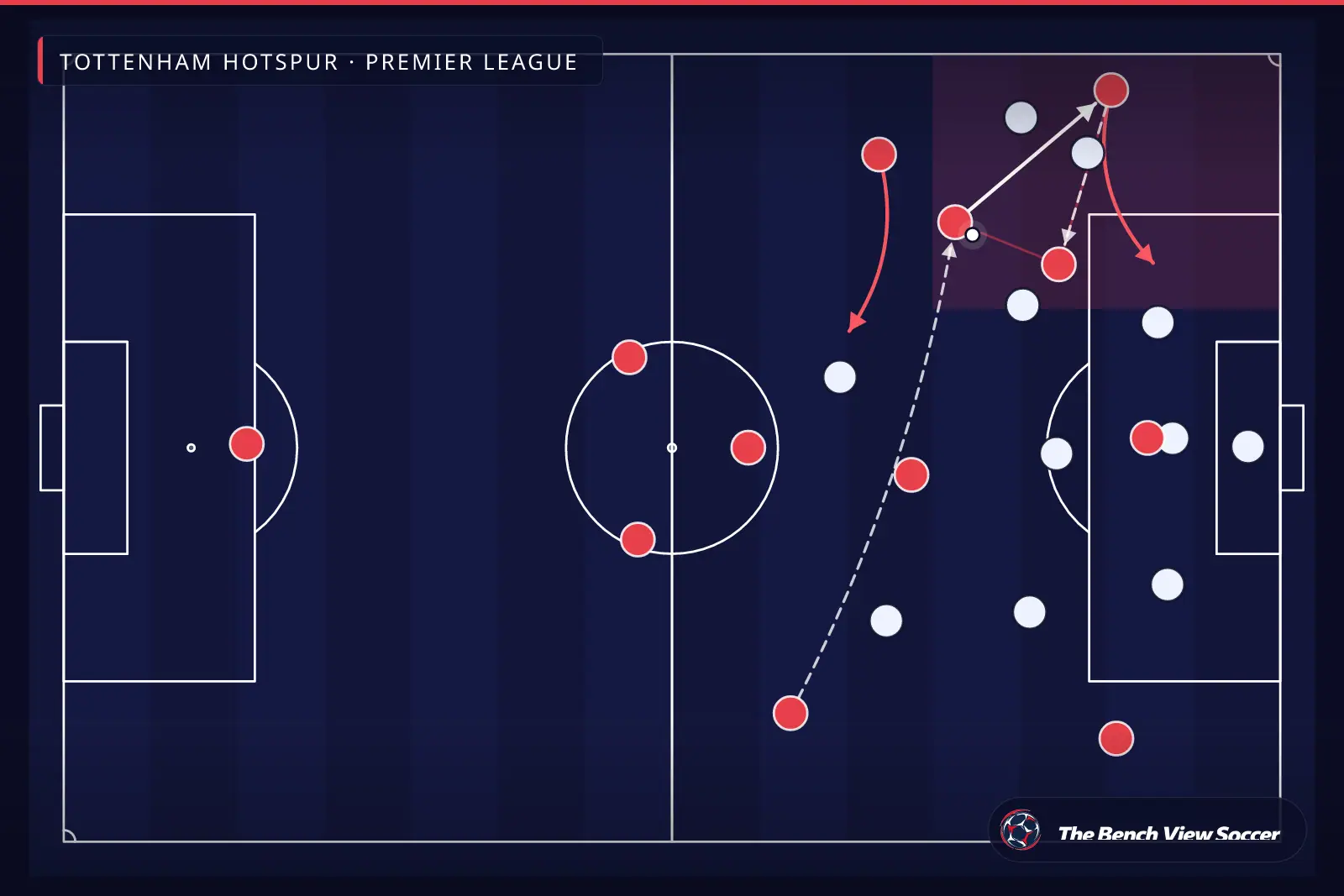
Tottenham Hotspur: Why a Gakpo-Style Inverted Winger Unlocks 3-2-5
August 25, 2026
Manchester United's Baleba Move Fixes Their Rest-Defense Gap
August 22, 2026
Rodri to FC Barcelona: How the Pivot Reinvents Rest-Defense
August 19, 2026
Benfica's Inverted Right-Back Plan Made Dedić a £30m Upgrade
August 18, 2026